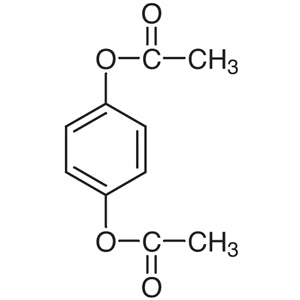
1,4-Diacetoxybenzene is a chemical compound widely used as a foundational material in various laboratory reactions. It belongs to the category of non-heterocyclic building blocks and is commonly employed in organic chemistry research. This compound features an aromatic benzene ring with two acetoxy groups attached at positions 1 and 4, making it a versatile intermediate in synthetic pathways. Its structural simplicity and reactivity make it an essential reagent for chemists working on complex molecule synthesis.
The properties of 1,4-Diacetoxybenzene that make it a preferred choice include its chemical stability under controlled conditions and its reactivity toward strong bases or elevated temperatures. These characteristics allow it to participate in a range of chemical transformations, such as substitution and oxidation reactions. Its aromatic structure also contributes to its stability against degradation, ensuring reliable performance in laboratory settings. This combination of stability and reactivity makes it a valuable tool for researchers aiming to develop new compounds.
In Indonesian laboratories, 1,4-Diacetoxybenzene is frequently used in organic chemistry research by academic institutions and research centers. Its availability in various packaging sizes facilitates its use in both small-scale and larger experimental setups. The compound is particularly favored for its role in synthesizing complex organic molecules, supporting a wide range of chemical investigations. Its consistent performance and reliability make it a go-to reagent for many laboratory applications.
- Organic synthesis reactions benefit from 1,4-Diacetoxybenzene due to its reactivity and structural versatility, allowing for the formation of complex molecules through substitution and oxidation processes.
- It is ideal for developing new chemical compounds in research settings, as its predictable behavior supports reproducible results in synthetic pathways.
- The compound is commonly used in academic laboratories for teaching and experimental purposes, providing students with hands-on experience in chemical synthesis techniques.
- Its stability under controlled conditions makes it suitable for use in long-term chemical studies, where consistent performance is critical.
- In industrial research, 1,4-Diacetoxybenzene is employed in the development of pharmaceutical and chemical products due to its role in intermediate synthesis.
| Brand | TCI |
|---|---|
| CAS number | 1205-91-0 |
| Molecular formula | — |
| Purity | — |
| Category | Chemistry > Building Blocks > Non-Heterocyclic Building Blocks |
| Pack sizes | Available in various sizes to suit different laboratory needs |
| Physical form | Solid, typically in crystalline form |
| Storage | Store in a cool, dry place away from direct sunlight and moisture |
1,4-Diacetoxybenzene should be stored in a cool, dry environment to maintain its chemical stability. It is recommended to use airtight containers to prevent exposure to moisture and air, which could affect its reactivity. The compound is generally stable under normal laboratory conditions but should be kept away from strong bases and high temperatures to avoid unintended chemical reactions. In a laboratory setting, it is important to handle the compound with appropriate personal protective equipment, such as gloves and safety goggles, to ensure safe handling. Proper storage and handling practices help preserve the compound's integrity and ensure its effectiveness in chemical experiments.
—
Produk Terkait
-
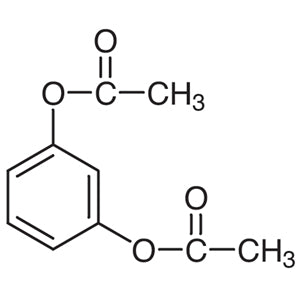
1,3-Diacetoxybenzene TCI R0046
Regular price From Rp 795.900,00Regular price -
1,2-Diacetoxybenzene TCI D2044
Regular price Rp 3.605.700,00Regular price -
3-Acetoxybenzaldehyde TCI A2467
Regular price Rp 4.213.650,00Regular price -
4-Acetoxybenzaldehyde TCI A1467
Regular price From Rp 530.250,00Regular price -
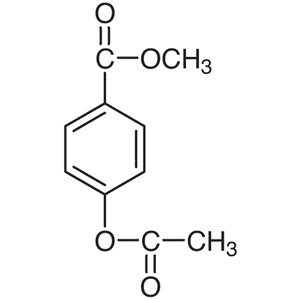
Methyl4-Acetoxybenzoate TCI A1227
Regular price Rp 1.167.600,00Regular price -
4-AcetoxybenzoicAcid TCI A0885
Regular price From Rp 823.200,00Regular price -
3,4-Diacetoxybenzaldehyde TCI D2042
Regular price From Rp 2.466.450,00Regular price -
1,2,4-Triacetoxybenzene TCI T0976
Regular price Rp 2.571.450,00Regular price