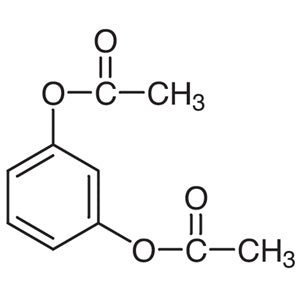
Methyl 4-Acetoxybenzoate is a chemical compound widely used in laboratory settings as a building block for various chemical reactions and the synthesis of complex molecules. It plays a crucial role in organic chemistry by participating in substitution reactions and serving as a key intermediate in the synthesis of aromatic compounds. This compound is particularly valued for its stability and reactivity, making it a versatile reagent in both research and industrial applications. Its ability to interact with a range of reagents allows chemists to design and execute a variety of synthetic pathways with precision and control.
One of the main reasons this compound is preferred in laboratories is its favorable solubility in organic solvents such as ethyl acetate and ethanol. This solubility profile simplifies its use in solution-based reactions and purification processes. Additionally, its relatively stable chemical properties under normal conditions ensure that it remains effective throughout the duration of experiments. The compound’s high melting point also facilitates efficient isolation and purification, which is essential for maintaining the integrity of chemical processes.
In Indonesian laboratories, Methyl 4-Acetoxybenzoate is commonly used in chemical research, especially in the fields of organic synthesis and analytical chemistry. Its role as a foundational building block enables scientists to develop new compounds and test chemical theories. Its availability and reliability make it a go-to material for both academic and applied research projects in the region.
- Organic synthesis applications benefit from its reactivity and stability, allowing for the creation of complex aromatic compounds with high precision.
- It is ideal for substitution reactions due to its ability to participate in nucleophilic and electrophilic processes under controlled conditions.
- In analytical chemistry, it serves as a standard reference material for spectroscopic and chromatographic analyses.
- Its solubility in organic solvents makes it suitable for use in solution-based reaction setups and purification techniques.
- It is frequently used in the development of pharmaceutical and agrochemical compounds as a key intermediate in synthetic pathways.
| Brand | TCI |
|---|---|
| CAS number | 24262-66-6 |
| Molecular formula | — |
| Purity | — |
| Category | Chemistry > Building Blocks > Non-Heterocyclic Building Blocks |
| Pack sizes | Available in various quantities as per supplier specifications |
| Physical form | Solid |
| Storage | Store in a cool, dry place away from direct sunlight and moisture |
Methyl 4-Acetoxybenzoate should be stored in a cool, dry environment to maintain its chemical stability and prevent degradation. It is recommended to keep the compound in airtight containers to minimize exposure to moisture and air, which could affect its purity and reactivity. Due to its solid form, it is best stored in a sealed container made of materials that are chemically inert, such as glass or high-density polyethylene. In laboratory settings, it should be handled with care, using appropriate personal protective equipment to ensure safety. Regular monitoring of storage conditions is advised to ensure the compound remains suitable for use in chemical experiments.
—
Produk Terkait
-
3-Acetoxybenzaldehyde TCI A2467
Regular price Rp 4.213.650,00Regular priceRp 2.946.300,00Sale price Rp 4.213.650,00 -
4-Acetoxybenzaldehyde TCI A1467
Regular price From Rp 530.250,00Regular priceRp 370.650,00Sale price From Rp 530.250,00 -
4-AcetoxybenzoicAcid TCI A0885
Regular price From Rp 875.700,00Regular priceRp 627.900,00Sale price From Rp 875.700,00 -
1,2,4-Triacetoxybenzene TCI T0976
Regular price Rp 2.571.450,00Regular priceRp 1.797.600,00Sale price Rp 2.571.450,00 -
1,3-Diacetoxybenzene TCI R0046
Regular price From Rp 795.900,00Regular priceRp 556.500,00Sale price From Rp 795.900,00 -
1,2-Diacetoxybenzene TCI D2044
Regular price Rp 3.605.700,00Regular priceRp 2.521.050,00Sale price Rp 3.605.700,00 -
3,4-Diacetoxybenzaldehyde TCI D2042
Regular price From Rp 2.466.450,00Regular priceRp 1.724.100,00Sale price From Rp 2.466.450,00 -
1,4-Diacetoxybenzene TCI D1803
Regular price From Rp 1.035.300,00Regular priceRp 723.450,00Sale price From Rp 1.035.300,00