

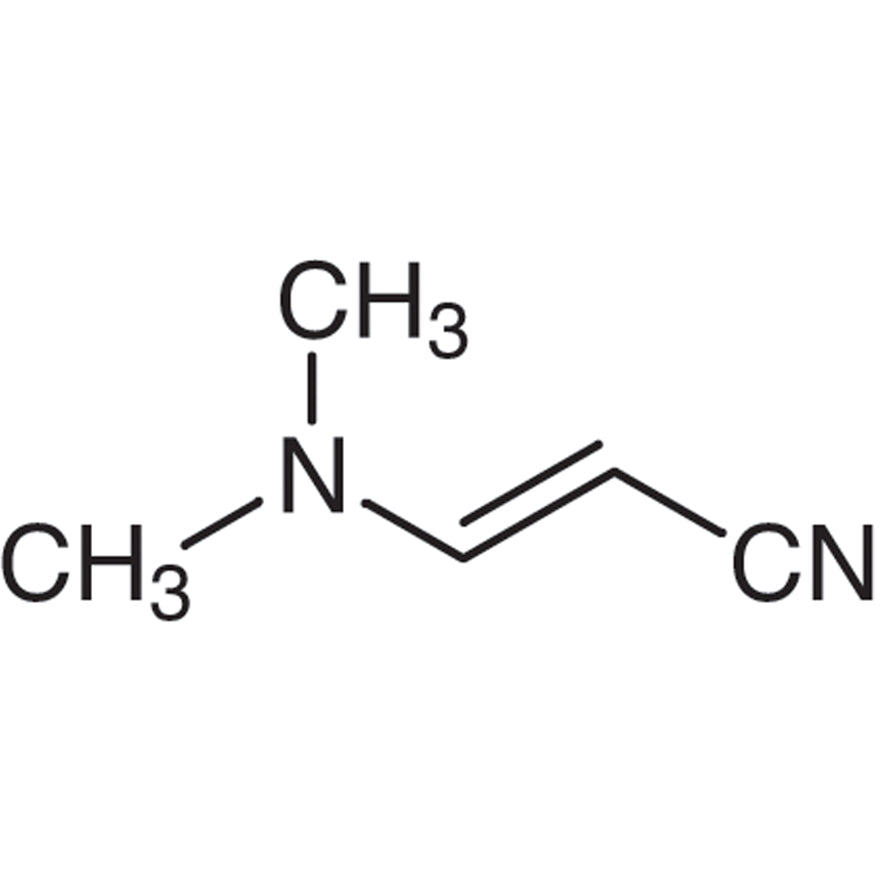
3-(Dimethylamino)acrylonitrile is a chemical compound widely used as a building block in organic synthesis. It plays a crucial role in laboratories where researchers aim to create complex molecular structures through various chemical reactions. This compound is particularly valuable for its ability to participate in multiple reaction types, including addition, substitution, and polymerization, making it a versatile reagent. Its unique molecular structure, featuring both a nitrile group and a dimethylamino group, allows it to act as a key intermediate in the development of new compounds and functional materials.
The compound's chemical properties make it a preferred choice for synthetic chemists. It exhibits stability under controlled conditions, yet remains highly reactive, enabling it to engage in a wide range of chemical transformations. Its reactivity is especially useful in the formation of heterocyclic compounds, which are essential in pharmaceutical and industrial applications. The presence of both electrophilic and nucleophilic functional groups enhances its utility in designing and optimizing synthetic pathways.
In Indonesian laboratories, 3-(Dimethylamino)acrylonitrile is commonly used in organic chemistry research, particularly in the synthesis of new compounds and molecular modifications. It is also an important teaching tool in advanced chemistry courses, helping students understand reactivity and reaction mechanisms. Its application spans both academic and industrial research, supporting innovation in chemical sciences.
Related TCI products
- TCI A2982 661489-23-2 (E)-3-(4-Amino-3,5-dimethylphenyl)acrylonitrile Hydrochloride
- TCI E0388 61310-53-0 3-Ethoxyacrylonitrile (cis- and trans- mixture)
- TCI C0701 920-37-6 2-Chloroacrylonitrile (stabilized with HQ)
- TCI A0291 22525-43-5 4-Amino-4'-(N,N-dimethylamino)stilbene
- TCI T2898 33527-91-2 Tris[2-(dimethylamino)ethyl]amine
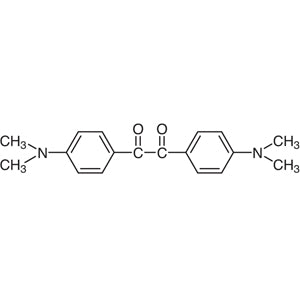
- TCI B1212 17078-27-2 4,4'-Bis(dimethylamino)benzil
- Synthesis of heterocyclic compounds for drug development due to its reactivity and structural versatility.
- Organic chemistry research in academic institutions for teaching and experimental purposes.
- Polymerization reactions where its nitrile group can participate in chain formation processes.
- Modification of molecular structures to create new functional materials with specific properties.
- Chemical synthesis of pharmaceutical intermediates requiring precise functional group manipulation.
| Brand | TCI |
|---|---|
| CAS number | 2407-68-3 |
| Molecular formula | — |
| Purity | — |
| Category | Chemistry > Building Blocks > Non-Heterocyclic Building Blocks |
| Pack sizes | Available in various quantities as per standard laboratory supply formats |
| Physical form | Liquid |
| Storage | Store in a cool, dry place away from direct sunlight and incompatible materials |
This compound should be stored in a cool, dry environment, away from direct sunlight and sources of heat. It is recommended to use sealed, airtight containers to prevent exposure to moisture and air. Due to its reactivity, it should be kept separate from strong oxidizers, acids, and bases to avoid unwanted chemical interactions. In laboratory settings, proper personal protective equipment such as gloves, goggles, and a lab coat should be worn when handling this material. It is important to ensure good ventilation in the workspace to minimize inhalation of vapors. Always follow standard safety protocols for handling reactive chemicals to ensure a safe working environment.
—
Produk Terkait
-
(E)-3-(4-Amino-3,5-dimethylphenyl)acrylonitrileHydrochloride TCI A2982
Regular price Rp 2.174.550,00Regular price -
3-Ethoxyacrylonitrile(cis-andtrans-mixture) TCI E0388
Regular price From Rp 1.510.950,00Regular price -
2-Chloroacrylonitrile(stabilizedwithHQ) TCI C0701
Regular price Rp 2.094.750,00Regular price -
4-Amino-4'-(N,N-dimethylamino)stilbene TCI A0291
Regular price From Rp 1.936.200,00Regular price -
Tris[2-(dimethylamino)ethyl]amine TCI T2898
Regular price From Rp 2.254.350,00Regular price -
4,4'-Bis(dimethylamino)benzil TCI B1212
Regular price From Rp 3.683.400,00Regular price -
1,8-Bis(dimethylamino)naphthalene[forDehydrohalogenation] TCI B1018
Regular price From Rp 928.200,00Regular price -
Bis[4-(dimethylamino)phenyl]methane TCI B0483
Regular price From Rp 743.400,00Regular price


![33527-91-2 Tris[2-(dimethylamino)ethyl]amine - AMI Scientific](http://amiscientific.com/cdn/shop/files/TCI2510T2898.jpg?v=1767143487&width=533)
![20734-58-1 1,8-Bis(dimethylamino)naphthalene [for Dehydrohalogenation] - AMI Scientific](http://amiscientific.com/cdn/shop/files/TCI2510B1018_1ed1f360-c291-4dd0-9e2f-8717aa029c6e.jpg?v=1767230873&width=533)
![101-61-1 Bis[4-(dimethylamino)phenyl]methane - AMI Scientific](http://amiscientific.com/cdn/shop/files/TCI2510B0483.jpg?v=1768359052&width=533)