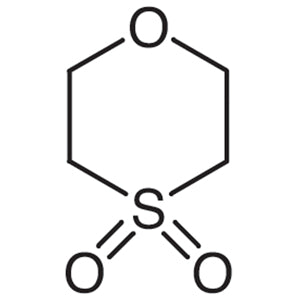
4,4-Dioxo-1,4-oxathiane is a chemical compound widely used as a building block in the synthesis of heterocyclic compounds. This versatile reagent plays a crucial role in laboratory settings, where it serves as a foundational material for creating complex molecular structures. Its unique oxathiane ring structure enables participation in various chemical reactions, including substitution, reduction, and ring-opening processes. This makes it an essential tool for chemists working on the development of new compounds with potential applications in pharmaceuticals, materials science, and organic chemistry.
The chemical properties of 4,4-Dioxo-1,4-oxathiane make it a preferred choice for researchers. Its reactivity allows for the formation of new bonds with a variety of functional groups, enhancing its utility in synthetic pathways. While it exhibits chemical stability under certain conditions, it remains highly reactive in specific chemical environments, making it ideal for targeted molecular modifications. This reactivity, combined with its structural versatility, ensures that it remains a popular reagent in the field of heterocyclic synthesis.
In Indonesian laboratories, 4,4-Dioxo-1,4-oxathiane is commonly used in organic chemistry research, particularly in the development of pharmacological compounds and advanced materials. Its ability to participate in a wide range of reactions makes it a valuable resource for researchers aiming to design and synthesize new compounds with specific functional properties. As a key building block, it supports ongoing scientific innovation in various chemical disciplines.
Related TCI products
- TCI M2049 67715-80-4 2-Methyl-4-propyl-1,3-oxathiane (cis- and trans- mixture)
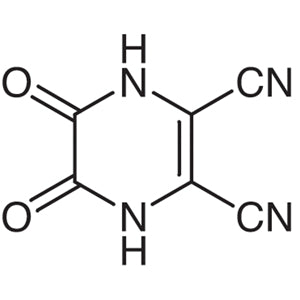
- TCI T1472 36023-64-0 1,4,5,6-Tetrahydro-5,6-dioxo-2,3-pyrazinedicarbonitrile
- TCI M2936 57409-51-5 Methyl 2,4-Dioxo-4-(2-thienyl)butyrate
- TCI I1020 23945-44-0 2,4-Dioxo-1,2,3,4-tetrahydropyrimidine-5-carboxylic Acid
- TCI T4007 223255-30-9 N,N'-[(Perfluoropropane-2,2-diyl)bis(6-hydroxy-3,1-phenylene)]bis(1,3-dioxo-1,3-dihydroisobenzofuran-5-carboxamide)
- TCI P2625 2770-49-2 1,4-Phenylene Bis(1,3-dioxo-1,3-dihydroisobenzofuran-5-carboxylate)
- Organic synthesis of heterocyclic compounds due to its reactive oxathiane ring structure and ability to form new functional groups.
- Development of pharmaceuticals through ring-opening and substitution reactions that yield bioactive molecules.
- Creation of advanced materials by enabling chemical modifications that enhance material properties.
- Research in medicinal chemistry for the design of novel drug candidates with targeted molecular structures.
- Exploration of chemical reactivity in synthetic pathways requiring precise molecular transformations.
| Brand | TCI |
|---|---|
| CAS number | 107-61-9 |
| Molecular formula | — |
| Purity | — |
| Category | Chemistry > Building Blocks > Heterocyclic Building Blocks |
| Pack sizes | Available in various quantities as per supplier specifications |
| Physical form | Solid or liquid, depending on the specific product variant |
| Storage | Store in a cool, dry place away from moisture and direct sunlight |
4,4-Dioxo-1,4-oxathiane should be stored in a cool, dry environment to maintain its chemical stability. It is recommended to keep the compound in a sealed container to prevent exposure to moisture and air, which may affect its reactivity. Due to its chemical nature, it should be handled in a well-ventilated laboratory setting, with appropriate personal protective equipment such as gloves and goggles. Avoid direct contact with skin and eyes, and ensure proper disposal procedures are followed. Regular monitoring of storage conditions is essential to ensure the compound remains suitable for use in laboratory applications.
—
Produk Terkait
-
2-Methyl-4-propyl-1,3-oxathiane(cis-andtrans-mixture) TCI M2049
Regular price Rp 2.227.050,00Regular price -
1,4,5,6-Tetrahydro-5,6-dioxo-2,3-pyrazinedicarbonitrile TCI T1472
Regular price Rp 2.704.800,00Regular price -
Methyl2,4-Dioxo-4-(2-thienyl)butyrate TCI M2936
Regular price Rp 2.386.650,00Regular price -
2,4-Dioxo-1,2,3,4-tetrahydropyrimidine-5-carboxylicAcid TCI I1020
Regular price Rp 1.193.850,00Regular price -
N,N'-[(Perfluoropropane-2,2-diyl)bis(6-hydroxy-3,1-phenylene)]bis(1,3-dioxo-1,3-dihydroisobenzofuran-5-carboxamide) TCI T4007
Regular price From Rp 1.776.600,00Regular price -
1,4-PhenyleneBis(1,3-dioxo-1,3-dihydroisobenzofuran-5-carboxylate) TCI P2625
Regular price From Rp 3.472.350,00Regular price -
1,3-Dioxo-1,3,3a,4,7,7a-hexahydro-2H-4,7-methanoisoindol-2-ylTrifluoromethanesulfonate TCI N1217
Regular price From Rp 1.458.450,00Regular price -
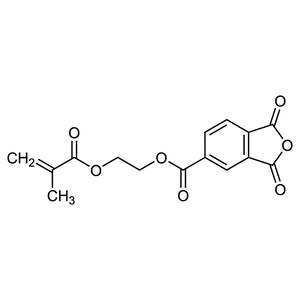
2-(Methacryloyloxy)ethyl1,3-Dioxo-1,3-dihydroisobenzofuran-5-carboxylate TCI M3377
Regular price From Rp 2.650.200,00Regular price



![223255-30-9 N,N'-[(Perfluoropropane-2,2-diyl)bis(6-hydroxy-3,1-phenylene)]bis(1,3-dioxo-1,3-dihydroisobenzofuran-5-carboxamide) - AMI Scientific](http://amiscientific.com/cdn/shop/files/TCI2510T4007.jpg?v=1767144592&width=533)