4,5-Dichlorophthalic Anhydride is a chemical compound widely used as a foundational building block in the synthesis of complex organic compounds. This material plays a crucial role in laboratory settings by enabling a variety of chemical reactions, including esterification and nucleophilic substitution. Its versatile nature makes it an essential reagent for chemists working on a wide range of synthetic pathways. In the context of research and development, it is particularly valuable for its ability to participate in multiple reaction types, offering flexibility in experimental design.
The compound's chemical properties, such as its high reactivity and stability under controlled conditions, make it a preferred choice for many laboratory applications. It exhibits a high melting point and boiling point, allowing it to be used in reactions requiring elevated temperatures. These characteristics are especially beneficial in processes that demand extreme conditions, such as vacuum reactions or those conducted in organic solvents. Additionally, its resistance to degradation ensures a longer shelf life when stored properly, contributing to its reliability in laboratory environments.
In Indonesian laboratories, 4,5-Dichlorophthalic Anhydride is commonly used in the production of pharmaceuticals, industrial chemicals, and heterocyclic compounds. Its role in creating intermediate compounds is vital for the development of new drugs and chemical products. Due to its chemical stability and reactivity, it is a staple in both academic and industrial research settings, supporting a wide array of chemical synthesis processes.
Related TCI products
- Used in pharmaceutical research for the synthesis of complex drug molecules due to its reactivity and structural versatility.
- Applied in industrial chemistry for the production of specialty chemicals and polymers because of its stability under high temperatures.
- Utilized in organic synthesis to create intermediates that are essential for the development of new compounds and materials.
- Employed in heterocyclic compound synthesis due to its ability to participate in nucleophilic and electrophilic reactions.
- Valuable in analytical chemistry for testing the reactivity of other compounds in controlled environments.
| Brand | TCI |
|---|---|
| CAS number | 942-06-3 |
| Molecular formula | — |
| Purity | — |
| Category | Chemistry > Building Blocks > Non-Heterocyclic Building Blocks |
| Pack sizes | Available in various quantities as per standard laboratory supply formats |
| Physical form | Solid |
| Storage | Should be stored in a dry, cool, and well-ventilated area away from moisture and direct sunlight |
This compound should be stored in a dry, cool, and well-ventilated area to prevent moisture exposure, which can affect its stability. It is recommended to use airtight containers made of materials such as glass or stainless steel to minimize contamination and degradation. Due to its reactivity, it should be handled with appropriate personal protective equipment, including gloves and safety goggles. Avoid contact with moisture and ensure proper ventilation during handling to prevent inhalation of vapors. Regular monitoring of storage conditions is essential to maintain its chemical integrity and ensure safe usage in laboratory settings.
—
Produk Terkait
-
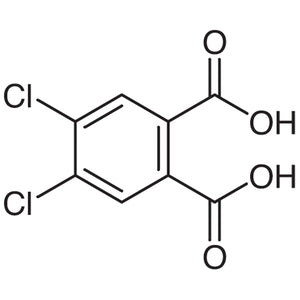
4,5-DichlorophthalicAcid TCI D2350
Regular price From Rp 1.008.000,00Regular price -
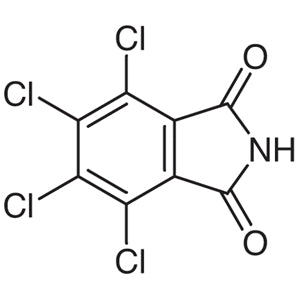
3,4,5,6-Tetrachlorophthalimide TCI T0918
Regular price Rp 1.458.450,00Regular price -
TetrachlorophthalicAcidHemihydrate TCI T0070
Regular price From Rp 1.431.150,00Regular price -
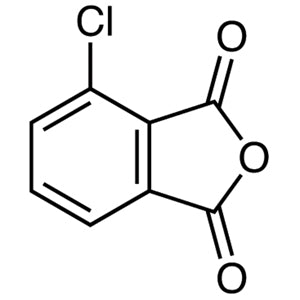
3-ChlorophthalicAnhydride TCI C3489
Regular price From Rp 1.035.300,00Regular price -
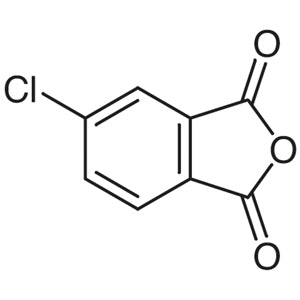
4-ChlorophthalicAnhydride TCI C1328
Regular price From Rp 2.386.650,00Regular price -
N-Chlorophthalimide TCI C0802
Regular price From Rp 769.650,00Regular price -
DipropylTetrachlorophthalate TCI T0595
Regular price Rp 2.359.350,00Regular price -
SodiumHydrogen4-Chlorophthalate(containsisomerandPhthalicAcid) TCI C0265
Regular price Rp 743.400,00Regular price