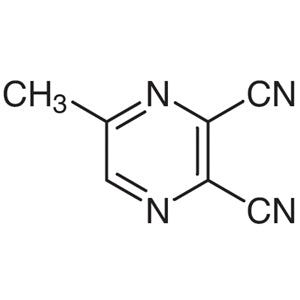
2,3-Dicyano-1,4-dihydroxy-5-nitronaphthalene is a chemical compound widely used as a foundational building block in organic synthesis. This compound plays a crucial role in laboratory settings where the creation of complex molecules is required. It is particularly valuable for its ability to participate in various chemical reactions, allowing researchers to modify its structure and develop new compounds with tailored properties. Its presence in chemical reactions is essential for the synthesis of a wide range of organic materials, making it an indispensable tool for chemists working in both academic and industrial environments.
The compound’s unique molecular structure, featuring multiple functional groups such as nitro, cyano, and hydroxyl, contributes to its high reactivity. These functional groups enable it to engage in substitution and redox reactions, which are fundamental in the synthesis of more complex organic molecules. The presence of aromatic rings further enhances its chemical versatility, allowing it to be modified through various reaction mechanisms. Its reactivity and structural complexity make it a preferred choice for researchers aiming to develop new compounds or improve existing ones.
In Indonesian laboratories, this compound is commonly used in organic chemistry research, particularly in academic institutions and research centers. Its role in the synthesis of complex molecules, pharmaceuticals, and material modifications makes it a key component in many research projects. Due to its reactivity and structural adaptability, it is frequently utilized in studies related to drug development, material science, and chemical innovation. Its widespread application in these fields underscores its importance in the chemical research landscape of Indonesia.
Related TCI products
- Organic synthesis projects benefit from this compound due to its multiple functional groups, enabling diverse chemical transformations and the creation of complex molecules.
- Pharmaceutical research utilizes this compound as a building block for the development of new drugs, leveraging its reactivity and structural versatility.
- Material modification studies employ this compound to alter the properties of existing materials, enhancing their performance in various applications.
- Analytical chemistry experiments use this compound as a standard reference material for testing reaction mechanisms and spectroscopic properties.
- Environmental chemistry research incorporates this compound to study the behavior of reactive compounds in different chemical environments and their potential impact on ecosystems.
| Brand | TCI |
|---|---|
| CAS number | 4655-62-3 |
| Molecular formula | — |
| Purity | — |
| Category | Chemistry > Building Blocks > Non-Heterocyclic Building Blocks |
| Pack sizes | Available in various quantities as per standard laboratory supply practices |
| Physical form | Solid |
| Storage | Store in a cool, dry, and well-ventilated area away from direct sunlight |
This compound should be stored in a cool, dry, and well-ventilated area to maintain its chemical stability. It is recommended to use airtight containers made of materials that are chemically inert, such as glass or high-density polyethylene, to prevent contamination and degradation. Due to its reactivity, it should be handled with care, using appropriate personal protective equipment like gloves and safety goggles. Avoid exposure to heat, moisture, and incompatible substances. In laboratory settings, it is important to ensure proper ventilation to minimize the risk of inhalation of any vapors. Always follow standard safety protocols when working with reactive chemicals to ensure a safe and controlled environment.
—
Produk Terkait
-
2,3-Dicyano-6-nitronaphthalene TCI D2027
Regular price Rp 12.244.050,00Regular price -
1-Chloro-4-nitronaphthalene TCI C1566
Regular price Rp 9.804.900,00Regular price -
2-Nitronaphthalen-1-ol TCI N1197
Regular price From Rp 1.353.450,00Regular price -
3,4-Dihydroxy-5-nitrobenzaldehyde TCI D3645
Regular price Rp 2.862.300,00Regular price -
1,2-Naphthalenedicarbonitrile TCI N0578
Regular price From Rp 4.161.150,00Regular price -
2-Amino-4,5-dicyano-1H-imidazole TCI A1292
Regular price Rp 3.870.300,00Regular price -
2,3-Dicyano-5-methylpyrazine TCI D2281
Regular price From Rp 4.293.450,00Regular price -
3,4-Dihydronaphthalen-1(2H)-oneOxime TCI D6120
Regular price From Rp 1.458.450,00Regular price