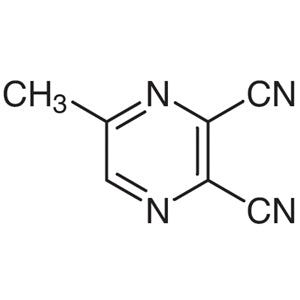
2,3-Dicyano-6-nitronaphthalene is a chemical compound widely used in organic reactions for the synthesis of complex molecules. As a building block, it serves as a foundational material in the development of more intricate chemical structures. This compound is commonly found in laboratory settings where researchers require a stable yet reactive starting material for various synthetic processes. Its unique chemical properties make it an essential component in the toolkit of chemists working on advanced organic synthesis.
The compound’s aromatic structure, combined with the presence of nitro and dinitro groups, contributes to its high reactivity under controlled chemical conditions. These functional groups allow for versatile chemical transformations, making it suitable for a range of synthetic applications. Its stability and reactivity are carefully balanced, enabling chemists to achieve precise control over reaction outcomes. This combination of properties makes it a preferred choice for those seeking reliable and effective reagents in complex synthetic pathways.
In Indonesian laboratories, 2,3-Dicyano-6-nitronaphthalene is frequently used in organic chemistry research, particularly by academic institutions and research organizations. Its availability in the local market supports ongoing scientific investigations and facilitates the development of new materials and compounds. Its role in both educational and industrial research contexts highlights its importance in the chemical sciences within Indonesia.
Related TCI products
- TCI D2434 4655-62-3 2,3-Dicyano-1,4-dihydroxy-5-nitronaphthalene
- TCI C1566 605-61-8 1-Chloro-4-nitronaphthalene
- TCI N1197 607-24-9 2-Nitronaphthalen-1-ol
- TCI N0578 19291-76-0 1,2-Naphthalenedicarbonitrile
- TCI A1292 40953-34-2 2-Amino-4,5-dicyano-1H-imidazole
- TCI D2281 52197-12-3 2,3-Dicyano-5-methylpyrazine
- Synthesis of aromatic compounds: This compound is ideal for creating complex aromatic structures due to its stable and reactive nature.
- Organic reaction intermediates: Its reactivity allows it to participate in substitution reactions and other organic transformations.
- Material science research: The compound’s unique chemical properties make it useful in the development of new materials with specific functional characteristics.
- Educational research: It is commonly used in academic settings to teach and demonstrate advanced organic synthesis techniques.
- Industrial chemical development: Its versatility supports the creation of compounds with applications in various industrial sectors.
| Brand | TCI |
|---|---|
| CAS number | 184026-06-0 |
| Molecular formula | — |
| Purity | — |
| Category | Chemistry > Building Blocks > Non-Heterocyclic Building Blocks |
| Pack sizes | — |
| Physical form | — |
| Storage | Store in a cool, dry place away from light and incompatible materials. |
This compound should be stored in a cool, dry environment, away from direct sunlight and sources of heat. It is recommended to use airtight containers made of materials that are chemically inert to prevent any unwanted reactions. Due to its reactivity, it should be kept separate from strong oxidizing agents and reducing agents to avoid potential hazards. Proper labeling of containers is essential for safety and identification. Laboratory personnel should always wear appropriate personal protective equipment, such as gloves and safety goggles, when handling this material. Regular inspection of storage conditions ensures the compound remains in optimal condition for use in experiments.
—
Produk Terkait
-
2,3-Dicyano-1,4-dihydroxy-5-nitronaphthalene TCI D2434
Regular price Rp 12.428.850,00Regular price -
1-Chloro-4-nitronaphthalene TCI C1566
Regular price Rp 9.804.900,00Regular price -
2-Nitronaphthalen-1-ol TCI N1197
Regular price From Rp 1.353.450,00Regular price -
1,2-Naphthalenedicarbonitrile TCI N0578
Regular price From Rp 4.161.150,00Regular price -
2-Amino-4,5-dicyano-1H-imidazole TCI A1292
Regular price Rp 3.870.300,00Regular price -
2,3-Dicyano-5-methylpyrazine TCI D2281
Regular price From Rp 4.293.450,00Regular price -
3,4-Dihydronaphthalen-1(2H)-oneOxime TCI D6120
Regular price From Rp 1.458.450,00Regular price -
cis-1,2-Dicyano-1,2-bis(2,4,5-trimethyl-3-thienyl)ethene TCI B1536
Regular price Rp 6.970.950,00Regular price