N,N’-Dimethylquinacridone is an organic compound widely used in optoelectronic material research, particularly in the development of materials for OLED (Organic Light-Emitting Diode) devices. This compound plays a crucial role in laboratory settings where the creation of efficient and durable light-emitting layers is essential. It is commonly employed as an active material in the fabrication of emissive layers, which are fundamental components of OLED technology. Its presence in the lab supports the advancement of display technologies and lighting solutions that rely on organic materials.
The compound is favored for its strong fluorescence properties and excellent chemical stability. These characteristics ensure that it maintains its performance over extended periods, making it ideal for applications requiring consistent light emission. Its molecular structure allows for effective interaction with various supporting materials, enabling the formulation of organic material blends that balance conductivity and light emission. This versatility makes it a preferred choice for researchers aiming to optimize the performance of OLED devices.
In Indonesian laboratories, N,N’-Dimethylquinacridone is utilized in OLED device research, the development of new display materials, and the study of optical and electronic properties of organic materials. It is a key component in the exploration of advanced lighting and display technologies, contributing to the growth of scientific innovation in the region.
Related TCI products
- TCI D3227 19205-19-7 N,N'-Dimethylquinacridone (purified by sublimation)
- TCI D4780 99762-80-8 N,N'-Dibutylquinacridone
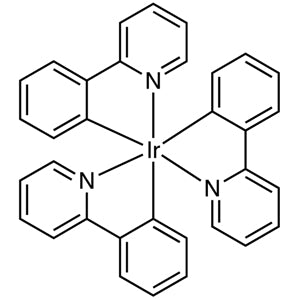
- TCI T3716 94928-86-6 Tris(2-phenylpyridinato)iridium(III)
- TCI T3657 145898-89-1 N,N,N',N'-Tetraphenyl[1,1':4',1'':4'',1'''-quaterphenyl]-4,4'''-diamine
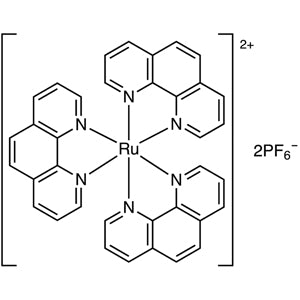
- TCI T3208 60804-75-3 Tris(1,10-phenanthroline)ruthenium(II) Bis(hexafluorophosphate)
- TCI T3206 17568-09-1 Tris(acetylacetonato)(1,10-phenanthroline)europium(III)
- OLED Device Development: This compound is used to create emissive layers in OLEDs due to its strong fluorescence and stability, ensuring efficient light emission.
- Organic Material Formulation: Its molecular structure allows it to interact effectively with supporting materials, enabling the development of balanced organic material blends.
- Display Technology Research: It supports the creation of new display materials by providing a reliable light-emitting component for experimental prototypes.
- Optical Property Studies: Researchers use it to investigate the optical behavior of organic materials, aiding in the design of more efficient lighting solutions.
- Electronic Material Innovation: Its stability and performance make it suitable for exploring new applications in electronic materials beyond traditional OLEDs.
| Brand | TCI |
|---|---|
| CAS number | 19205-19-7 |
| Molecular formula | — |
| Purity | — |
| Category | Materials Science > Electronic Materials > Organic Light-Emitting Diode (OLED) Materials |
| Pack sizes | Available in various quantities as per standard laboratory supply |
| Physical form | Solid powder |
| Storage | Store in a cool, dry place away from direct light and moisture |
N,N’-Dimethylquinacridone should be stored in a cool, dry environment, away from direct sunlight and moisture to maintain its chemical stability. It is recommended to keep the compound in a sealed container to prevent exposure to air and humidity. Due to its organic nature, it should be handled in a well-ventilated area, and appropriate personal protective equipment such as gloves and safety goggles should be worn. Avoid contact with skin and eyes, and ensure that spillage is cleaned up promptly. The compound is generally stable under normal laboratory conditions but should be kept in a secure location to prevent accidental exposure. Proper storage ensures the material retains its properties and remains safe for use in research applications.
—
Produk Terkait
-
N,N'-Dimethylquinacridone(purifiedbysublimation) TCI D3227
Regular price Rp 4.584.300,00Regular price -
N,N'-Dibutylquinacridone TCI D4780
Regular price From Rp 2.597.700,00Regular price -
Tris(2-phenylpyridinato)iridium(III) TCI T3716
Regular price From Rp 5.062.050,00Regular price -
N,N,N',N'-Tetraphenyl[1,1':4',1'':4'',1'''-quaterphenyl]-4,4'''-diamine TCI T3657
Regular price From Rp 1.856.400,00Regular price -
Tris(1,10-phenanthroline)ruthenium(II)Bis(hexafluorophosphate) TCI T3208
Regular price From Rp 1.829.100,00Regular price -
Tris(acetylacetonato)(1,10-phenanthroline)europium(III) TCI T3206
Regular price Rp 5.221.650,00Regular price -
2,5,8,11-Tetra-tert-butylperylene TCI T3053
Regular price Rp 3.683.400,00Regular price -
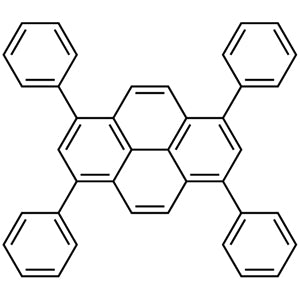
1,3,6,8-Tetraphenylpyrene TCI T3042
Regular price From Rp 2.837.100,00Regular price


![145898-89-1 N,N,N',N'-Tetraphenyl[1,1':4',1'':4'',1'''-quaterphenyl]-4,4'''-diamine - AMI Scientific](http://amiscientific.com/cdn/shop/files/TCI2510T3657.jpg?v=1769181355&width=533)