3,4-Dimethoxybenzonitrile is a chemical compound widely used as a building block in the synthesis of complex organic molecules. It serves as a key intermediate in various chemical reactions, particularly in the development of heterocyclic and aromatic compounds. This compound is essential in laboratory settings where researchers aim to create new materials, pharmaceuticals, or functional chemicals. Its structural simplicity and reactivity make it a versatile tool for synthetic chemists.
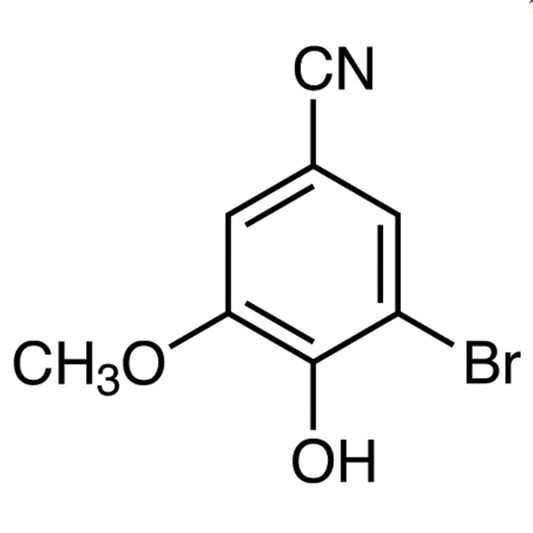
The compound's chemical properties, including its stability under controlled conditions and reactivity with various reagents, make it a preferred choice for synthetic applications. It can participate in substitution, reduction, and electrophilic reactions, offering flexibility in reaction pathways. Its molecular structure, featuring a benzene ring with two methoxy groups and a nitrile group, provides a stable yet reactive platform for further modifications. These characteristics make it a valuable resource in organic chemistry research.
In Indonesian laboratories, 3,4-Dimethoxybenzonitrile is commonly used in organic chemistry research, especially in pharmaceutical and material science fields. It is a key component in the development of new drugs and advanced materials. Its availability and reliability make it a standard reagent in both academic and industrial research environments. Researchers rely on its consistent performance to achieve desired chemical outcomes in their experiments.
Related TCI products
- Organic synthesis of heterocyclic compounds due to its reactive nitrile group and methoxy substituents.
- Development of pharmaceutical intermediates as a versatile building block for drug molecule construction.
- Preparation of aromatic derivatives through substitution and electrophilic reactions in synthetic pathways.
- Research in material science for creating functional polymers and advanced chemical materials.
- Use in analytical chemistry for standardization and as a reference compound in reaction studies.
| Brand | TCI |
|---|---|
| CAS number | 2024-83-1 |
| Molecular formula | — |
| Purity | — |
| Category | Chemistry > Building Blocks > Non-Heterocyclic Building Blocks |
| Pack sizes | Available in standard laboratory quantities as per supplier specifications |
| Physical form | Solid or liquid, depending on supplier packaging |
| Storage | Store in a cool, dry place away from moisture and direct sunlight |
3,4-Dimethoxybenzonitrile should be stored in a cool, dry environment to maintain its chemical stability. It is recommended to keep it in a tightly sealed container to prevent exposure to moisture and air. Due to its potential reactivity with strong acids and alkalis, it should be handled with care and stored separately from incompatible substances. Laboratory personnel should wear appropriate personal protective equipment when handling this compound. Proper ventilation is essential to minimize inhalation risks. Regular inspection of storage conditions ensures the compound remains safe and effective for use in chemical experiments.
—
Produk Terkait
-
2-Amino-4,5-dimethoxybenzonitrile TCI A3750
Regular price Rp 2.359.350,00Regular price -
2,4-Dimethoxybenzonitrile TCI D4854
Regular price From Rp 1.298.850,00Regular price -
2,3-Dimethoxybenzonitrile TCI D4853
Regular price From Rp 1.378.650,00Regular price -
2,5-Dimethoxybenzonitrile TCI D3659
Regular price From Rp 530.250,00Regular price -
2,3,4-Trimethoxybenzonitrile TCI T3285
Regular price From Rp 1.458.450,00Regular price -
3,4,5-Trimethoxybenzonitrile TCI T3244
Regular price From Rp 1.485.750,00Regular price -
3-Bromo-2-hydroxybenzonitrile TCI B5273
Regular price From Rp 1.220.100,00Regular price -
3-Bromo-4-hydroxy-5-methoxybenzonitrile TCI B4757
Regular price From Rp 689.850,00Regular price