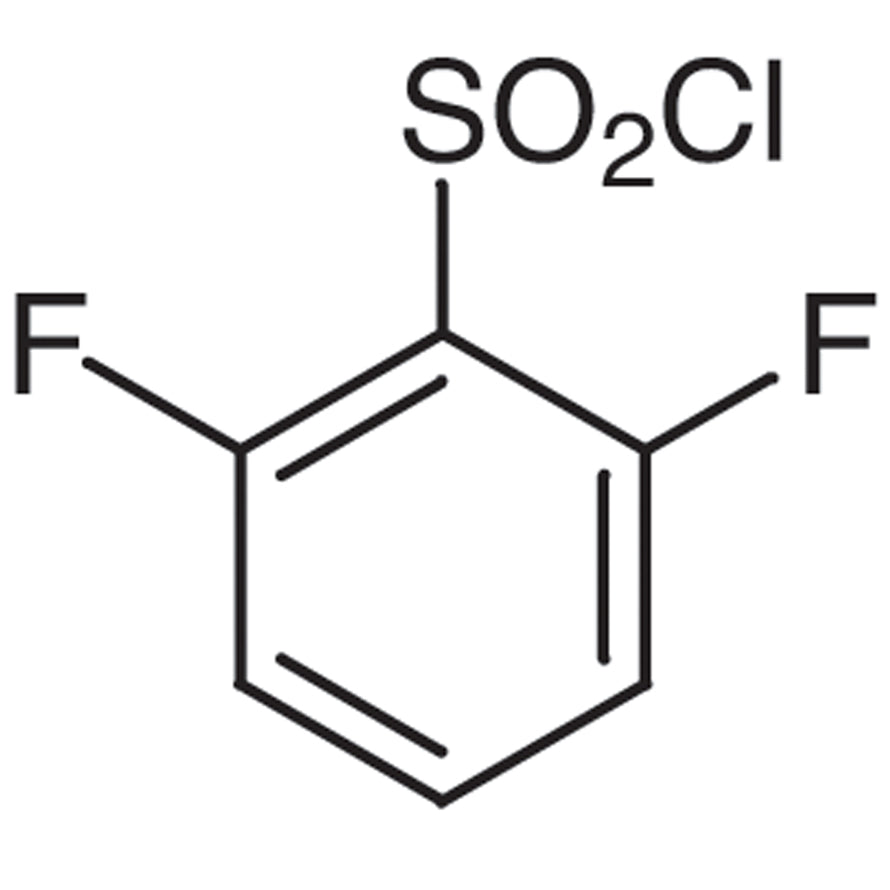
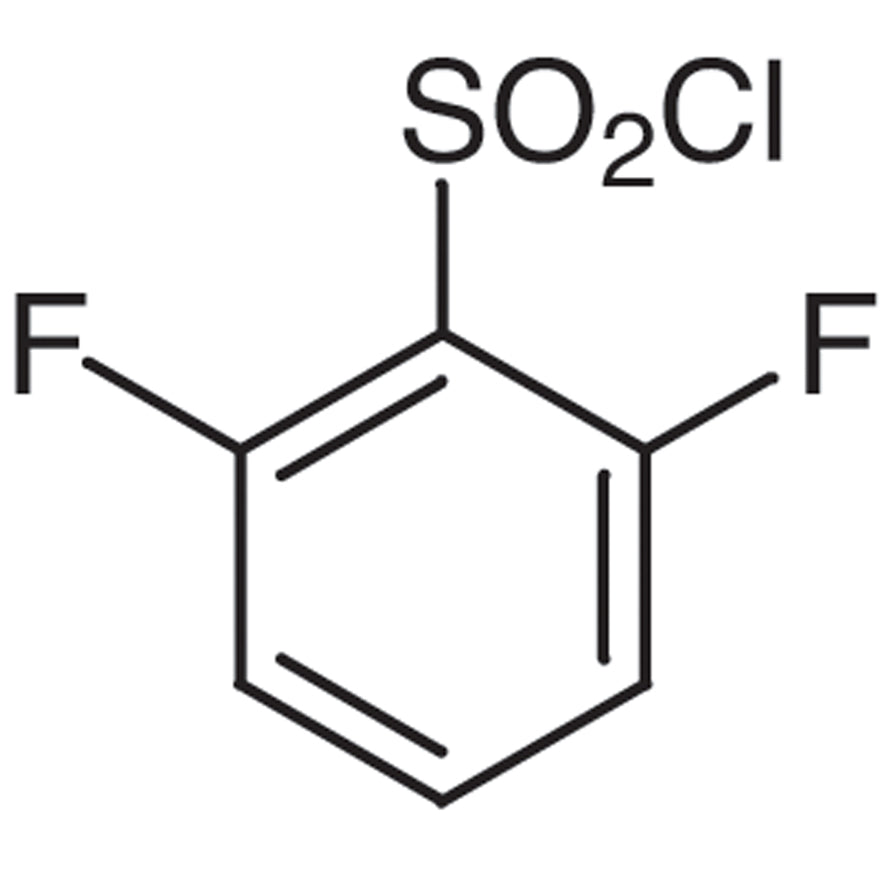
2,6-Difluorobenzenesulfonyl Chloride is a chemical compound widely used as a building block in the synthesis of complex organic molecules. It is a key reagent in various organic reactions due to its unique molecular structure, which includes a sulfonate chloride group attached to a benzene ring with two fluorine atoms. This compound plays a vital role in modern laboratory settings, particularly in research involving functional group transformations and molecular modifications. Its versatility makes it an essential tool for chemists working on drug development and material science projects.
The compound is valued for its high reactivity and ability to form stable bonds with a wide range of functional groups. These properties make it an ideal choice for reactions requiring both stability and reactivity. Its chemical stability under controlled conditions further enhances its usability in laboratory environments. The combination of these characteristics allows researchers to achieve precise and efficient chemical transformations, contributing to the success of numerous scientific investigations.
In Indonesian laboratories, 2,6-Difluorobenzenesulfonyl Chloride is commonly used in organic chemistry and pharmacology research. Scientists rely on this compound to develop new compounds with potential medical or industrial applications. Its role in synthesizing bioactive molecules and functional materials underscores its importance in both academic and applied research settings across the country.
TCI brochures (PDF)
- Fluorination Reagents, Fluorinated Building Blocks 2026-03-18 · p. 30
Related TCI products
- TCI D2941 145758-05-0 3,4-Difluorobenzenesulfonyl Chloride
- TCI D2939 13918-92-8 2,4-Difluorobenzenesulfonyl Chloride
- TCI T3128 220227-21-4 2,4,5-Trifluorobenzenesulfonyl Chloride
- TCI B3835 351003-51-5 4-Bromo-3-fluorobenzenesulfonyl Chloride
- TCI B3698 216159-03-4 4-Bromo-2-fluorobenzenesulfonyl Chloride
- TCI B2291 405074-81-9 1-[Bis(trifluoromethanesulfonyl)methyl]-2,3,4,5,6-pentafluorobenzene
- Organic synthesis reactions benefit from this compound's reactivity and ability to form sulfonamide bonds, making it ideal for coupling reactions.
- Drug development projects utilize its structural versatility to create novel pharmaceutical compounds with targeted biological activities.
- Functional group modification experiments leverage its sulfonate chloride group for precise molecular alterations and substitutions.
- Material science research employs it to synthesize advanced polymers and coatings with enhanced chemical resistance.
- Analytical chemistry applications use it as a reagent for derivatization and spectroscopic analysis of complex organic compounds.
| Brand | TCI |
|---|---|
| CAS number | 60230-36-6 |
| Molecular formula | — |
| Purity | — |
| Category | Chemistry > Building Blocks > Fluorinated Building Blocks |
| Pack sizes | Available in various quantities as per standard laboratory supply |
| Physical form | Solid, crystalline |
| Storage | Store in a cool, dry place away from moisture and light |
This compound should be stored in a cool, dry environment, away from moisture and direct light to maintain its chemical stability. It is recommended to use airtight containers made of materials such as glass or high-density polyethylene to prevent contamination and degradation. Due to its reactivity, it should be handled with appropriate personal protective equipment, including gloves and safety goggles. In laboratory settings, it is important to ensure proper ventilation and avoid exposure to incompatible substances. Careful handling and controlled storage conditions are essential to preserve its effectiveness and ensure safe usage in research applications.
—
Produk Terkait
-
3,4-DifluorobenzenesulfonylChloride TCI D2941
Regular price From Rp 980.700,00Regular price -
2,4-DifluorobenzenesulfonylChloride TCI D2939
Regular price From Rp 1.298.850,00Regular price -
2,4,5-TrifluorobenzenesulfonylChloride TCI T3128
Regular price From Rp 1.538.250,00Regular price -
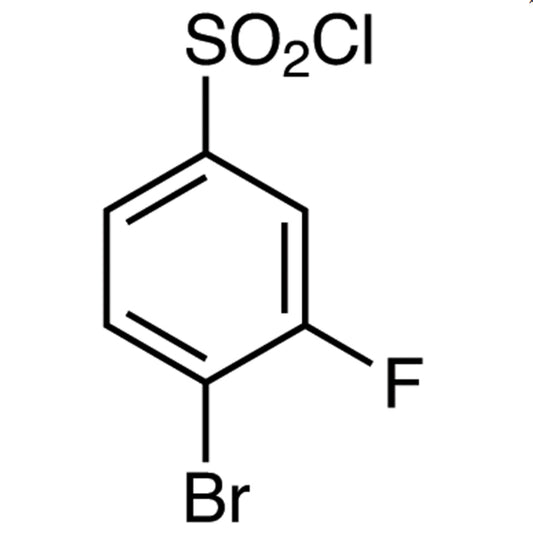
4-Bromo-3-fluorobenzenesulfonylChloride TCI B3835
Regular price From Rp 2.016.000,00Regular price -
4-Bromo-2-fluorobenzenesulfonylChloride TCI B3698
Regular price From Rp 823.200,00Regular price -
1-[Bis(trifluoromethanesulfonyl)methyl]-2,3,4,5,6-pentafluorobenzene TCI B2291
Regular price From Rp 3.763.200,00Regular price -
PentafluorobenzenesulfonylChloride TCI P0934
Regular price From Rp 1.856.400,00Regular price -
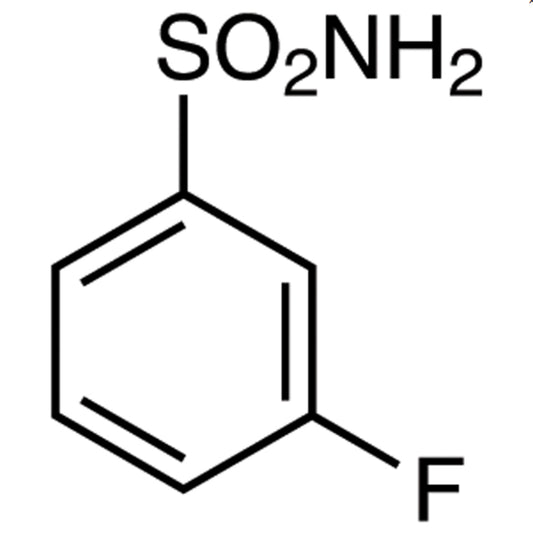
3-Fluorobenzenesulfonamide TCI F1141
Regular price From Rp 637.350,00Regular price



![405074-81-9 1-[Bis(trifluoromethanesulfonyl)methyl]-2,3,4,5,6-pentafluorobenzene - AMI Scientific](http://amiscientific.com/cdn/shop/files/TCI2510B2291_1d491266-8d39-418c-8071-bf7f7c3bd951.jpg?v=1767336434&width=533)