


2-(3,4-Dimethoxystyryl)-4,6-bis(trichloromethyl)-1,3,5-triazine is a chemical compound widely used in laboratory settings, particularly in materials science and polymer research. It serves as a key reagent in polymerization processes, enabling the synthesis of complex molecular structures with high reactivity. This compound is essential for creating functional materials with specific chemical properties, making it a valuable tool for advanced chemical synthesis. Its unique molecular structure allows for targeted chemical reactions, supporting a wide range of applications in both academic and industrial research.
The compound’s high reactivity and structural complexity make it a preferred choice in chemical synthesis. The presence of trichloromethyl groups at positions 4 and 6 of the triazine ring, along with the dimethoxystyryl group at position 2, contributes to its versatility in chemical reactions. These functional groups enable the compound to participate in various reaction mechanisms, such as electrophilic substitution and conjugated addition, which are critical in the development of new materials and pharmaceutical compounds. Its chemical stability and reactivity also make it suitable for use in controlled synthetic environments.
In Indonesian laboratories, this compound is commonly used in research focused on polymer science and material innovation. It is a key component in the development of advanced materials with specialized properties, such as conductivity, optical activity, or biocompatibility. Researchers in Indonesia rely on this compound for its ability to facilitate the synthesis of complex molecules, supporting both fundamental and applied research in chemistry and related fields.
- Polymer synthesis and functional material development due to its high reactivity and structural versatility.
- Organic synthesis of pharmaceutical compounds for drug development and bioactive molecule creation.
- Research in advanced materials for applications in electronics, optoelectronics, and nanotechnology.
- Development of specialty polymers with tailored chemical and physical properties.
- Investigation of chemical reactivity and reaction mechanisms in synthetic chemistry studies.
| Brand | TCI |
|---|---|
| CAS number | 42880-07-9 |
| Molecular formula | — |
| Purity | — |
| Category | Materials Science > Polymer/Macromolecule Reagents > Polymerization Reagents |
| Pack sizes | Available in various quantities as per standard laboratory reagent packaging |
| Physical form | Solid, typically in crystalline or powder form |
| Storage | Store in a cool, dry place away from light and moisture |
This compound should be stored in a cool, dry place, away from direct light and moisture to maintain its chemical stability. It is recommended to use airtight containers made of materials such as glass or polyethylene to prevent contamination and degradation. Due to its reactivity, it should be handled with appropriate personal protective equipment, including gloves and safety goggles. It is important to ensure good ventilation in the laboratory when working with this compound to minimize exposure. Always follow standard laboratory safety protocols when handling reactive chemicals to ensure a safe working environment.
—
Produk Terkait
-
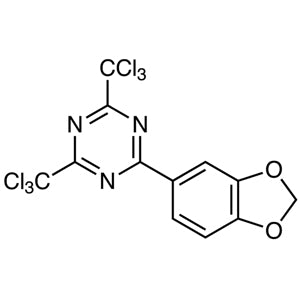
2-(1,3-Benzodioxol-5-yl)-4,6-bis(trichloromethyl)-1,3,5-triazine TCI B3633
Regular price From Rp 1.326.150,00Regular price -
2-(4-Methoxystyryl)-4,6-bis(trichloromethyl)-1,3,5-triazine TCI M2140
Regular price From Rp 1.458.450,00Regular price -
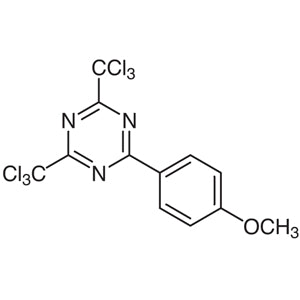
2-(4-Methoxyphenyl)-4,6-bis(trichloromethyl)-1,3,5-triazine TCI M1245
Regular price From Rp 1.538.250,00Regular price -
2-[2-(5-Methylfuran-2-yl)vinyl]-4,6-bis(trichloromethyl)-1,3,5-triazine TCI M1209
Regular price Rp 1.829.100,00Regular price -
2-[2-(Furan-2-yl)vinyl]-4,6-bis(trichloromethyl)-1,3,5-triazine TCI F0362
Regular price Rp 1.220.100,00Regular price -
3'-Hydroxyacetophenone TCI A0104
Regular price From Rp 1.060.500,00Regular price -
Anthraquinone TCI A0502
Regular price From Rp 477.750,00Regular price -
SodiumAnthraquinone-2-sulfonateMonohydrate TCI A0508
Regular price From Rp 769.650,00Regular price

![156360-76-8 2-[2-(5-Methylfuran-2-yl)vinyl]-4,6-bis(trichloromethyl)-1,3,5-triazine - AMI Scientific](http://amiscientific.com/cdn/shop/files/TCI2510M1209.jpg?v=1767124540&width=533)
![2-[2-(Furan-2-yl)vinyl]-4,6-bis(trichloromethyl)-1,3,5-triazine (CAS 154880-05-4) - TCI F0362 - AMI Scientific](http://amiscientific.com/cdn/shop/files/TCI2510F0362.jpg?v=1767113611&width=533)


