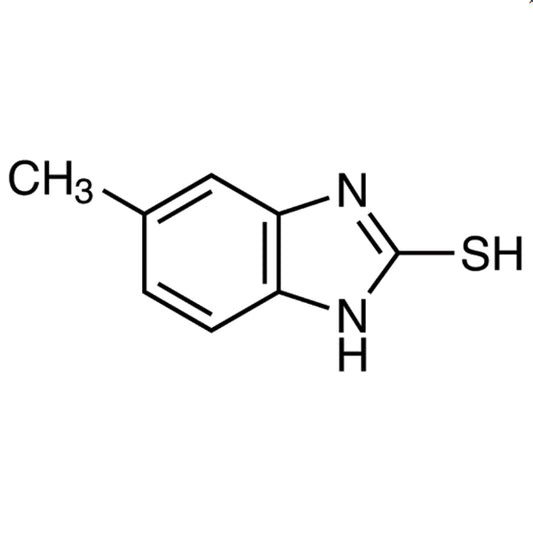
1,2-Dimethylbenzimidazole is a chemical compound widely used in laboratory settings for the synthesis of heterocyclic compounds. As a key building block in organic chemistry, it plays a crucial role in the development of pharmaceuticals, agrochemicals, and industrial chemicals. Its unique molecular structure allows it to participate in various chemical reactions, making it a versatile reagent in both academic and industrial research. This compound is commonly found in chemical and pharmaceutical laboratories, where it serves as a foundation for the creation of more complex molecules.
The compound's stability and reactivity make it a preferred choice for chemists seeking to design and synthesize new compounds. Its ability to undergo nucleophilic, electrophilic, and substitution reactions enables researchers to tailor its properties for specific applications. The presence of methyl groups on the benzimidazole ring enhances its chemical versatility, allowing for modifications that can lead to compounds with targeted biological or functional properties. These characteristics make it a valuable tool in the field of medicinal chemistry and materials science.
In Indonesian laboratories, 1,2-Dimethylbenzimidazole is extensively used in organic chemistry research, drug synthesis, and the development of industrial chemicals. It is a key component in the production of pharmaceuticals and is often utilized in the formulation of preservatives and other chemical products. Its role in the synthesis of heterocyclic compounds makes it an essential material for researchers working on new drug discovery and chemical innovation.
- Organic synthesis applications benefit from 1,2-Dimethylbenzimidazole due to its ability to participate in various reaction mechanisms, making it ideal for the creation of complex heterocyclic structures.
- Pharmaceutical research utilizes this compound as a building block for the development of new drugs, as its reactivity allows for the modification of functional groups to achieve desired biological activities.
- Industrial chemical production relies on this compound for the synthesis of preservatives and other specialty chemicals, where its stability and reactivity are essential for efficient manufacturing processes.
- Academic research in chemistry often incorporates this compound to explore new reaction pathways and to study the behavior of heterocyclic compounds in different environments.
- Drug discovery projects use 1,2-Dimethylbenzimidazole as a starting material for the synthesis of bioactive molecules, leveraging its structural versatility to design compounds with targeted therapeutic properties.
| Brand | TCI |
|---|---|
| CAS number | 2876-08-6 |
| Molecular formula | — |
| Purity | — |
| Category | Chemistry > Building Blocks > Heterocyclic Building Blocks |
| Pack sizes | Available in various quantities as per supplier specifications |
| Physical form | Solid |
| Storage | Store in a cool, dry place away from light and moisture |
This compound should be stored in a cool, dry environment, away from direct light and moisture to maintain its chemical integrity. It is recommended to use airtight containers to prevent exposure to air and humidity, which can affect its stability. In laboratory settings, it should be handled with appropriate personal protective equipment, such as gloves and safety goggles, to ensure safety during use. Due to its reactivity, it should be stored separately from strong oxidizing agents and incompatible substances. Proper labeling of storage containers is essential for safe handling and to prevent accidental exposure. Regular inspection of storage conditions is advised to ensure optimal preservation of the compound's properties.
—
Produk Terkait
-
5,6-Dimethylbenzimidazole TCI D1345
Regular price Rp 1.008.000,00Regular price -
1-Methylbenzimidazole TCI M2173
Regular price From Rp 1.326.150,00Regular price -
2-Mercapto-5-methylbenzimidazole TCI M1357
Regular price From Rp 1.246.350,00Regular price -
5-Methylbenzimidazole TCI M1321
Regular price Rp 1.936.200,00Regular price -
2-Methylbenzimidazole TCI M0286
Regular price Rp 1.298.850,00Regular price -
2-BenzylbenzimidazoleHydrochloride TCI B4341
Regular price From Rp 1.988.700,00Regular price -
2-Phenylbenzimidazole TCI P1105
Regular price Rp 848.400,00Regular price -
2-Nonylbenzimidazole TCI N0671
Regular price Rp 1.670.550,00Regular price