

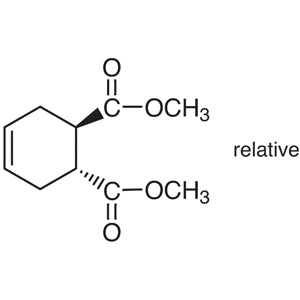
TCI D3692 Dimethyl trans-4-Cyclohexene-1,2-dicarboxylate is a cyclic building block that combines two adjacent methyl ester groups in a trans configuration together with one double bond inside the cyclohexene ring. Having three centres of reactivity within a single compact molecule makes this compound highly useful as a starting material for multi-step synthesis in the organic chemistry laboratory. Compounds of this type are the characteristic products of Diels-Alder cycloaddition reactions, so they are frequently used to introduce a cyclohexene framework with controlled stereochemistry into synthetic routes towards more complex target molecules.
The property that makes it a preferred choice is the breadth of transformations it offers. The double bond within the ring can be hydrogenated to a saturated cyclohexane, oxidised to a diol or an epoxide, cleaved to a dicarbonyl compound, or exploited in metathesis and polymerisation reactions. Both ester groups can be hydrolysed, reduced, or converted to amides, and the trans-1,2 relationship between them allows selective opening of a single group to give a chiral monoester. Its liquid form at room temperature makes volumetric measurement straightforward, while its well-defined stereochemistry supports reproducible synthetic work.
In Indonesian laboratories, this building block is typically used in university and institutional organic synthesis groups, in research on fine chemicals and functional materials, and in method development work where a cyclohexene scaffold with defined stereochemistry is required. Because it is supplied as a liquid, it is convenient for laboratories that measure reagents by volume for small-scale reactions, and its multiple reactive sites let a single container serve several different research routes.
Related TCI products
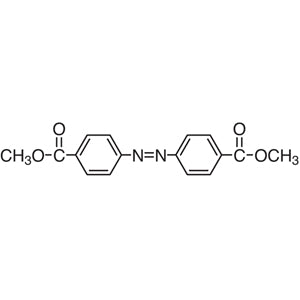
- TCI A1581 5320-91-2 Dimethyl Azobenzene-4,4'-dicarboxylate
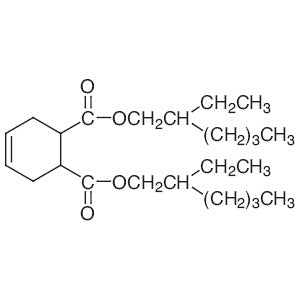
- TCI T0605 2915-49-3 Bis(2-ethylhexyl) 4-Cyclohexene-1,2-dicarboxylate
- TCI D6351 115913-32-1 Dimethyl Bicyclo[1.1.1]pentane-1,3-dicarboxylate
- TCI D5743 68039-49-6 2,4-Dimethyl-3-cyclohexene-1-carboxaldehyde (mixture of isomers)
- TCI D5576 21544-03-6 Diglycidyl 4-Cyclohexene-1,2-dicarboxylate
- TCI D5542 29412-62-2 Dimethyl Cubane-1,4-dicarboxylate
- Diels-Alder route development: the compound represents the typical cycloaddition product, so it lets researchers begin a synthesis directly from a ready-made cyclohexene adduct without performing the cycloaddition step.
- Selective ester chemistry: the trans-1,2 diester arrangement allows controlled hydrolysis, reduction, or amidation of one group, giving access to chiral monoesters for asymmetric synthesis studies.
- Ring functionalisation studies: the internal double bond can be hydrogenated, epoxidised, or dihydroxylated, making the material suitable for teaching and researching alkene transformation methodology on a defined substrate.
- Oxidative cleavage work: the ring alkene can be cleaved to dicarbonyl products, so the compound serves as a convenient precursor for preparing open-chain polyfunctional intermediates in the laboratory.
- Metathesis and polymerisation research: the reactive cyclohexene double bond makes this diester a useful monomer or model substrate when developing olefin metathesis and ring-based polymerisation chemistry.
| Brand | TCI |
|---|---|
| CAS number | 17673-68-6 |
| Molecular formula | — |
| Purity | — |
| Category | Chemistry > Building Blocks > Non-Heterocyclic Building Blocks |
| Pack sizes | available in standard TCI research-scale packaging; please confirm the sizes currently offered when ordering |
| Physical form | liquid at room temperature |
| Storage | keep in the tightly closed original container in a cool, dry, well-ventilated place |
- Chemical name: Dimethyl trans-4-Cyclohexene-1,2-dicarboxylate
Store the product in its tightly closed original container in a cool, dry, and well-ventilated area, away from heat, direct sunlight, and oxidising agents. Because the material is a liquid, use chemically compatible glass or amber glass containers with secure caps, and keep the container upright with secondary containment to limit the effect of any spill. Handle the compound inside a fume hood, wearing safety glasses, gloves, and a laboratory coat, and dispense it with clean, dry glassware to avoid contamination. Close the container immediately after use, label any secondary containers clearly, and collect residues and rinsings as organic chemical waste in accordance with your institutional procedures. Always consult the manufacturer's safety data sheet before first use.
—
Produk Terkait
-
DimethylAzobenzene-4,4'-dicarboxylate TCI A1581
Regular price From Rp 2.571.450,00Regular price -
Bis(2-ethylhexyl)4-Cyclohexene-1,2-dicarboxylate TCI T0605
Regular price From Rp 477.750,00Regular price -
DimethylBicyclo[1.1.1]pentane-1,3-dicarboxylate TCI D6351
Regular price Rp 3.260.250,00Regular price -
2,4-Dimethyl-3-cyclohexene-1-carboxaldehyde(mixtureofisomers) TCI D5743
Regular price From Rp 1.035.300,00Regular price -
Diglycidyl4-Cyclohexene-1,2-dicarboxylate TCI D5576
Regular price Rp 848.400,00Regular price -
DimethylCubane-1,4-dicarboxylate TCI D5542
Regular price From Rp 2.359.350,00Regular price -
Dimethyl7-Oxabicyclo[2.2.1]hepta-2,5-diene-2,3-dicarboxylate TCI D4414
Regular price From Rp 1.193.850,00Regular price -
Diethylcis-4-Cyclohexene-1,2-dicarboxylate TCI D3714
Regular price Rp 2.837.100,00Regular price
![Dimethyl Bicyclo[1.1.1]pentane-1,3-dicarboxylate (CAS 115913-32-1) - TCI D6351 - AMI Scientific](http://amiscientific.com/cdn/shop/files/TCI2510D6351.jpg?v=1767110078&width=533)


![Dimethyl 7-Oxabicyclo[2.2.1]hepta-2,5-diene-2,3-dicarboxylate (CAS 1829-60-3) - TCI D4414 - AMI Scientific](http://amiscientific.com/cdn/shop/files/TCI2510D4414.jpg?v=1767107531&width=533)
