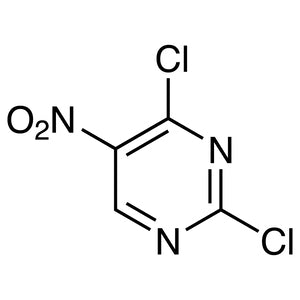
TCI D3721, also known as 2,4-Dichloro-5-nitropyrimidine, is a heterocyclic compound built on a pyrimidine ring that carries two chlorine atoms at the 2- and 4-positions together with a nitro group at the 5-position. In the laboratory, this compound occupies an important position as a heterocyclic building block for medicinal chemistry, because the pyrimidine ring is a core scaffold encountered very frequently in bioactive molecules, nucleic acid base analogues, and a wide range of drug candidates. The availability of a starting material of this kind shortens synthetic routes significantly.
Its main appeal lies in a highly directed reactivity pattern. The strongly electron-withdrawing nitro group activates the ring toward nucleophilic aromatic substitution, so that the two chlorine atoms can be displaced by amines, alkoxides, or thiols in a stepwise fashion, with a difference in reactivity between the two positions that can be exploited to control selectivity. After substitution, the nitro group itself can be reduced to an amine and used to close a new ring, opening a path toward fused systems such as pteridines and modified purines. It is this layered flexibility that gives the material its high value.
In Indonesian laboratories, this material is typically used in university and institutional research groups working on organic synthesis and medicinal chemistry, as well as in method development work where a reliable heterocyclic starting point is needed. It is normally ordered in research-scale quantities for multi-step synthesis programmes, where a well-defined, reactive scaffold allows a team to reach target compounds in fewer steps than would be required if the pyrimidine core had to be constructed from simpler precursors.
Related TCI products
- TCI D4105 4316-93-2 4,6-Dichloro-5-nitropyrimidine
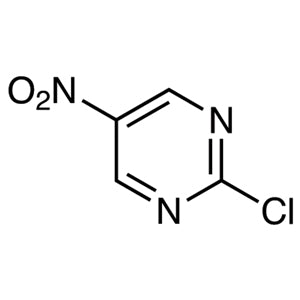
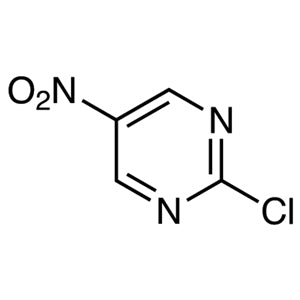
- TCI C2507 10320-42-0 2-Chloro-5-nitropyrimidine
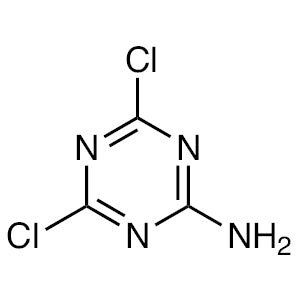
- TCI A3095 933-20-0 4,6-Dichloro-1,3,5-triazin-2-amine
- TCI A2716 145783-15-9 5-Amino-4,6-dichloro-2-(propylthio)pyrimidine
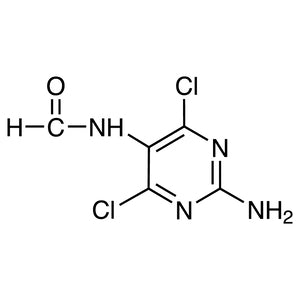
- TCI A2146 171887-03-9 2-Amino-4,6-dichloro-5-formamidopyrimidine
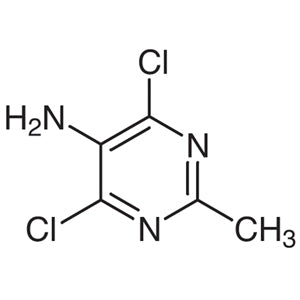
- TCI A1946 39906-04-2 5-Amino-4,6-dichloro-2-methylpyrimidine
- Medicinal chemistry scaffold synthesis: the pyrimidine core is a recurring motif in bioactive molecules, so this building block lets chemists reach drug-like structures quickly without constructing the ring themselves.
- Sequential nucleophilic aromatic substitution: the nitro group activates both chlorine positions toward attack by amines, alkoxides, or thiols, allowing controlled stepwise introduction of two different substituents.
- Selective mono-functionalisation studies: the difference in reactivity between the 2- and 4-positions can be exploited to install one nucleophile first, giving chemists a practical handle for selectivity control.
- Fused heterocycle construction: after substitution, the nitro group can be reduced to an amine and used to close a new ring, giving access to pteridine and modified purine systems.
- Nucleic acid base analogue preparation: because the pyrimidine ring is the framework of natural nucleobases, this compound serves as a direct entry point to structurally modified base analogues.
| Brand | TCI |
|---|---|
| CAS number | 49845-33-2 |
| Molecular formula | — |
| Purity | — |
| Category | Chemistry > Building Blocks > Heterocyclic Building Blocks |
| Pack sizes | available in standard research-scale packaging as supplied by the manufacturer; please confirm the required pack size when ordering |
| Physical form | — |
| Storage | keep in the tightly closed original container under the conditions stated on the manufacturer's label and safety data sheet |
- Chemical name: 2,4-Dichloro-5-nitropyrimidine
- Product code: D3721
Store the compound in its tightly closed original container in a cool, dry, and well-ventilated area, away from heat, direct sunlight, moisture, and incompatible materials, following the conditions stated on the manufacturer's label and safety data sheet. Keep the container clearly labelled and segregated from strong bases, reducing agents, and other reactive substances. Handle only in a properly functioning fume hood, using appropriate personal protective equipment including chemical-resistant gloves, safety goggles, and a laboratory coat. Avoid the formation and inhalation of dust, avoid direct skin and eye contact, and transfer material using clean, dry equipment to prevent contamination and moisture uptake. Reseal containers immediately after use, and dispose of residues and contaminated materials in accordance with applicable laboratory waste procedures. Always consult the full safety data sheet before first use.
—
Produk Terkait
-
4,6-Dichloro-5-nitropyrimidine TCI D4105
Regular price From Rp 2.174.550,00Regular price -
2-Chloro-5-nitropyrimidine TCI C2507
Regular price From Rp 2.306.850,00Regular price -
4,6-Dichloro-1,3,5-triazin-2-amine TCI A3095
Regular price Rp 4.611.600,00Regular price -
5-Amino-4,6-dichloro-2-(propylthio)pyrimidine TCI A2716
Regular price From Rp 637.350,00Regular price -
2-Amino-4,6-dichloro-5-formamidopyrimidine TCI A2146
Regular price From Rp 769.650,00Regular price -
5-Amino-4,6-dichloro-2-methylpyrimidine TCI A1946
Regular price From Rp 2.439.150,00Regular price -
3,6-Dichloro-1,2,4,5-tetrazine TCI D5732
Regular price From Rp 2.757.300,00Regular price -
2,4-Dichloro-3-nitropyridine TCI D5580
Regular price From Rp 769.650,00Regular price