2,4-Dichloro-3-nitropyridine is a chemical compound widely utilized in organic synthesis reactions. As a key building block in the development of heterocyclic compounds and their derivatives, it plays a crucial role in the creation of new chemical entities. This compound is particularly valuable in laboratory settings where the synthesis of complex molecules is required. Its unique structure allows it to participate in various chemical transformations, making it an essential reagent for researchers working in organic chemistry.
The compound's chemical properties, including the presence of nitro and chloro groups, contribute to its reactivity in specific conditions. These functional groups make it suitable for substitution reactions, nitration processes, and other chemical transformations. Its stability under certain conditions ensures that it remains a reliable starting material for a wide range of synthetic applications. The ability to undergo reduction and condensation reactions further enhances its versatility in laboratory experiments.
In Indonesian laboratories, 2,4-Dichloro-3-nitropyridine is commonly used in organic chemistry research, especially in the development of new compounds with potential applications in pharmaceuticals and industrial materials. Its chemical reactivity and structural complexity make it a preferred choice for studies aiming to create novel molecules with specific functional properties. Researchers rely on this compound to explore new synthetic pathways and to advance their work in chemical innovation.
Related TCI products
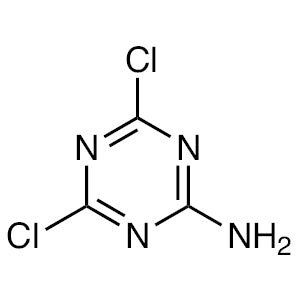
- TCI A3095 933-20-0 4,6-Dichloro-1,3,5-triazin-2-amine
- TCI A2716 145783-15-9 5-Amino-4,6-dichloro-2-(propylthio)pyrimidine
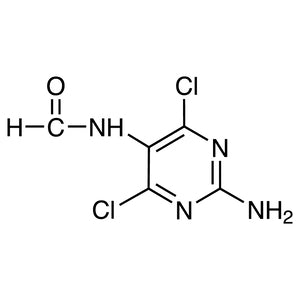
- TCI A2146 171887-03-9 2-Amino-4,6-dichloro-5-formamidopyrimidine
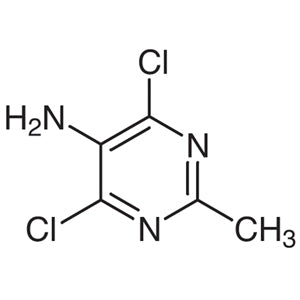
- TCI A1946 39906-04-2 5-Amino-4,6-dichloro-2-methylpyrimidine
- TCI D5732 106131-61-7 3,6-Dichloro-1,2,4,5-tetrazine
- TCI D5325 1698-53-9 4,5-Dichloro-2-phenyl-3(2H)-pyridazinone
- Organic synthesis of heterocyclic compounds due to its reactive nitro and chloro groups.
- Development of pharmaceutical intermediates through substitution and reduction reactions.
- Creation of industrial materials by utilizing its structural versatility in condensation processes.
- Research in chemical innovation for new molecular structures with potential medical applications.
- Investigation of chemical reactivity in controlled laboratory environments for advanced synthetic pathways.
| Brand | TCI |
|---|---|
| CAS number | 5975-12-2 |
| Molecular formula | — |
| Purity | — |
| Category | Chemistry > Building Blocks > Heterocyclic Building Blocks |
| Pack sizes | Available in standard laboratory quantities |
| Physical form | Solid |
| Storage | Store in a cool, dry place away from direct sunlight |
This compound should be stored in a cool, dry environment to maintain its chemical stability. It is recommended to keep it in a sealed container to prevent exposure to moisture and air. Due to its reactivity, it should be handled with care, using appropriate personal protective equipment such as gloves and safety goggles. Storage away from incompatible substances is essential to avoid any potential chemical interactions. Proper labeling of containers ensures safe handling and minimizes the risk of accidental exposure in laboratory settings. Regular inspection of storage conditions helps maintain the integrity of the compound for reliable experimental results.
—
Produk Terkait
-
4,6-Dichloro-1,3,5-triazin-2-amine TCI A3095
Regular price Rp 4.611.600,00Regular price -
5-Amino-4,6-dichloro-2-(propylthio)pyrimidine TCI A2716
Regular price From Rp 637.350,00Regular price -
2-Amino-4,6-dichloro-5-formamidopyrimidine TCI A2146
Regular price From Rp 769.650,00Regular price -
5-Amino-4,6-dichloro-2-methylpyrimidine TCI A1946
Regular price From Rp 2.439.150,00Regular price -
3,6-Dichloro-1,2,4,5-tetrazine TCI D5732
Regular price From Rp 2.757.300,00Regular price -
4,5-Dichloro-2-phenyl-3(2H)-pyridazinone TCI D5325
Regular price From Rp 717.150,00Regular price -
4,5-Dichloro-2-methyl-3(2H)-pyridazinone TCI D5324
Regular price From Rp 769.650,00Regular price -
1,7-Dichloro-4-methoxyisoquinoline TCI D5182
Regular price Rp 1.405.950,00Regular price