TCI D5732 3,6-Dichloro-1,2,4,5-tetrazine is a nitrogen-rich heterocyclic compound belonging to the 1,2,4,5-tetrazine (s-tetrazine) family, carrying two chlorine substituents at the 3 and 6 positions. In the organic synthesis laboratory it serves as a versatile building block, because it delivers a pre-formed tetrazine core together with two reactive handles ready for further modification. Working from this material, researchers can systematically assemble libraries of tetrazine derivatives for bioorthogonal chemistry, materials chemistry, or fluorescent probe development, without having to go through the longer and more demanding ring-forming routes normally required to construct a tetrazine nucleus.
Two properties account for why this material is preferred. First, the s-tetrazine core is extremely electron-poor, which makes it an outstanding diene in inverse electron demand Diels–Alder reactions with strained dienophiles such as trans-cyclooctene and norbornene — the very reaction that forms the backbone of metal-free click chemistry. Second, both chlorine substituents are readily displaced by nucleophiles such as amines, alcohols, or thiols, so a single starting material can be converted into a wide range of symmetrically or unsymmetrically substituted tetrazines through straightforward substitution steps.
In Indonesian laboratories, this building block is typically used in university and institutional research groups working on organic synthesis, medicinal chemistry, and chemical biology, as well as in materials research programmes that need functionalised heterocycles. It is generally handled in small-scale synthetic work on the bench or in a fume hood, where the ability to start from a ready-made tetrazine core shortens project timelines and reduces reliance on multi-step ring construction that would otherwise consume scarce reagents and instrument time.
TCI brochures (PDF)
- Click Chemistry 2026-09-08 · p. 18
Related TCI products
- TCI D3175 6830-78-0 3,6-Diphenyl-1,2,4,5-tetrazine
- TCI D5733 1558-23-2 3,6-Dimethyl-1,2,4,5-tetrazine
- TCI B6382 3017266-45-1 3-[4-(Bromomethyl)phenyl]-6-methyl-1,2,4,5-tetrazine
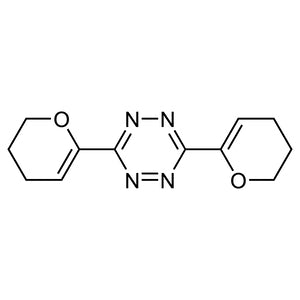
- TCI B6965 37005-02-0 3,6-Bis(3,4-dihydro-2H-pyran-6-yl)-1,2,4,5-tetrazine
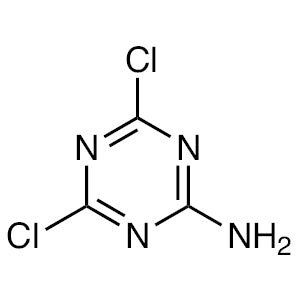
- TCI A3095 933-20-0 4,6-Dichloro-1,3,5-triazin-2-amine
- TCI A2716 145783-15-9 5-Amino-4,6-dichloro-2-(propylthio)pyrimidine
- Bioorthogonal labelling chemistry: the electron-poor tetrazine core reacts rapidly with strained dienophiles like trans-cyclooctene, enabling catalyst-free conjugation under mild conditions compatible with biological samples.
- Tetrazine derivative library synthesis: the two displaceable chlorine atoms let a single starting material be converted into many symmetrically or unsymmetrically substituted analogues through straightforward nucleophilic substitution steps.
- Fluorescent probe development: the pre-formed tetrazine nucleus provides a reactive reporting handle that can be coupled to fluorophores and further functionalised at both the 3 and 6 positions.
- Inverse electron demand Diels–Alder methodology studies: the compound acts as a benchmark electron-poor diene, making it useful for exploring reaction scope, kinetics, and dienophile compatibility in click chemistry.
- Materials chemistry and functional heterocycle research: nitrogen-rich tetrazine units can be incorporated into larger molecular architectures, with the chlorine positions serving as attachment points for further building blocks.
| Brand | TCI |
|---|---|
| CAS number | 106131-61-7 |
| Molecular formula | — |
| Purity | — |
| Category | Chemistry > Building Blocks > Heterocyclic Building Blocks |
| Pack sizes | available in standard TCI research-scale packaging; please confirm the currently listed sizes when ordering |
| Physical form | — |
| Storage | keep in the closed original container under the conditions stated on the manufacturer's label and safety data sheet |
- Product code: TCI D5732
Store the material in its tightly closed original container, kept in a cool, dry, and well-ventilated area away from heat, ignition sources, and incompatible substances, following the conditions specified on the manufacturer's label and safety data sheet. Use chemically resistant containers and clean, dry spatulas when weighing out portions, and reseal promptly to limit exposure to moisture and air. Handle the compound in a fume hood while wearing safety goggles, a laboratory coat, and suitable gloves. Consult the safety data sheet before first use, and dispose of residues and contaminated materials through the laboratory's established chemical waste procedures.
—
Product Categories
- Building BlocksHeterocyclic Building BlocksHalogenated Heterocyclic Building Blocks
- Chemical BiologyConjugation Chemistry/Click ChemistryCatalysts, Ligands, Reagents [Conjugation Chemistry/Click Chemistry]
- Chemical BiologyConjugation Chemistry/Click ChemistryTetrazines [Conjugation Chemistry/Click Chemistry]
- Pharmaceutical Development and Drug Discovery ResearchConjugation Chemistry/Click ChemistryCatalysts, Ligands, Reagents [Conjugation Chemistry/Click Chemistry]
- Pharmaceutical Development and Drug Discovery ResearchConjugation Chemistry/Click ChemistryTetrazines [Conjugation Chemistry/Click Chemistry]
Produk Terkait
-
3,6-Diphenyl-1,2,4,5-tetrazine TCI D3175
Regular price From Rp 1.961.400,00Regular price -
3,6-Dimethyl-1,2,4,5-tetrazine TCI D5733
Regular price From Rp 1.776.600,00Regular price -
3-[4-(Bromomethyl)phenyl]-6-methyl-1,2,4,5-tetrazine TCI B6382
Regular price From Rp 7.712.250,00Regular price -
3,6-Bis(3,4-dihydro-2H-pyran-6-yl)-1,2,4,5-tetrazine TCI B6965
Regular price From Rp 2.650.200,00Regular price -
4,6-Dichloro-1,3,5-triazin-2-amine TCI A3095
Regular price Rp 4.611.600,00Regular price -
5-Amino-4,6-dichloro-2-(propylthio)pyrimidine TCI A2716
Regular price From Rp 637.350,00Regular price -
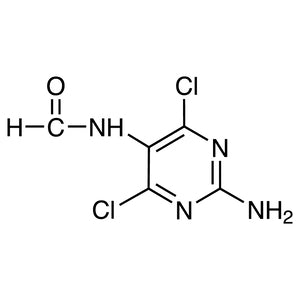
2-Amino-4,6-dichloro-5-formamidopyrimidine TCI A2146
Regular price From Rp 769.650,00Regular price -
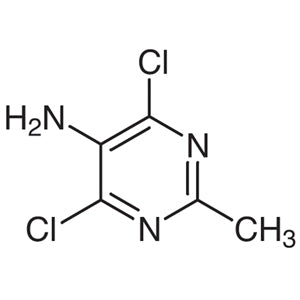
5-Amino-4,6-dichloro-2-methylpyrimidine TCI A1946
Regular price From Rp 2.439.150,00Regular price


![3-[4-(Bromomethyl)phenyl]-6-methyl-1,2,4,5-tetrazine (CAS 3017266-45-1) - TCI B6382 - AMI Scientific](http://amiscientific.com/cdn/shop/files/TCI2510B6382_765bf7fd-56da-4f2d-8212-fd3ec1f36666.jpg?v=1767865568&width=533)