5-Amino-4,6-dichloro-2-(propylthio)pyrimidine is a chemical compound widely used in organic synthesis reactions within laboratory settings. This heterocyclic building block plays a crucial role in the development of complex molecular structures, especially in pharmaceutical and chemical research. Its unique structure, featuring a pyrimidine ring with amino, chloro, and thioethyl substituents, makes it a versatile intermediate in the synthesis of bioactive compounds. Due to its reactivity and structural complexity, it is an essential tool for researchers aiming to create new therapeutic agents or industrial chemicals.
The compound is known for its solubility in organic solvents and chemical stability under controlled conditions, which makes it a preferred choice for synthetic chemists. Its reactivity allows it to participate in various chemical reactions, including substitution, condensation, and nucleophilic processes. These properties enable it to be used in a wide range of synthetic pathways, contributing to the development of new compounds with specific biological activities. Its reliability and consistency in performance make it a trusted material in both academic and industrial laboratories.
In Indonesian laboratories, this compound is extensively used in chemical and pharmaceutical research. It is commonly found in academic institutions and research centers where scientists are working on drug discovery and chemical synthesis projects. Its availability in the local market supports ongoing research efforts, enabling scientists to conduct experiments that lead to the development of new therapeutic compounds and industrial materials.
Related TCI products
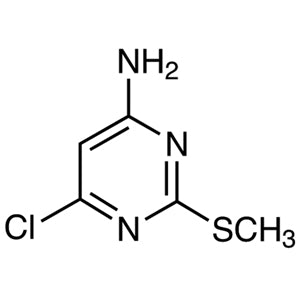
- TCI A2848 1005-38-5 4-Amino-6-chloro-2-(methylthio)pyrimidine
- TCI D4135 4489-34-3 4,6-Dichloro-2-(methylsulfonyl)pyrimidine
- TCI D2533 6299-25-8 4,6-Dichloro-2-(methylthio)pyrimidine
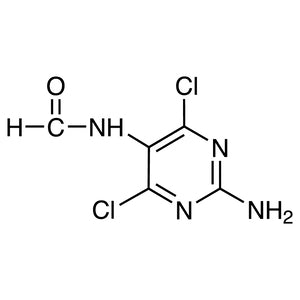
- TCI A2146 171887-03-9 2-Amino-4,6-dichloro-5-formamidopyrimidine
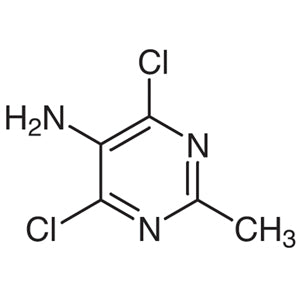
- TCI A1946 39906-04-2 5-Amino-4,6-dichloro-2-methylpyrimidine
- TCI T1810 32980-71-5 2,4,6,8-Tetrachloropyrimido[5,4-d]pyrimidine
- Organic synthesis of bioactive compounds due to its reactivity and structural versatility.
- Development of pharmaceutical intermediates in drug discovery programs for therapeutic applications.
- Creation of complex heterocyclic structures in medicinal chemistry research projects.
- Synthesis of industrial chemicals requiring precise molecular modifications and functional group transformations.
- Support for academic research in chemical and pharmaceutical sciences for educational and experimental purposes.
| Brand | TCI |
|---|---|
| CAS number | 145783-15-9 |
| Molecular formula | — |
| Purity | — |
| Category | Chemistry > Building Blocks > Heterocyclic Building Blocks |
| Pack sizes | Available in standard laboratory quantities as per supplier specifications |
| Physical form | Solid, crystalline or powder, depending on the batch |
| Storage | Store in a cool, dry place away from light and moisture |
This compound should be stored in a cool, dry environment, away from direct light and moisture to maintain its chemical stability. It is recommended to use airtight containers made of glass or high-density polyethylene to prevent contamination and degradation. Due to its reactivity, it should be handled with care using appropriate personal protective equipment such as gloves and safety goggles. It is important to ensure proper ventilation in the laboratory when working with this material to minimize exposure. Storage conditions should be consistent to avoid any changes in its physical or chemical properties. Always follow standard laboratory safety protocols when handling and storing this compound.
—
Produk Terkait
-
4-Amino-6-chloro-2-(methylthio)pyrimidine TCI A2848
Regular price Rp 1.776.600,00Regular priceRp 1.257.900,00Sale price Rp 1.776.600,00 -
4,6-Dichloro-2-(methylsulfonyl)pyrimidine TCI D4135
Regular price From Rp 980.700,00Regular priceRp 701.400,00Sale price From Rp 980.700,00 -
4,6-Dichloro-2-(methylthio)pyrimidine TCI D2533
Regular price From Rp 1.087.800,00Regular priceRp 775.950,00Sale price From Rp 1.087.800,00 -
2-Amino-4,6-dichloro-5-formamidopyrimidine TCI A2146
Regular price From Rp 822.150,00Regular priceRp 590.100,00Sale price From Rp 822.150,00 -
5-Amino-4,6-dichloro-2-methylpyrimidine TCI A1946
Regular price From Rp 2.491.650,00Regular priceRp 1.757.700,00Sale price From Rp 2.491.650,00 -
2,4,6,8-Tetrachloropyrimido[5,4-d]pyrimidine TCI T1810
Regular price From Rp 2.914.800,00Regular priceRp 2.053.800,00Sale price From Rp 2.914.800,00 -
5-Bromo-4-chloro-2-(methylthio)pyrimidine TCI B4406
Regular price From Rp 1.008.000,00Regular priceRp 720.300,00Sale price From Rp 1.008.000,00 -
5-Bromo-2-(methylthio)pyrimidine-4-carboxylicAcid TCI B3829
Regular price From Rp 769.650,00Regular priceRp 553.350,00Sale price From Rp 769.650,00