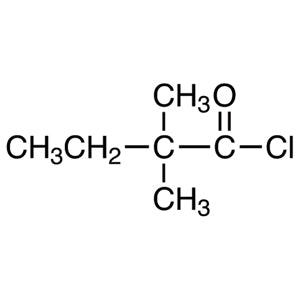
TCI D3987 2,2-Dimethylbutyryl Chloride (CAS 5856-77-9) is a branched aliphatic acid chloride (acyl chloride) carrying a quaternary carbon centre at the alpha position relative to the carbonyl group. It functions as a highly useful acylating reagent in organic synthesis laboratories: it transfers the 2,2-dimethylbutanoyl fragment onto a wide range of nucleophiles such as alcohols, phenols, amines, and thiols, thereby producing esters, amides, or thioesters that are difficult to form efficiently from the free carboxylic acid. Its role becomes essential whenever researchers need to install a sterically stabilised branched acyl group onto a target molecule.
The property that makes this reagent a preferred choice is its combination of high yet well-directed reactivity. As an acyl chloride, it reacts rapidly at low to moderate temperatures without requiring any additional activating agent, and its only by-product is hydrogen chloride, which is easily scavenged by a base such as triethylamine or pyridine. The gem-dimethyl branching at the alpha position removes any possibility of enolisation or epimerisation adjacent to the carbonyl, so reaction outcomes are cleaner and more predictable. This branched acyl group also confers comparatively better hydrolytic resistance on the final ester product.
In Indonesian laboratories, this building block is typically used in academic and industrial organic synthesis settings where controlled acylation is required. It belongs to the Chemistry > Building Blocks > Non-Heterocyclic Building Blocks category and is chosen by research groups, university chemistry departments, and formulation or process development laboratories that prepare ester, amide, and thioester intermediates. It suits work programmes where reproducible acyl transfer, straightforward by-product handling, and predictable stereochemical behaviour are important to the overall synthetic route.
Related TCI products
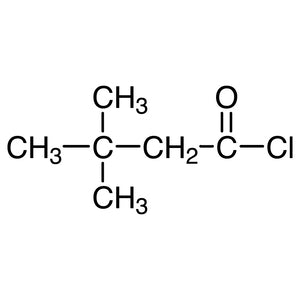
- TCI B1196 7065-46-5 3,3-Dimethylbutyryl Chloride
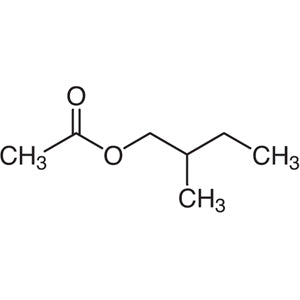
- TCI A1076 624-41-9 2-Methylbutyl Acetate
- TCI A0964 103429-90-9 3-Methoxy-3-methylbutyl Acetate
- TCI O0031 2035-99-6 Isoamyl n-Octanoate (contains 2-Methylbutyl n-Octanoate)
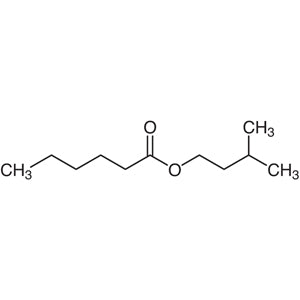
- TCI H0109 2198-61-0 Isoamyl Hexanoate (contains 2-Methylbutyl Hexanoate)
- TCI I0736 66576-71-4 Isopropyl 2-Methylbutyrate
- Ester synthesis from alcohols and phenols: the reagent transfers the 2,2-dimethylbutanoyl group directly without an activating agent, giving esters that are difficult to obtain efficiently from the free carboxylic acid.
- Amide preparation from primary and secondary amines: rapid reaction at low to moderate temperature allows amide bond formation with only hydrogen chloride as by-product, easily scavenged by triethylamine or pyridine.
- Thioester formation from thiols: the high but well-directed reactivity of the acyl chloride permits clean acyl transfer to sulfur nucleophiles under mild laboratory conditions without additional coupling reagents.
- Installation of sterically hindered branched acyl groups: the quaternary alpha carbon delivers a bulky acyl fragment onto target molecules where steric stabilisation of the resulting linkage is required.
- Synthesis of hydrolytically more resistant ester intermediates: the gem-dimethyl branching adjacent to the carbonyl improves the relative hydrolysis resistance of the ester products formed in multi-step routes.
| Brand | TCI |
|---|---|
| CAS number | 5856-77-9 |
| Molecular formula | — |
| Purity | — |
| Category | Chemistry > Building Blocks > Non-Heterocyclic Building Blocks |
| Pack sizes | available in the standard laboratory pack sizes supplied by TCI for this catalogue item |
| Physical form | — |
| Storage | store in a tightly closed container, protected from moisture |
- Catalogue Number: D3987
- Chemical Name: 2,2-Dimethylbutyryl Chloride
As an acyl chloride, this material should be stored in a tightly closed, moisture-resistant container in a cool, dry, well-ventilated area away from water, alcohols, amines, and strong bases. Original supplier packaging or a compatible sealed glass container is appropriate, and containers should be kept closed when not in use to limit exposure to atmospheric humidity. Handle only in a fume hood using gloves, safety goggles, and a laboratory coat, since the reagent releases hydrogen chloride on contact with moisture. Transfer with dry glassware and dry syringes or cannulae, keep an acid-neutralising agent nearby for spills, and consult the manufacturer's safety data sheet before use and disposal.
—
Produk Terkait
-
3,3-DimethylbutyrylChloride TCI B1196
Regular price From Rp 1.881.600,00Regular price -
2-MethylbutylAcetate TCI A1076
Regular price From Rp 928.200,00Regular price -
3-Methoxy-3-methylbutylAcetate TCI A0964
Regular price From Rp 505.050,00Regular price -
Isoamyln-Octanoate(contains2-Methylbutyln-Octanoate) TCI O0031
Regular price Rp 637.350,00Regular price -
IsoamylHexanoate(contains2-MethylbutylHexanoate) TCI H0109
Regular price Rp 530.250,00Regular price -
Isopropyl2-Methylbutyrate TCI I0736
Regular price From Rp 477.750,00Regular price -
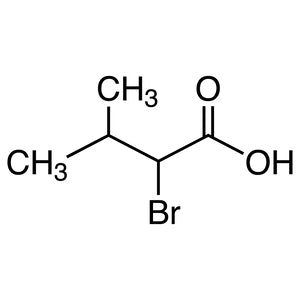
2-Bromo-3-methylbutyricAcid TCI B0668
Regular price Rp 2.016.000,00Regular price -
Propyl2-Methylbutyrate TCI P1809
Regular price Rp 1.326.150,00Regular price