Isoamyl Hexanoate is a branched ester formed from hexanoic acid and isoamyl alcohol, and this TCI product is supplied with the stated note that it contains the isomer 2-Methylbutyl Hexanoate. The presence of these two branched isomers actually reflects the real condition of natural aroma materials, which makes the compound valuable as a comparative material in the analysis of food volatiles. In the laboratory its roles include service as a chromatography standard, as a reference material for aroma research, and as an organic synthesis intermediate for work that requires a branched alkyl group on the ester portion of the molecule.
The property that leads analysts to select this material is its branched ester character, which gives it slightly different chromatographic behaviour compared with straight-chain esters of equivalent carbon number. That difference is useful when researchers need to separate and distinguish isomers within a crowded chromatogram. The compound is a liquid with a fruity aroma, dissolves well in organic solvents, and is very limited in its solubility in water. Its ester group is neutral and stable under ordinary storage conditions, yet it can still be hydrolysed under acidic or basic conditions, which makes it flexible for use across a variety of experimental designs.
In Indonesian laboratories, this material is used in settings where branched ester references are required for volatile and flavour-related work. It supports food and beverage analysis groups, aroma research units in universities, and synthesis laboratories that build molecules carrying branched ester functionality. Because it functions as a reference and comparison substance rather than a bulk reagent, it is typically ordered in small quantities and kept as part of a standing collection of ester standards.
Related TCI products
- TCI I0899 2198-61-0 Isoamyl Hexanoate
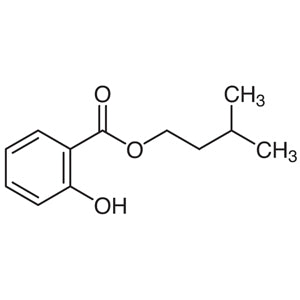
- TCI S0012 87-20-7 Isoamyl Salicylate (contains 2-Methylbutyl Salicylate)
- TCI O0031 2035-99-6 Isoamyl n-Octanoate (contains 2-Methylbutyl n-Octanoate)
- TCI A0029 10031-87-5 2-Ethylbutyl Acetate
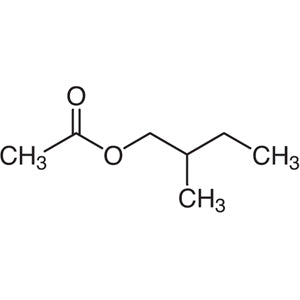
- TCI A1076 624-41-9 2-Methylbutyl Acetate
- TCI A0964 103429-90-9 3-Methoxy-3-methylbutyl Acetate
- Gas chromatography standard preparation: the defined branched ester identity gives analysts a dependable retention reference when identifying ester peaks in complex volatile mixtures.
- Food volatile profiling: because the material reflects the branched ester composition of natural aroma sources, it serves as a realistic comparison substance for food analysis work.
- Aroma and flavour research: its fruity-smelling ester character makes it a suitable reference compound for studies examining how branched esters contribute to aroma profiles.
- Isomer separation method development: the slight chromatographic difference between branched and straight-chain esters helps chemists tune column conditions to resolve closely eluting isomer pairs.
- Organic synthesis intermediate work: the ester supplies a branched alkyl fragment for synthetic routes that require that structural feature on the ester portion of a target.
| Brand | TCI (Tokyo Chemical Industry) |
|---|---|
| CAS number | 2198-61-0 |
| Molecular formula | — |
| Purity | — |
| Category | Chemistry > Building Blocks > Non-Heterocyclic Building Blocks |
| Pack sizes | available in the catalogue pack sizes offered by TCI for this product code |
| Physical form | liquid with a fruity aroma; soluble in organic solvents, very limited solubility in water |
| Storage | — |
- Product code: H0109
- Composition note: Isoamyl Hexanoate containing 2-Methylbutyl Hexanoate isomer
Store the material in a tightly closed container in a cool, dry, and well-ventilated area, away from direct sunlight and from sources of heat or ignition. Tightly sealed glass bottles are appropriate, since the ester is an organic liquid that should be kept from evaporation loss and from contact with incompatible materials. Because the ester group can be hydrolysed under acidic or basic conditions, keep the material away from strong acids and strong bases during storage and handling. Handle in a fume hood where practical, wear gloves, safety glasses, and a laboratory coat, and close the container immediately after each withdrawal so the composition of the reference material remains consistent between uses. Always consult the manufacturer's safety data sheet before use.
—
Produk Terkait
-
IsoamylHexanoate TCI I0899
Regular price From Rp 610.050,00Regular price -
IsoamylSalicylate(contains2-MethylbutylSalicylate) TCI S0012
Regular price From Rp 505.050,00Regular price -
Isoamyln-Octanoate(contains2-Methylbutyln-Octanoate) TCI O0031
Regular price Rp 637.350,00Regular price -
2-EthylbutylAcetate TCI A0029
Regular price From Rp 1.405.950,00Regular price -
2-MethylbutylAcetate TCI A1076
Regular price From Rp 928.200,00Regular price -
3-Methoxy-3-methylbutylAcetate TCI A0964
Regular price From Rp 505.050,00Regular price -
2-MethylbutylIsobutyrate TCI M3483
Regular price Rp 1.749.300,00Regular price -
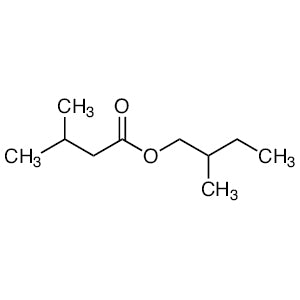
2-MethylbutylIsovalerate TCI M3283
Regular price From Rp 903.000,00Regular price