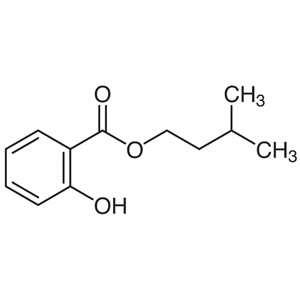
Isoamyl Salicylate, with CAS number 87-20-7, is an organic compound commonly used in various chemical experiments conducted in laboratory settings. It is an ester formed from salicylic acid and isovaleraldehyde, and is known for its distinctive aroma, which makes it a valuable component in the fragrance and cosmetic industries. In the laboratory, this compound serves as a key building block or auxiliary material in the synthesis of complex compounds, particularly in esterification and hydrolysis reactions. Its role is essential in organic chemistry due to its ability to participate in a variety of chemical transformations.
The chemical properties of Isoamyl Salicylate make it a preferred choice for laboratory use. It exhibits relatively stable chemical behavior, allowing it to remain inert under normal conditions while still being reactive enough to participate in controlled chemical processes. Its solubility in organic solvents such as ethyl acetate and ethanol enhances its utility in a wide range of chemical reactions. Additionally, its low toxicity in small doses ensures a safer working environment, making it suitable for use in both academic and industrial laboratory settings.
In Indonesian laboratories, Isoamyl Salicylate is frequently used in organic synthesis experiments and as a fragrance component in cosmetic formulations. Its availability and chemical versatility make it a common choice for researchers and students engaged in chemical experimentation. The compound is also used in the development of perfumes and skincare products, where its aromatic properties are highly valued. Its role in both educational and industrial contexts underscores its importance in the chemical research landscape of Indonesia.
- Esterification Reactions – Isoamyl Salicylate is ideal for esterification due to its stable chemical structure and reactivity, making it suitable for synthesizing ester compounds in organic chemistry.
- Cosmetic Formulation – Its aromatic properties make it a preferred ingredient in the development of perfumes and skincare products, where it contributes to the desired fragrance profile.
- Analytical Chemistry – The compound’s distinct chemical properties allow it to be used as a reference standard in analytical procedures, aiding in the identification and quantification of similar compounds.
- Teaching Laboratory Experiments – Its low toxicity and ease of handling make it a safe and effective material for educational purposes, supporting student learning in organic chemistry.
- Industrial Chemical Synthesis – Its chemical versatility and solubility in organic solvents make it a valuable component in the production of complex chemical compounds in industrial settings.
| Brand | TCI |
|---|---|
| CAS number | 87-20-7 |
| Molecular formula | — |
| Purity | — |
| Category | Chemistry > Building Blocks > Non-Heterocyclic Building Blocks |
| Pack sizes | Available in various sizes as per supplier specifications |
| Physical form | Liquid |
| Storage | Store in a cool, dry place away from direct sunlight and incompatible substances |
Isoamyl Salicylate should be stored in a cool, dry place away from direct sunlight and incompatible substances such as strong acids or bases. It is recommended to use airtight containers to prevent exposure to moisture and air, which may affect its stability. Due to its low toxicity, it is generally safe to handle with standard laboratory precautions, but gloves and proper ventilation should be used when working with larger quantities. The compound is not flammable, but it should be kept away from heat sources. Regular monitoring of storage conditions ensures the compound remains in optimal condition for use in laboratory applications.
—
Produk Terkait
-
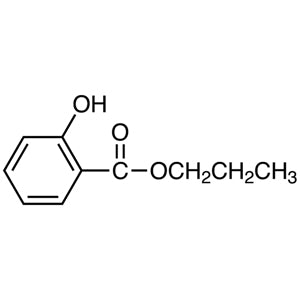
PropylSalicylate TCI S0441
Regular price Rp 2.094.750,00Regular price -
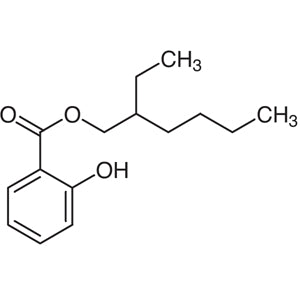
2-EthylhexylSalicylate TCI S0387
Regular price From Rp 903.000,00Regular price -
MethylSalicylate TCI S0015
Regular price From Rp 452.550,00Regular price -
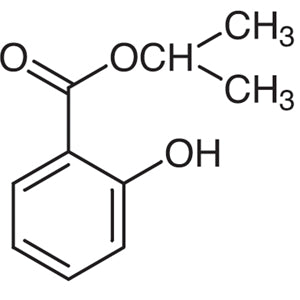
IsopropylSalicylate TCI S0014
Regular price Rp 1.405.950,00Regular price -
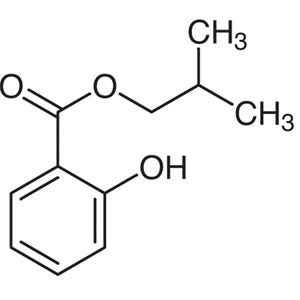
IsobutylSalicylate TCI S0013
Regular price From Rp 505.050,00Regular price -
ButylSalicylate TCI S0010
Regular price From Rp 689.850,00Regular price -
PhenethylSalicylate TCI P2165
Regular price Rp 848.400,00Regular price -
3,3,5-TrimethylcyclohexylSalicylate(cis-andtrans-mixture) TCI T2278
Regular price From Rp 664.650,00Regular price