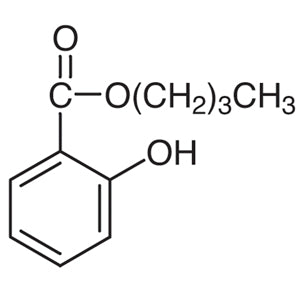
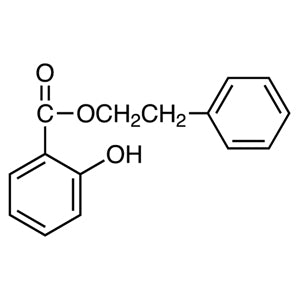
2-Ethylhexyl Salicylate is a chemical compound widely used in laboratory settings, particularly in organic synthesis applications. It serves as a building block for the creation of complex organic molecules, including esters and aromatic compounds. This compound is valued for its stability and predictable chemical behavior, making it a reliable choice for various synthetic processes. Its role in the laboratory extends beyond mere reagent use, as it contributes to the development of new chemical structures and materials.
One of the key properties that make 2-Ethylhexyl Salicylate a preferred choice is its chemical stability and moderate reactivity. These characteristics allow it to remain intact during chemical reactions, reducing the risk of unwanted side reactions. Additionally, its high melting point ensures it remains solid under normal storage conditions, simplifying handling and storage. The compound’s well-defined molecular structure also enhances its usability in experimental setups where precision is essential.
In Indonesian laboratories, 2-Ethylhexyl Salicylate is commonly used by researchers and students in organic synthesis and chemical analysis. Its availability and reliability make it a staple in academic and industrial research environments. It is frequently employed in experiments that require stable and reactive intermediates, supporting both teaching and research activities. Its consistent performance in laboratory conditions ensures it remains a trusted material for chemical investigations.
Related TCI products
- TCI T2278 118-56-9 3,3,5-Trimethylcyclohexyl Salicylate (cis- and trans- mixture)
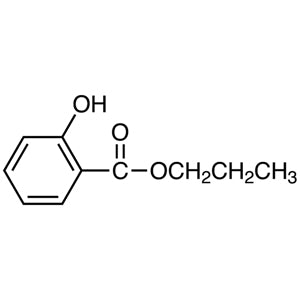
- TCI S0441 607-90-9 Propyl Salicylate
- TCI S0015 119-36-8 Methyl Salicylate
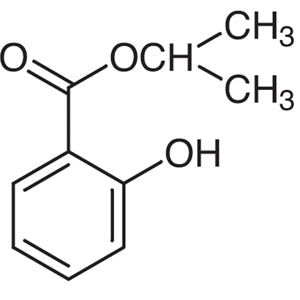
- TCI S0014 607-85-2 Isopropyl Salicylate
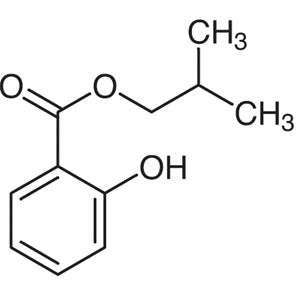
- TCI S0013 87-19-4 Isobutyl Salicylate
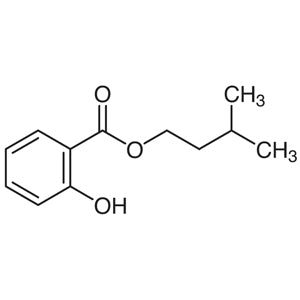
- TCI S0012 87-20-7 Isoamyl Salicylate (contains 2-Methylbutyl Salicylate)
- Organic synthesis experiments benefit from 2-Ethylhexyl Salicylate due to its stable chemical structure and predictable reactivity, enabling the formation of complex ester compounds.
- It is widely used in the development of aromatic compounds, where its molecular framework supports the creation of diverse chemical derivatives.
- In analytical chemistry, the compound serves as a reference standard for identifying and quantifying ester-based compounds in various samples.
- It is a key reagent in the preparation of pharmaceutical intermediates, supporting the synthesis of drug-related compounds with specific functional groups.
- Indonesian research institutions utilize it in educational settings to teach fundamental principles of organic chemistry and reaction mechanisms.
| Brand | TCI |
|---|---|
| CAS number | 118-60-5 |
| Molecular formula | — |
| Purity | — |
| Category | Chemistry > Building Blocks > Non-Heterocyclic Building Blocks |
| Pack sizes | Available in standard laboratory quantities as per supplier specifications |
| Physical form | Solid at room temperature |
| Storage | Store in a cool, dry place away from direct sunlight and moisture |
2-Ethylhexyl Salicylate should be stored in a cool, dry environment to maintain its chemical stability. It is recommended to use airtight containers to prevent exposure to moisture and air, which could affect its integrity. Due to its solid form, it is best kept in a sealed container to avoid contamination. In laboratory settings, it should be handled with standard chemical safety practices, including the use of gloves and proper ventilation. While it is not highly toxic, it is important to follow general laboratory safety protocols when working with any chemical compound. Proper storage ensures its effectiveness and safety in both research and educational applications.
—
Produk Terkait
-
3,3,5-TrimethylcyclohexylSalicylate(cis-andtrans-mixture) TCI T2278
Regular price From Rp 664.650,00Regular priceRp 464.100,00Sale price From Rp 664.650,00 -
PropylSalicylate TCI S0441
Regular price Rp 2.094.750,00Regular priceRp 1.464.750,00Sale price Rp 2.094.750,00 -
MethylSalicylate TCI S0015
Regular price From Rp 452.550,00Regular priceRp 316.050,00Sale price From Rp 452.550,00 -
IsopropylSalicylate TCI S0014
Regular price Rp 1.405.950,00Regular priceRp 982.800,00Sale price Rp 1.405.950,00 -
IsobutylSalicylate TCI S0013
Regular price From Rp 505.050,00Regular priceRp 352.800,00Sale price From Rp 505.050,00 -
IsoamylSalicylate(contains2-MethylbutylSalicylate) TCI S0012
Regular price From Rp 505.050,00Regular priceRp 352.800,00Sale price From Rp 505.050,00 -
ButylSalicylate TCI S0010
Regular price From Rp 689.850,00Regular priceRp 481.950,00Sale price From Rp 689.850,00 -
PhenethylSalicylate TCI P2165
Regular price Rp 848.400,00Regular priceRp 593.250,00Sale price Rp 848.400,00