1,3-Di-9-carbazolylbenzene is a complex organic compound widely used in laboratory settings for organic reactions and the synthesis of intricate molecular structures. This compound features a benzene ring substituted with two carbazole groups at positions 1 and 3, making it a versatile building block in heterocyclic chemistry. Its unique molecular structure allows it to participate in a variety of synthetic pathways, contributing to the development of advanced chemical compounds. Due to its structural complexity and functional versatility, it is a key component in modern synthetic chemistry.
The compound is known for its high chemical stability under controlled conditions, yet it exhibits reactivity toward specific chemical environments, such as elevated temperatures or reactive reagents. The purification process via sublimation ensures a high level of purity, which is essential for precise experimental outcomes. This makes it an ideal choice for researchers requiring reliable and reproducible results in their experiments. Its stability and reactivity balance make it a preferred material for advanced chemical synthesis.
In Indonesian laboratories, 1,3-Di-9-carbazolylbenzene is commonly used in organic chemistry research and the development of new materials. It is frequently employed in academic and industrial settings where the synthesis of complex molecules is required. Its availability and purity make it a valuable resource for both educational and research purposes in the chemical sciences.
TCI brochures (PDF)
- Chemical Compounds Purified by Sublimation 2025-05-07 · p. 4
- Organic Light-Emitting Diode (OLED) Materials 2026-08-18 · p. 3
- Carbazoles 2025-06-27 · p. 6
Related TCI products
- TCI T2274 139092-78-7 4,4',4''-Tri-9-carbazolyltriphenylamine (purified by sublimation)
- TCI T2238 2085-33-8 Tris(8-quinolinolato)aluminum (purified by sublimation)
- TCI T1934 148044-07-9 1,3,5-Tri(9H-carbazol-9-yl)benzene (purified by sublimation)
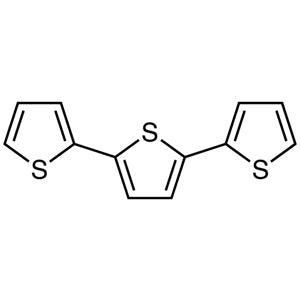
- TCI T1196 1081-34-1 2,2':5',2''-Terthiophene (purified by sublimation)
- TCI B5139 142289-08-5 4,4'-Bis(2,2-diphenylvinyl)biphenyl (purified by sublimation)
- TCI B4219 58328-31-7 4,4'-Bis(9H-carbazol-9-yl)biphenyl (purified by sublimation)
- Organic synthesis applications benefit from its ability to form stable intermediates in complex molecule construction.
- Heterocyclic compound development leverages its structural versatility for creating novel chemical frameworks.
- Pharmaceutical research utilizes its reactivity to design and synthesize bioactive molecules with targeted properties.
- Material science applications take advantage of its molecular structure to develop advanced polymers and coatings.
- Academic research in chemistry relies on its purity and stability for reproducible experimental outcomes.
| Brand | TCI |
|---|---|
| CAS number | 550378-78-4 |
| Molecular formula | — |
| Purity | — |
| Category | Chemistry > Building Blocks > Heterocyclic Building Blocks |
| Pack sizes | As available |
| Physical form | Solid |
| Storage | Keep in a cool, dry place away from light and moisture |
This compound should be stored in a cool, dry environment, away from direct light and moisture to maintain its chemical integrity. It is recommended to use airtight containers made of glass or high-density polyethylene to prevent contamination and degradation. Due to its reactivity under certain conditions, it should be handled in a well-ventilated laboratory with appropriate personal protective equipment. Avoid exposure to high temperatures and reactive reagents to ensure safe storage and usage. Always follow standard laboratory safety protocols when working with this compound to minimize risks associated with its chemical properties.
—
Product Categories
Produk Terkait
-
4,4',4''-Tri-9-carbazolyltriphenylamine(purifiedbysublimation) TCI T2274
Regular price Rp 2.147.250,00Regular priceRp 1.517.250,00Sale price Rp 2.147.250,00 -
Tris(8-quinolinolato)aluminum(purifiedbysublimation) TCI T2238
Regular price Rp 5.460.000,00Regular priceRp 3.833.550,00Sale price Rp 5.460.000,00 -
1,3,5-Tri(9H-carbazol-9-yl)benzene(purifiedbysublimation) TCI T1934
Regular price Rp 5.062.050,00Regular priceRp 3.555.300,00Sale price Rp 5.062.050,00 -
2,2':5',2''-Terthiophene(purifiedbysublimation) TCI T1196
Regular price Rp 2.252.250,00Regular priceRp 1.590.750,00Sale price Rp 2.252.250,00 -
4,4'-Bis(2,2-diphenylvinyl)biphenyl(purifiedbysublimation) TCI B5139
Regular price From Rp 1.644.300,00Regular price -
4,4'-Bis(9H-carbazol-9-yl)biphenyl(purifiedbysublimation) TCI B4219
Regular price Rp 3.870.300,00Regular price -
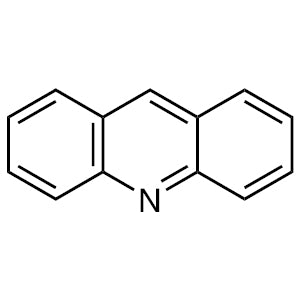
Acridine(purifiedbysublimation) TCI A3436
Regular price From Rp 1.458.450,00Regular price -
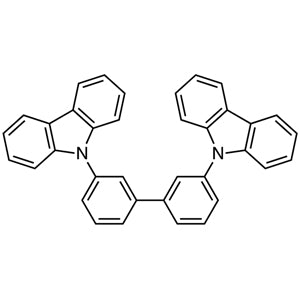
3,3'-Di(9H-carbazol-9-yl)-1,1'-biphenyl(purifiedbysublimation) TCI D5594
Regular price From Rp 2.650.200,00Regular price