TCI D4093 3,4-Dimethoxybenzoyl Chloride, CAS number 3535-37-3, is an aromatic acyl chloride carrying two methoxy groups at positions 3 and 4 of the benzene ring. In organic synthesis laboratories, this material serves as an acylating reagent that transfers the veratroyl (3,4-dimethoxybenzoyl) fragment to a wide range of nucleophiles, including amines, alcohols, phenols, and electron-rich aromatic rings. Its role is significant because many high-value molecular frameworks, among them isoquinoline derivatives and bioactive compounds built on the veratrole ring, are constructed through acylation steps of exactly this kind during the early stages of a synthetic route.
The characteristic that makes this material a preferred choice is the high reactivity of its carbonyl chloride group, which allows amidation and esterification reactions to proceed rapidly, even at room temperature or with only mild cooling, without requiring additional and costly coupling reagents. The presence of two methoxy groups increases the electron density of the aromatic ring, so the resulting derivatives display a distinctive electronic profile that is useful in structure-activity relationship studies. The material is a solid at room temperature, which makes it comparatively easy to weigh out, while still demanding careful handling because of its moisture sensitivity.
In Indonesian laboratories, this reagent is typically used in university and institutional organic chemistry research, in medicinal chemistry groups preparing amide and ester libraries, and in analytical work where a veratroyl-derivatised standard is required. Because acyl chlorides react readily with atmospheric humidity, laboratories in Indonesia's warm and humid climate usually keep the container tightly closed, work in a fume hood, and dispense the solid quickly to protect the remaining stock in the bottle.
Related TCI products
- Amide synthesis: the reactive carbonyl chloride couples directly with primary and secondary amines at room temperature, giving veratroyl amides quickly without any additional coupling reagent.
- Ester and aryl ester preparation: alcohols and phenols are acylated efficiently under mild conditions with only light cooling, making this a practical route to 3,4-dimethoxybenzoate esters.
- Friedel-Crafts acylation: the acyl chloride transfers the veratroyl fragment onto electron-rich aromatic rings, building diaryl ketone frameworks used as intermediates in multi-step synthesis.
- Isoquinoline scaffold construction: acylation of suitable amine precursors with this reagent supplies the veratroyl unit needed in the early stages of routes toward isoquinoline derivatives.
- Structure-activity relationship studies: the two methoxy groups raise aromatic electron density, so derivatives prepared from this reagent carry a distinctive electronic profile useful for comparative studies.
| Brand | TCI |
|---|---|
| CAS number | 3535-37-3 |
| Molecular formula | — |
| Purity | — |
| Category | Chemistry > Building Blocks > Non-Heterocyclic Building Blocks |
| Pack sizes | available in the standard TCI catalogue pack sizes; please confirm the required quantity when ordering |
| Physical form | solid at room temperature |
| Storage | keep the container tightly closed and protected from moisture |
Store the material in its original tightly closed container, protected from atmospheric moisture, and keep the closure secure between uses. Glass containers with well-sealing caps are suitable, and a desiccated storage cabinet gives added protection in humid conditions. All weighing and transfer operations should be carried out in a functioning fume hood, since acyl chlorides react with water and can release irritating vapours. Wear safety glasses, gloves, and a laboratory coat throughout, dispense the solid promptly to limit exposure of the bulk stock to air, and keep the material away from water, alcohols, amines, and other reactive nucleophiles during storage. Follow your institution's chemical waste procedures for residues and contaminated glassware.
—
Produk Terkait
-
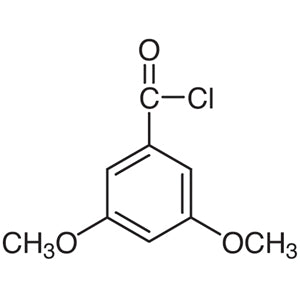
3,5-DimethoxybenzoylChloride TCI D2609
Regular price From Rp 1.565.550,00Regular price -
3-MethoxybenzoylChloride TCI M2992
Regular price Rp 955.500,00Regular price -
3-(4-Methoxybenzoyl)propionicAcid TCI M1383
Regular price From Rp 769.650,00Regular price -
Ethyl(4-Methoxybenzoyl)acetate TCI M1380
Regular price From Rp 1.115.100,00Regular price -
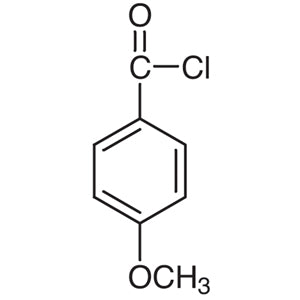
4-MethoxybenzoylChloride TCI M0721
Regular price From Rp 980.700,00Regular price -
2-MethoxybenzoylChloride TCI M0108
Regular price From Rp 2.016.000,00Regular price -
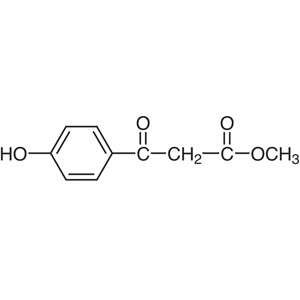
Methyl(4-Hydroxybenzoyl)acetate TCI H0828
Regular price From Rp 4.479.300,00Regular price -
Ethyl(3-Methoxybenzoyl)acetate TCI E1121
Regular price From Rp 1.115.100,00Regular price