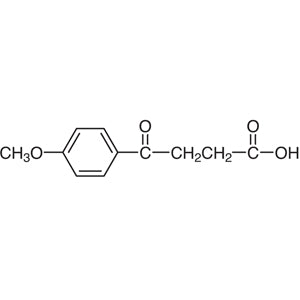
3-(4-Methoxybenzoyl)propionic Acid is a chemical compound widely used in laboratory settings for the synthesis of complex organic molecules. As a key building block in chemical reactions, it plays a crucial role in the development of new compounds and the modification of existing ones. This compound is particularly valued for its versatility in organic synthesis, where it can participate in various reaction mechanisms such as esterification and substitution. Its presence in laboratory workflows supports the creation of more intricate molecular structures, making it an essential tool for chemists and researchers.
The compound’s molecular structure is stable, and its reactivity allows it to be effectively utilized under controlled conditions. The presence of a carboxylic acid group enables it to engage in multiple chemical reactions, including esterification, hydrolysis, and substitution. These properties make it a preferred choice for researchers looking to explore different synthetic pathways. Its availability in solid form and ease of handling further enhance its practicality in both academic and industrial laboratory environments.
In Indonesian laboratories, this compound is commonly used in organic chemistry research, especially in the synthesis of new compounds or the modification of existing ones. It is also utilized in educational settings to train students in chemical processing techniques. Its role in laboratory applications is significant, particularly in the field of synthetic chemistry where it serves as a foundational component for more complex molecular structures.
- Organic Synthesis: This compound is ideal for creating complex organic molecules due to its reactive carboxylic acid group, enabling esterification and substitution reactions.
- Esterification Reactions: Its ability to participate in esterification makes it useful for synthesizing ester derivatives in laboratory settings.
- Substitution Reactions: The presence of a methoxy group facilitates substitution reactions, making it suitable for functional group modifications.
- Educational Research: It is commonly used in academic settings to teach students about chemical synthesis and reaction mechanisms.
- Compound Modification: It is used to modify existing compounds, allowing for the development of new chemical structures with desired properties.
| Brand | TCI |
|---|---|
| CAS number | 3153-44-4 |
| Molecular formula | — |
| Purity | — |
| Category | Chemistry > Building Blocks > Non-Heterocyclic Building Blocks |
| Pack sizes | Available in various quantities as per supplier specifications |
| Physical form | Solid |
| Storage | Store in a cool, dry place away from moisture and direct sunlight |
This compound should be stored in a cool, dry environment to maintain its stability and prevent degradation. It is recommended to use airtight containers to protect it from moisture and humidity. Since it is a solid, it can be stored in standard chemical storage cabinets, provided the area is well-ventilated. Avoid exposure to direct sunlight and heat sources to ensure optimal preservation. In laboratory settings, it is important to handle the compound with appropriate personal protective equipment, such as gloves and safety goggles, to ensure safe usage. Regular inspection of storage conditions is advised to maintain the integrity of the material.
—
Produk Terkait
-
3-MethoxybenzoylChloride TCI M2992
Regular price Rp 955.500,00Regular price -
Ethyl(4-Methoxybenzoyl)acetate TCI M1380
Regular price From Rp 1.115.100,00Regular price -
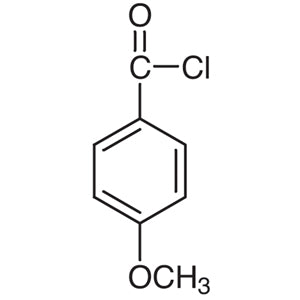
4-MethoxybenzoylChloride TCI M0721
Regular price From Rp 980.700,00Regular price -
2-MethoxybenzoylChloride TCI M0108
Regular price From Rp 2.016.000,00Regular price -
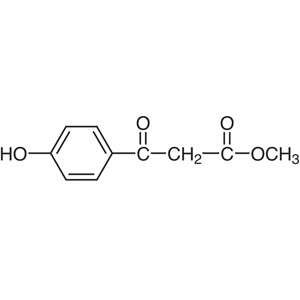
Methyl(4-Hydroxybenzoyl)acetate TCI H0828
Regular price From Rp 4.479.300,00Regular price -
Ethyl(3-Methoxybenzoyl)acetate TCI E1121
Regular price From Rp 1.115.100,00Regular price -
Ethyl(2-Methoxybenzoyl)acetate TCI E1120
Regular price Rp 3.180.450,00Regular price -
4-EthoxybenzoylChloride TCI E0700
Regular price From Rp 875.700,00Regular price