
![1,1-Dimethyl-1,3-dihydrobenzo[c][1,2]oxasilole (CAS 321903-29-1) - TCI D4243 - AMI Scientific](http://amiscientific.com/cdn/shop/files/TCI2510D4243.jpg?v=1769141971&width=1946)
![1,1-Dimethyl-1,3-dihydrobenzo[c][1,2]oxasilole (CAS 321903-29-1) - TCI D4243 - AMI Scientific](http://amiscientific.com/cdn/shop/files/TCI2510D4243.jpg?v=1769141971&width=1445)
TCI D4243 1,1-Dimethyl-1,3-dihydrobenzo[c][1,2]oxasilole (CAS 321903-29-1) is a cyclic organosilicon reagent that combines a silicon atom, an oxygen atom, and a benzene framework within a single five-membered ring. Among synthetic chemists, this compound is known as an aryl donor that plays a role in palladium-catalyzed cross-coupling reactions, particularly in the Hiyama–Denmark approach. The cyclic oxasilole form acts as a protected form of a silanol, so the reagent can be handled more conveniently while remaining easy to activate at the moment of reaction in order to transfer the aryl group to its electrophilic partner.
The principal characteristic that leads chemists to select this reagent is the controllable reactivity of silicon. In contrast to highly reactive organometallic reagents, organosilicon compounds are generally more stable, more tolerant of a wide range of functional groups, and generate silicon-based by-products that are relatively innocuous and straightforward to separate. The strained oxasilole ring allows activation to proceed efficiently when the compound is exposed to a suitable base or activator, so transfer of the aryl group takes place with good results. The combination of storage stability and ready activation on demand is what makes this reagent a practical choice for bench-scale synthesis.
In Indonesian laboratories, this reagent is typically encountered in university and institutional research groups working on organic synthesis and methodology development, as well as in research and development units that prepare aryl-substituted intermediates. It is generally used in small quantities within schlenk-line or inert-atmosphere setups where palladium catalysis is already established, and it suits groups that prefer a milder alternative to more aggressive organometallic aryl donors while maintaining reproducible coupling outcomes across a variety of substrates.
TCI brochures (PDF)
Related TCI products
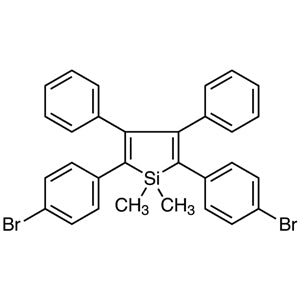
- TCI B4547 866769-99-5 2,5-Bis(4-bromophenyl)-1,1-dimethyl-3,4-diphenylsilole
- TCI B4318 66826-78-6 5-Bromo-2,3-dihydrobenzofuran
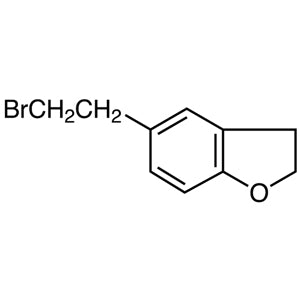
- TCI B4066 127264-14-6 5-(2-Bromoethyl)-2,3-dihydrobenzofuran
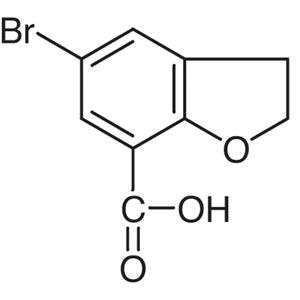
- TCI B1705 41177-72-4 5-Bromo-2,3-dihydrobenzofuran-7-carboxylic Acid
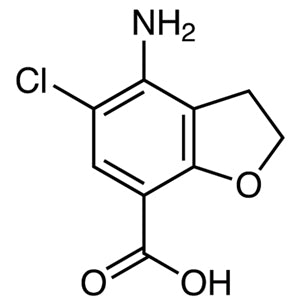
- TCI A2918 123654-26-2 4-Amino-5-chloro-2,3-dihydrobenzofuran-7-carboxylic Acid
- TCI F0875 187618-60-6 Nalpha-[(9H-Fluoren-9-ylmethoxy)carbonyl]-Nomega-(2,2,4,6,7-pentamethyldihydrobenzofuran-5-sulfonyl)-D-arginine
- Hiyama–Denmark cross-coupling: the cyclic oxasilole serves as a masked silanol that is activated in situ, transferring its aryl group to an electrophilic partner under palladium catalysis with good efficiency.
- Biaryl scaffold construction: the reagent supplies an aryl unit for building biaryl linkages, offering milder conditions than highly reactive organometallic donors while remaining compatible with sensitive functional groups.
- Synthetic methodology development: research groups use this oxasilole to study silicon activation, base and activator selection, and catalyst systems that govern aryl transfer efficiency in coupling reactions.
- Functionalized intermediate preparation: because organosilicon reagents tolerate a broad range of functional groups, this compound suits couplings on substrates that would not survive more aggressive aryl-donor chemistry.
- Cleaner work-up coupling routes: the silicon-based by-products generated during the reaction are relatively innocuous and easy to separate, simplifying purification compared with several alternative cross-coupling reagent classes.
| Brand | TCI |
|---|---|
| CAS number | 321903-29-1 |
| Molecular formula | — |
| Purity | — |
| Category | Chemistry > Organometallic Reagents > Organosilicon [Organometallic Reagents] |
| Pack sizes | available in the pack sizes offered by TCI for this catalogue item; please confirm the required size when ordering. |
| Physical form | — |
| Storage | store as an organosilicon reagent, in a tightly closed original container kept cool and dry. |
- Product code: D4243
Keep this reagent in its original tightly closed container, stored in a cool, dry, and well-ventilated location away from moisture, heat, direct sunlight, and ignition sources. Because organosilicon compounds of this type can be sensitive to moisture, containers should be resealed promptly after use, and transfers are best carried out under an inert atmosphere using dry glassware and dry solvents. Handle the material in a fume hood with appropriate personal protective equipment, including safety goggles, chemical-resistant gloves, and a laboratory coat. Store separately from strong oxidizing agents and incompatible chemicals, and always consult the manufacturer's safety data sheet before use and before disposal of residues.
—
Produk Terkait
-
2,5-Bis(4-bromophenyl)-1,1-dimethyl-3,4-diphenylsilole TCI B4547
Regular price From Rp 2.650.200,00Regular price -
5-Bromo-2,3-dihydrobenzofuran TCI B4318
Regular price Rp 1.803.900,00Regular price -
5-(2-Bromoethyl)-2,3-dihydrobenzofuran TCI B4066
Regular price From Rp 2.597.700,00Regular price -
5-Bromo-2,3-dihydrobenzofuran-7-carboxylicAcid TCI B1705
Regular price From Rp 2.147.250,00Regular price -
4-Amino-5-chloro-2,3-dihydrobenzofuran-7-carboxylicAcid TCI A2918
Regular price From Rp 1.353.450,00Regular price -
Nalpha-[(9H-Fluoren-9-ylmethoxy)carbonyl]-Nomega-(2,2,4,6,7-pentamethyldihydrobenzofuran-5-sulfonyl)-D-arginine TCI F0875
Regular price From Rp 769.650,00Regular price -
Nalpha-[(9H-Fluoren-9-ylmethoxy)carbonyl]-Nomega-(2,2,4,6,7-pentamethyldihydrobenzofuran-5-sulfonyl)-L-arginine TCI F0729
Regular price Rp 1.618.050,00Regular price -
2,3-Dihydrobenzofuran-5-boronicAcid(containsvaryingamountsofAnhydride) TCI D4711
Regular price Rp 1.936.200,00Regular price

![Nalpha-[(9H-Fluoren-9-ylmethoxy)carbonyl]-Nomega-(2,2,4,6,7-pentamethyldihydrobenzofuran-5-sulfonyl)-D-arginine (CAS 187618-60-6) - TCI F0875 - AMI Scientific](http://amiscientific.com/cdn/shop/files/TCI2510F0875.jpg?v=1769056125&width=533)
![Nalpha-[(9H-Fluoren-9-ylmethoxy)carbonyl]-Nomega-(2,2,4,6,7-pentamethyldihydrobenzofuran-5-sulfonyl)-L-arginine (CAS 154445-77-9) - TCI F0729 - AMI Scientific](http://amiscientific.com/cdn/shop/files/TCI2510F0729.jpg?v=1768205380&width=533)
