2,5-Bis(4-bromophenyl)-1,1-dimethyl-3,4-diphenylsilole is a complex organosilicon compound widely used in chemical research, particularly in the synthesis of advanced organic and inorganic materials. This compound is a key reagent in the field of organometallic chemistry, where it serves as a versatile building block for creating intricate molecular structures. Its unique chemical composition, featuring both aromatic rings and bromine substituents, makes it an essential component in various synthetic pathways. In laboratory settings, it is frequently employed to produce compounds with specific functional groups and structural features, enabling the development of new materials and pharmaceuticals.
The compound’s chemical stability and reactivity make it a preferred choice for controlled chemical reactions. Its ability to participate in substitution reactions and form stable intermediates is highly valued in synthetic chemistry. The presence of silicon atoms bonded to aromatic systems enhances its utility in reactions requiring precise control over molecular architecture. Additionally, the bromine substituents contribute to its reactivity, allowing it to be used in a variety of functionalization processes. These properties ensure its relevance in both academic and industrial research environments.
In Indonesian laboratories, this compound is commonly used in organic chemistry research and the synthesis of complex molecules. It is particularly favored for its role in creating materials with specific optical or electronic properties. Due to its importance in advanced chemical synthesis, it is a standard item in the inventory of many research laboratories in Indonesia. Its versatility and reliability make it an essential reagent for scientists working on cutting-edge chemical projects.
TCI brochures (PDF)
- Siloles 2024-12-02 · p. 1
Related TCI products
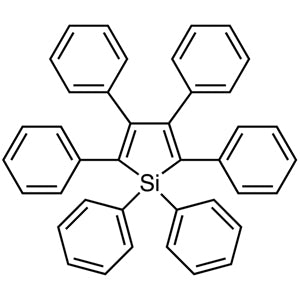
- TCI H1413 752-28-3 1,1,2,3,4,5-Hexaphenylsilole
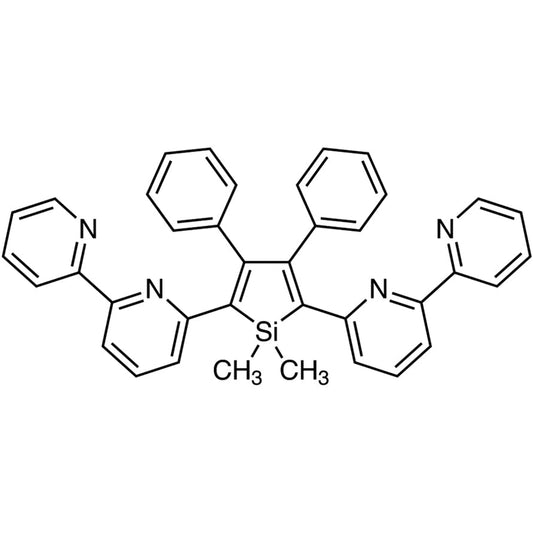
- TCI B4233 350042-00-1 2,5-Bis(2,2'-bipyridin-6-yl)-1,1-dimethyl-3,4-diphenylsilole
- TCI B5535 1342892-15-2 10-(4-Bromophenyl)-9,9-dimethyl-9,10-dihydroacridine
- TCI D4243 321903-29-1 1,1-Dimethyl-1,3-dihydrobenzo[c][1,2]oxasilole
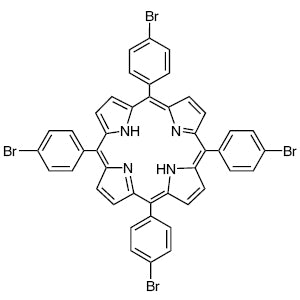
- TCI T3467 29162-73-0 5,10,15,20-Tetrakis(4-bromophenyl)porphyrin
- TCI B5491 118621-30-0 2-(4-Bromophenyl)-5-phenylthiophene
- Organic synthesis of complex molecules where precise control over molecular structure is required.
- Development of new materials with tailored optical and electronic properties.
- Synthesis of pharmaceutical compounds involving silicon-based functional groups.
- Research in organometallic chemistry for the creation of stable intermediates.
- Investigation of silicon-aryl interactions in reaction mechanisms and catalytic processes.
| Brand | TCI |
|---|---|
| CAS number | 866769-99-5 |
| Molecular formula | — |
| Purity | — |
| Category | Chemistry > Organometallic Reagents > Organosilicon |
| Pack sizes | Available in various quantities as per supplier specifications |
| Physical form | Solid |
| Storage | Store in a cool, dry place away from moisture and light |
This compound should be stored in a cool, dry environment, away from moisture and direct light to maintain its chemical integrity. It is recommended to use airtight containers made of glass or high-density polyethylene to prevent contamination and degradation. Due to its brominated nature, it is important to handle it with care, using appropriate personal protective equipment such as gloves and safety goggles. It should be kept in a well-ventilated area to minimize exposure. Avoid contact with incompatible materials, and ensure proper labeling for easy identification and safe handling in the laboratory.
—
Produk Terkait
-
1,1,2,3,4,5-Hexaphenylsilole TCI H1413
Regular price Rp 3.340.050,00Regular priceRp 2.350.950,00Sale price Rp 3.340.050,00 -
2,5-Bis(2,2'-bipyridin-6-yl)-1,1-dimethyl-3,4-diphenylsilole TCI B4233
Regular price Rp 4.796.400,00Regular priceRp 3.369.450,00Sale price Rp 4.796.400,00 -
10-(4-Bromophenyl)-9,9-dimethyl-9,10-dihydroacridine TCI B5535
Regular price From Rp 1.563.450,00Regular priceRp 1.108.800,00Sale price From Rp 1.563.450,00 -
1,1-Dimethyl-1,3-dihydrobenzo[c][1,2]oxasilole TCI D4243
Regular price From Rp 3.498.600,00Regular priceRp 2.462.250,00Sale price From Rp 3.498.600,00 -
5,10,15,20-Tetrakis(4-bromophenyl)porphyrin TCI T3467
Regular price Rp 6.122.550,00Regular priceRp 4.296.600,00Sale price Rp 6.122.550,00 -
2-(4-Bromophenyl)-5-phenylthiophene TCI B5491
Regular price From Rp 928.200,00Regular priceRp 664.650,00Sale price From Rp 928.200,00