acetic Acid (CAS 2903-48-2) - TCI D4265 - AMI Scientific](http://amiscientific.com/cdn/shop/files/TCI2510D4265.jpg?v=1767107338&width=1946)
acetic Acid (CAS 2903-48-2) - TCI D4265 - AMI Scientific](http://amiscientific.com/cdn/shop/files/TCI2510D4265.jpg?v=1767107338&width=1445)
TCI D4265 with CAS number 2903-48-2 is [(2,6-Dimethylphenyl)amino](oxo)acetic Acid, also known as the oxanilic acid derivative of 2,6-dimethylaniline. This compound belongs to the family of non-heterocyclic building blocks and combines two important functional groups within a single small molecule: a secondary amide group and a carboxylic acid group linked through a carbonyl unit. In the laboratory, molecules of this type are valued because they provide an α-ketoamide framework that is ready for further modification, whether toward heterocyclic targets or toward more elaborate ester and amide derivatives.
The principal characteristic that makes this material a preferred choice is the presence of two methyl groups at the ortho positions of the aromatic ring. These substituents create a distinctive steric environment around the amide nitrogen, restricting free rotation and stabilising particular conformations. Researchers frequently exploit this property when designing compounds that require controlled spatial orientation. In addition, the carboxylic acid group offers a highly versatile reaction site, supporting esterification, amide formation through coupling reagents, and salt formation to improve solubility. The oxo group positioned between the two functionalities links them electronically and adds a further point of reactivity.
In Indonesian laboratories, a building block of this kind is typically ordered for synthetic organic chemistry work in university research groups, in pharmaceutical and agrochemical development programmes, and in method development for analytical chemistry. It is generally used at small to moderate scale, where a well-defined starting material with predictable functional group behaviour matters more than bulk quantity. Supplied under the TCI brand, it fits routine bench work in synthesis and derivatisation studies.
Related TCI products
- TCI D6399 3637-01-2 1-(3,4-Dimethylphenyl)ethan-1-one
- TCI I0863 1798-06-7 2-(4-Iodophenyl)acetic Acid
- TCI B3338 42989-85-5 [(tert-Butoxycarbonyl)aminooxy]acetic Acid
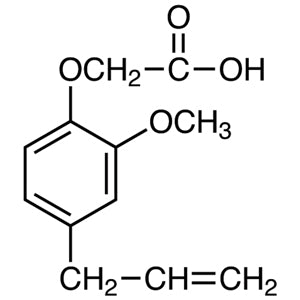
- TCI A3037 6331-61-9 (4-Allyl-2-methoxyphenoxy)acetic Acid
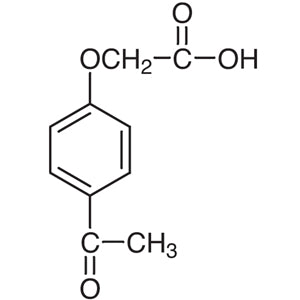
- TCI A2182 1878-81-5 (4-Acetylphenoxy)acetic Acid
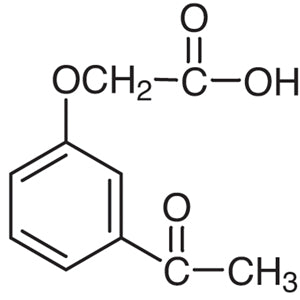
- TCI A2061 1878-80-4 (3-Acetylphenoxy)acetic Acid
- Multi-step organic synthesis: the combination of an amide group and a free carboxylic acid allows this molecule to be carried through several sequential transformations from a single starting point.
- Heterocycle construction: the α-ketoamide framework offers a convenient precursor toward heterocyclic ring systems, since the adjacent carbonyl and nitrogen centres participate readily in cyclisation chemistry.
- Amide coupling studies: the carboxylic acid reacts with coupling reagents to form new amide bonds, making this compound useful for building libraries of more complex amide derivatives.
- Esterification and derivatisation work: the acid functionality can be converted into esters, which is helpful both for protecting group strategies and for adjusting the physical behaviour of intermediates.
- Conformationally controlled molecular design: the two ortho methyl groups restrict rotation around the amide nitrogen, so researchers use this scaffold when a defined spatial orientation is required.
| Brand | TCI |
|---|---|
| CAS number | 2903-48-2 |
| Molecular formula | — |
| Purity | — |
| Category | Chemistry > Building Blocks > Non-Heterocyclic Building Blocks |
| Pack sizes | available in standard laboratory research pack sizes as listed by the manufacturer; please confirm the required size when ordering |
| Physical form | — |
| Storage | keep in the tightly closed original container, in a cool, dry place away from moisture, following the manufacturer's instructions on the label |
- Chemical name: [(2,6-Dimethylphenyl)amino](oxo)acetic Acid
Store this material in its original tightly closed container in a cool, dry, well-ventilated place, protected from moisture and away from direct sunlight and heat sources. Chemically resistant glass or the supplier's original packaging is suitable for storage; avoid transferring to containers that may react with organic acids. Handle in a fume hood or a well-ventilated working area, and wear appropriate personal protective equipment including safety glasses, gloves, and a laboratory coat. Avoid generating dust, avoid inhalation and contact with skin and eyes, and keep the container closed when not in use. Always consult the manufacturer's safety data sheet before handling, and dispose of residues and contaminated materials in accordance with applicable laboratory waste procedures.
—
Produk Terkait
-
1-(3,4-Dimethylphenyl)ethan-1-one TCI D6399
Regular price From Rp 1.353.450,00Regular price -
2-(4-Iodophenyl)aceticAcid TCI I0863
Regular price From Rp 1.220.100,00Regular price -
[(tert-Butoxycarbonyl)aminooxy]aceticAcid TCI B3338
Regular price From Rp 1.565.550,00Regular price -
(4-Allyl-2-methoxyphenoxy)aceticAcid TCI A3037
Regular price From Rp 2.041.200,00Regular price -
(4-Acetylphenoxy)aceticAcid TCI A2182
Regular price From Rp 1.035.300,00Regular price -
(3-Acetylphenoxy)aceticAcid TCI A2061
Regular price From Rp 1.298.850,00Regular price -
2-(4-Methoxyphenoxy)aceticAcid TCI M3547
Regular price From Rp 1.193.850,00Regular price -
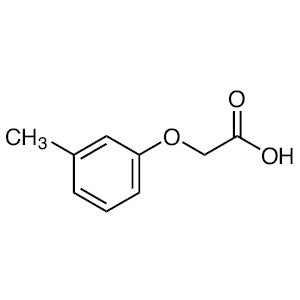
2-(m-Tolyloxy)aceticAcid TCI M3441
Regular price From Rp 2.147.250,00Regular price


![42989-85-5 [(tert-Butoxycarbonyl)aminooxy]acetic Acid - AMI Scientific](http://amiscientific.com/cdn/shop/files/TCI2510B3338.jpg?v=1768193550&width=533)