[(tert-Butoxycarbonyl)aminooxy]acetic Acid is a chemical compound widely used in organic reactions to construct complex molecules. It serves as a key building block in the synthesis of heterocyclic compounds and biological molecules, playing a crucial role in both organic chemistry and pharmacology. This compound is particularly valuable for its ability to participate in substitution and coupling reactions, enabling researchers to create molecules with precise structural features. Its versatility makes it an essential tool for chemists working on advanced synthetic pathways.
The compound’s chemical stability under specific conditions, combined with its reactivity towards acids, bases, and organic solvents, makes it a preferred choice in laboratory settings. Its ability to form new bonds through amine or carboxylate reactions further enhances its utility in synthetic chemistry. The predictable nature and controlled reactivity of [(tert-Butoxycarbonyl)aminooxy]acetic Acid ensure reliable results in complex synthesis processes, making it a favored material in research laboratories that require precision and consistency.
In Indonesian laboratories, [(tert-Butoxycarbonyl)aminooxy]acetic Acid is commonly used in organic chemistry research, drug development, and the analysis of complex compounds. It is widely utilized by research institutions and universities for projects involving the synthesis of molecules with specific structures. Its availability and effectiveness make it an essential component in the chemical toolkit of Indonesian scientists working in various fields of chemistry.
Related TCI products
- Organic synthesis projects benefit from this compound due to its role in constructing complex molecular structures through substitution and coupling reactions.
- Drug development initiatives use it to create biologically active molecules with specific functional groups and structural features.
- Analytical chemistry applications rely on its stability and reactivity to facilitate the breakdown and analysis of complex compounds.
- Research in pharmacology leverages its ability to form new bonds, aiding in the synthesis of pharmaceutical intermediates.
- Academic research in chemical sciences utilizes it for teaching and experimental purposes, demonstrating its importance in educational and research environments.
| Brand | TCI |
|---|---|
| CAS number | 42989-85-5 |
| Molecular formula | — |
| Purity | — |
| Category | Chemistry > Building Blocks > Non-Heterocyclic Building Blocks |
| Pack sizes | Available in various quantities as per supplier specifications |
| Physical form | Solid or powder, depending on the specific product variant |
| Storage | Store in a cool, dry place away from direct sunlight and moisture |
This compound should be stored in a cool, dry environment, away from direct sunlight and moisture to maintain its chemical stability. It is recommended to use airtight containers made of glass or high-density polyethylene to prevent contamination and degradation. When handling, ensure proper ventilation and use appropriate personal protective equipment such as gloves and safety goggles. Avoid contact with incompatible substances like strong acids or bases. Keep the material in a secure location inaccessible to children and unauthorized personnel. Regularly inspect storage conditions to ensure compliance with safety standards and maintain the integrity of the compound.
—
Produk Terkait
-
2-(4-Iodophenyl)aceticAcid TCI I0863
Regular price From Rp 1.272.600,00Regular priceRp 905.100,00Sale price From Rp 1.272.600,00 -
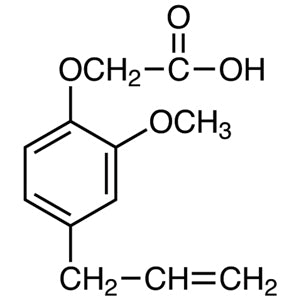
(4-Allyl-2-methoxyphenoxy)aceticAcid TCI A3037
Regular price From Rp 2.093.700,00Regular priceRp 1.479.450,00Sale price From Rp 2.093.700,00 -
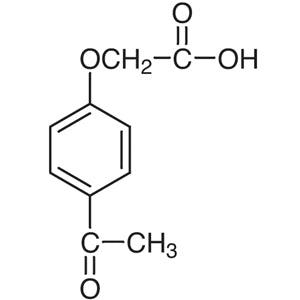
(4-Acetylphenoxy)aceticAcid TCI A2182
Regular price From Rp 1.087.800,00Regular priceRp 775.950,00Sale price From Rp 1.087.800,00 -
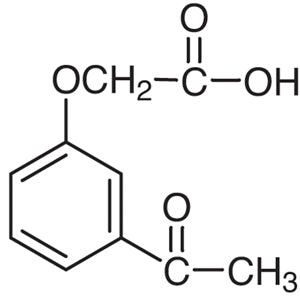
(3-Acetylphenoxy)aceticAcid TCI A2061
Regular price From Rp 1.351.350,00Regular priceRp 960.750,00Sale price From Rp 1.351.350,00 -
2-(4-Methoxyphenoxy)aceticAcid TCI M3547
Regular price From Rp 1.246.350,00Regular priceRp 887.250,00Sale price From Rp 1.246.350,00 -
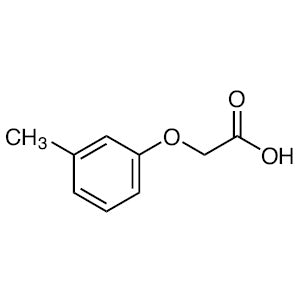
2-(m-Tolyloxy)aceticAcid TCI M3441
Regular price From Rp 2.199.750,00Regular priceRp 1.554.000,00Sale price From Rp 2.199.750,00 -
2-(6-Methoxynaphthalen-2-yl)aceticAcid TCI M3326
Regular price Rp 2.227.050,00Regular priceRp 1.572.900,00Sale price Rp 2.227.050,00 -
[2-(2-Methoxyethoxy)ethoxy]aceticAcid TCI M2963
Regular price From Rp 1.563.450,00Regular priceRp 1.108.800,00Sale price From Rp 1.563.450,00