

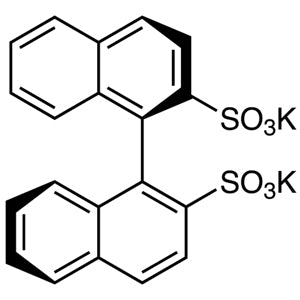
TCI D4445 1092934-19-4 Dipotassium (R)-1,1'-Binaphthyl-2,2'-disulfonate is a specialized chemical compound used in catalytic reactions, particularly in the field of organocatalysis. This compound is a key reagent in asymmetric synthesis, where it facilitates the formation of chiral molecules with high enantioselectivity. Its unique molecular structure, featuring two sulfonate groups attached to the binaphthyl framework, makes it highly effective in promoting specific reaction pathways. Due to its ability to accelerate chemical reactions without being consumed, it plays a crucial role in advancing research in organic chemistry and catalytic processes.
The compound's high reactivity and structural symmetry make it a preferred choice for researchers seeking efficient and selective catalytic systems. Its ability to maintain stability under various reaction conditions ensures consistent performance in laboratory settings. Additionally, its well-defined chemical properties allow for precise control over reaction outcomes, making it a reliable material for both academic and industrial applications. The compound's effectiveness in asymmetric reactions has made it a standard in modern synthetic chemistry.
In Indonesian laboratories, this compound is widely used in organic chemistry research, especially in the synthesis of complex molecules and asymmetric reactions. Its availability and performance make it a valuable tool for chemists working on drug development, material science, and other advanced chemical applications. The compound's role in promoting sustainable and efficient synthetic methods aligns with the growing emphasis on green chemistry in the region.
Advantages (TCI brochure)
- Forms the chiral sulfonic acid (BINSA) by treatment of ion exchange resin
- Applicable to asymmetric aza-Friedel-Crafts and asymmetric Strecker-type reaction
TCI brochures (PDF)
- Sulfonic Acid Catalyst Precursors for Asymmetric Synthesis 2026-02-13 · p. 1
- Asymmetric Organocatalysts 2025-06-12 · p. 10
- Asymmetric Synthesis 2026-03-18 · p. 3
Related TCI products
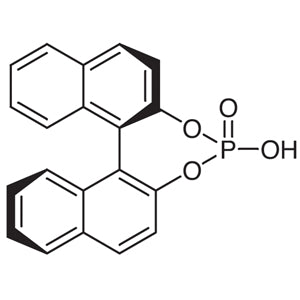
- TCI B1144 35193-64-7 (S)-(+)-1,1'-Binaphthyl-2,2'-diyl Hydrogen Phosphate
- TCI B1143 39648-67-4 (R)-(-)-1,1'-Binaphthyl-2,2'-diyl Hydrogen Phosphate
- TCI A0505 14938-42-2 Dipotassium Anthraquinone-1,8-disulfonate
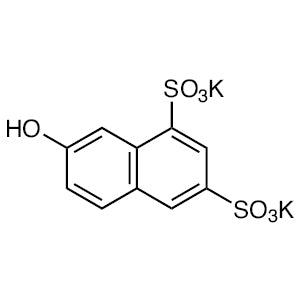
- TCI N0030 842-18-2 Dipotassium 2-Naphthol-6,8-disulfonate
- TCI B4523 1537876-31-5 Bis(3-bromophenylboronic Acid) scyllo-Inositol Complex Dipotassium Pentahydrate
- TCI B1077 63451-34-3 2,2'-Bicinchoninic Acid Dipotassium Salt [for Determination of Cu]
- Asymmetric Synthesis: This compound is ideal for asymmetric reactions due to its chiral structure, enabling the selective formation of enantiomers with high efficiency.
- Organocatalytic Reactions: Its catalytic properties make it suitable for a wide range of organocatalytic processes, enhancing reaction rates and selectivity.
- Complex Molecule Synthesis: The compound's ability to facilitate complex transformations makes it a preferred choice in the synthesis of intricate organic structures.
- Green Chemistry Initiatives: Its efficiency and reduced byproduct formation align with sustainable chemical practices, supporting eco-friendly laboratory protocols.
- Research and Development: It is commonly used in R&D settings for exploring new catalytic mechanisms and optimizing reaction conditions.
From the TCI brochure
- Asymmetric aza-Friedel-Crafts reaction
- Asymmetric Strecker-type reaction
| Brand | TCI |
|---|---|
| CAS number | 1092934-19-4 |
| Molecular formula | — |
| Purity | — |
| Category | Chemistry > Catalysis and Inorganic Chemistry > Organocatalysts [Catalysis] |
| Pack sizes | Available in various quantities as per standard chemical supply practices |
| Physical form | Solid, typically in powder or crystalline form |
| Storage | — |
This compound should be stored in a cool, dry, and well-ventilated area away from direct sunlight and sources of heat. It is recommended to use airtight containers made of glass or high-density polyethylene to prevent moisture absorption and contamination. Due to its chemical nature, it should be handled with appropriate personal protective equipment, including gloves and safety goggles. Avoid exposure to incompatible substances such as strong oxidizers or acids. Ensure proper labeling and storage in designated chemical storage cabinets to maintain safety and prevent accidental spills or reactions. Regular monitoring of storage conditions is advised to maintain the integrity and effectiveness of the compound.
References cited in the TCI brochure
- Kazuaki Ishihara. Enantioselective Friedel-Crafts Aminoalkylation Catalyzed by Chiral Ammonium 1,1′-Binaphthyl-2,2′-disulfonates Synlett, 2011. doi:10.1055/s-0030-1260538
- Manabu Hatano. Chiral Lanthanum(III)-Binaphthyldisulfonate Complexes for Catalytic Enantioselective Strecker Reaction Organic Letters, 2009. doi:10.1021/ol900680f
Produk Terkait
-
(S)-(+)-1,1'-Binaphthyl-2,2'-diylHydrogenPhosphate TCI B1144
Regular price From Rp 505.050,00Regular price -
(R)-(-)-1,1'-Binaphthyl-2,2'-diylHydrogenPhosphate TCI B1143
Regular price From Rp 477.750,00Regular price -
DipotassiumAnthraquinone-1,8-disulfonate TCI A0505
Regular price Rp 1.644.300,00Regular price -
Dipotassium2-Naphthol-6,8-disulfonate TCI N0030
Regular price Rp 2.359.350,00Regular price -
Bis(3-bromophenylboronicAcid)scyllo-InositolComplexDipotassiumPentahydrate TCI B4523
Regular price From Rp 717.150,00Regular price -
2,2'-BicinchoninicAcidDipotassiumSalt[forDeterminationofCu] TCI B1077
Regular price From Rp 1.565.550,00Regular price -
DipotassiumGlycyrrhizinate TCI G0270
Regular price Rp 1.590.750,00Regular price -
Disodium1-Naphthol-3,6-disulfonateHydrate TCI V0037
Regular price Rp 584.850,00Regular price



![63451-34-3 2,2'-Bicinchoninic Acid Dipotassium Salt [for Determination of Cu] - AMI Scientific](http://amiscientific.com/cdn/shop/files/TCI2510B1077_501acb84-bbbd-4643-86c9-ab685c4638df.jpg?v=1767231122&width=533)

