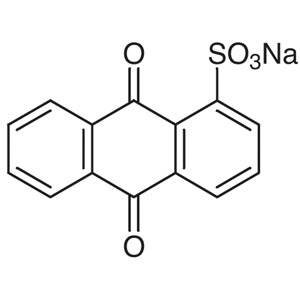
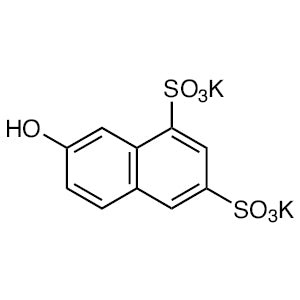
Dipotassium Anthraquinone-1,8-disulfonate is a chemical compound widely used in laboratory settings for its versatility in chemical synthesis and analytical applications. As a non-heterocyclic building block, it plays a crucial role in organic chemistry by serving as a precursor for the development of more complex molecules. Its unique structure, featuring two sulfonate groups attached to the anthraquinone ring, makes it an essential component in reactions that require sulfonate functionality. This compound is commonly found in research laboratories where its chemical properties are leveraged to achieve specific reaction outcomes.
The compound is valued for its solubility in organic solvents and its ability to participate in functional group transformations. These properties make it a preferred choice for chemists seeking reliable and predictable reactivity in synthetic pathways. Additionally, its stability under certain conditions ensures that it remains effective over extended periods, reducing the need for frequent replenishment. This stability, combined with its reactivity, makes it a go-to material for both synthesis and analytical experiments.
In Indonesian laboratories, Dipotassium Anthraquinone-1,8-disulfonate is frequently used in chemical research, particularly in organic synthesis and analytical chemistry. It supports a wide range of experimental needs, from developing new compounds to conducting detailed chemical analyses. Its availability and consistent performance make it a staple in both academic and industrial research environments.
TCI brochures (PDF)
- Battery Research Reagents 2026-09-18 · p. 7
Related TCI products
- TCI A0308 853-68-9 Disodium Anthraquinone-2,6-disulfonate
- TCI A1428 128-56-3 Sodium Anthraquinone-1-sulfonate
- TCI A0506 853-35-0 Anthraquinone-1,5-disulfonic Acid Disodium Salt
- TCI V0139 13388-33-5 2-Vinylanthraquinone
- TCI N0030 842-18-2 Dipotassium 2-Naphthol-6,8-disulfonate
- TCI A0508 153277-35-1 Sodium Anthraquinone-2-sulfonate Monohydrate
- Organic synthesis experiments benefit from this compound due to its sulfonate groups, which enable functional group modifications and enhance reactivity in complex molecule creation.
- Analytical chemistry applications rely on its solubility and chemical stability, making it suitable for use in spectroscopic and chromatographic analyses.
- Dye and pigment development utilizes its structural characteristics to create colorants with specific optical properties, supporting industrial and academic research.
- Environmental chemistry studies use it as a model compound to investigate the behavior of sulfonated aromatic compounds in various media.
- Pharmaceutical research incorporates it in the development of drug molecules, where its chemical structure can be modified to achieve desired pharmacological effects.
| Brand | TCI |
|---|---|
| CAS number | 14938-42-2 |
| Molecular formula | — |
| Purity | — |
| Category | Chemistry > Building Blocks > Non-Heterocyclic Building Blocks |
| Pack sizes | Available in various quantities as per supplier specifications |
| Physical form | Solid powder |
| Storage | Store in a cool, dry place away from direct sunlight and moisture |
This compound should be stored in a cool, dry environment to maintain its chemical integrity and prevent degradation. It is recommended to use airtight containers to minimize exposure to moisture and air, which can affect its stability. Due to its chemical nature, it should be handled with appropriate personal protective equipment, such as gloves and safety goggles, to ensure laboratory safety. While it is generally stable under normal storage conditions, it should be kept away from incompatible substances to avoid any potential reactions. Proper labeling and storage practices help ensure the compound remains safe and effective for use in laboratory applications.
—
Product Categories
Produk Terkait
-
DisodiumAnthraquinone-2,6-disulfonate TCI A0308
Regular price From Rp 5.300.400,00Regular priceRp 3.722.250,00Sale price From Rp 5.300.400,00 -
SodiumAnthraquinone-1-sulfonate TCI A1428
Regular price From Rp 1.192.800,00Regular priceRp 849.450,00Sale price From Rp 1.192.800,00 -
Anthraquinone-1,5-disulfonicAcidDisodiumSalt TCI A0506
Regular price Rp 2.359.350,00Regular priceRp 1.665.300,00Sale price Rp 2.359.350,00 -
2-Vinylanthraquinone TCI V0139
Regular price From Rp 2.384.550,00Regular priceRp 1.683.150,00Sale price From Rp 2.384.550,00 -
Dipotassium2-Naphthol-6,8-disulfonate TCI N0030
Regular price Rp 2.359.350,00Regular priceRp 1.649.550,00Sale price Rp 2.359.350,00 -
SodiumAnthraquinone-2-sulfonateMonohydrate TCI A0508
Regular price From Rp 822.150,00Regular priceRp 590.100,00Sale price From Rp 822.150,00 -
Disodium1-Naphthol-3,6-disulfonateHydrate TCI V0037
Regular price Rp 584.850,00Regular priceRp 408.450,00Sale price Rp 584.850,00 -
Disodium1-Nitroso-2-naphthol-3,6-disulfonateMonohydrate TCI N0268
Regular price From Rp 1.035.300,00Regular priceRp 723.450,00Sale price From Rp 1.035.300,00