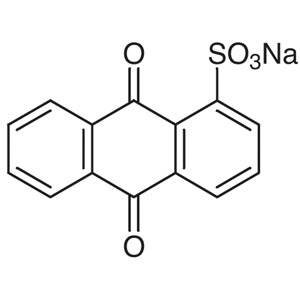
Anthraquinone-1,5-disulfonic Acid Disodium Salt is a chemical compound widely used in laboratory settings for its versatile applications in organic synthesis and chemical reactions. As a building block in chemistry, it serves as a key reagent in various synthetic pathways, particularly in the development of dyes, pigments, and other high-reactivity compounds. Its molecular structure, derived from anthraquinone with two sulfonate groups attached to carbon atoms 1 and 5, provides a stable yet reactive platform for further chemical modifications. This compound is essential for researchers aiming to explore new synthetic routes or functionalize aromatic systems.
The compound's high solubility in both organic solvents and water, along with its reactivity under controlled chemical conditions, makes it a preferred choice for laboratory use. Its ability to participate in substitution, oxidation, and reduction reactions allows it to be a valuable tool in both qualitative and quantitative chemical analyses. Additionally, its chemical stability under normal conditions ensures that it remains effective for extended periods, reducing the risk of degradation during storage and use. These properties make it a reliable reagent for a wide range of experimental applications.
In Indonesian laboratories, Anthraquinone-1,5-disulfonic Acid Disodium Salt is commonly used in chemical research, particularly in organic synthesis and analytical chemistry. It is frequently employed in academic and research institutions to support studies involving dye chemistry, colorants, and other specialized applications. Its availability and reliability make it an essential component in the chemical toolkit of Indonesian researchers.
TCI brochures (PDF)
- Battery Research Reagents 2026-09-18 · p. 7
Related TCI products
- TCI A0308 853-68-9 Disodium Anthraquinone-2,6-disulfonate
- TCI A1428 128-56-3 Sodium Anthraquinone-1-sulfonate
- TCI A0505 14938-42-2 Dipotassium Anthraquinone-1,8-disulfonate
- TCI V0139 13388-33-5 2-Vinylanthraquinone
- TCI A0263 24605-36-5 Aniline-2,5-disulfonic Acid Monosodium Salt
- TCI D0121 81-11-8 4,4'-Diaminostilbene-2,2'-disulfonic Acid
- Organic Synthesis: This compound is widely used in the synthesis of dyes and pigments due to its reactivity and structural versatility.
- Colorant Development: Its sulfonate groups enable it to be a key component in the creation of synthetic colorants and industrial dyes.
- Chemical Reactions: It serves as a reagent in substitution, oxidation, and reduction reactions, making it suitable for a variety of synthetic pathways.
- Analytical Chemistry: Its solubility and reactivity make it useful in analytical techniques that require controlled chemical environments.
- Research and Development: It is frequently used in R&D settings to explore new chemical structures and functional groups.
| Brand | TCI |
|---|---|
| CAS number | 853-35-0 |
| Molecular formula | — |
| Purity | — |
| Category | Chemistry > Building Blocks > Non-Heterocyclic Building Blocks |
| Pack sizes | Available in various quantities as per supplier specifications |
| Physical form | Solid |
| Storage | Store in a cool, dry place away from direct sunlight |
Anthraquinone-1,5-disulfonic Acid Disodium Salt should be stored in a cool, dry place, away from direct sunlight and moisture. It is recommended to use airtight containers to prevent exposure to humidity, which could affect its stability. Due to its chemical reactivity, it should be handled with appropriate personal protective equipment, such as gloves and safety goggles, to ensure safe laboratory practices. It is important to maintain proper ventilation in the workspace to minimize inhalation risks. The compound is generally stable under normal storage conditions, making it suitable for long-term use in laboratory settings. Always follow standard chemical safety protocols when handling this material.
—
Product Categories
Produk Terkait
-
DisodiumAnthraquinone-2,6-disulfonate TCI A0308
Regular price From Rp 5.300.400,00Regular priceRp 3.722.250,00Sale price From Rp 5.300.400,00 -
SodiumAnthraquinone-1-sulfonate TCI A1428
Regular price From Rp 1.192.800,00Regular priceRp 849.450,00Sale price From Rp 1.192.800,00 -
DipotassiumAnthraquinone-1,8-disulfonate TCI A0505
Regular price Rp 1.696.800,00Regular priceRp 1.202.250,00Sale price Rp 1.696.800,00 -
2-Vinylanthraquinone TCI V0139
Regular price From Rp 2.384.550,00Regular priceRp 1.683.150,00Sale price From Rp 2.384.550,00 -
Aniline-2,5-disulfonicAcidMonosodiumSalt TCI A0263
Regular price From Rp 980.700,00Regular priceRp 685.650,00Sale price From Rp 980.700,00 -
4,4'-Diaminostilbene-2,2'-disulfonicAcid TCI D0121
Regular price From Rp 743.400,00Regular priceRp 519.750,00Sale price From Rp 743.400,00 -
SodiumAnthraquinone-2-sulfonateMonohydrate TCI A0508
Regular price From Rp 822.150,00Regular priceRp 590.100,00Sale price From Rp 822.150,00 -
1-Amino-4-bromoanthraquinone-2-sulfonicAcidSodiumSalt TCI A0279
Regular price From Rp 822.150,00Regular priceRp 590.100,00Sale price From Rp 822.150,00