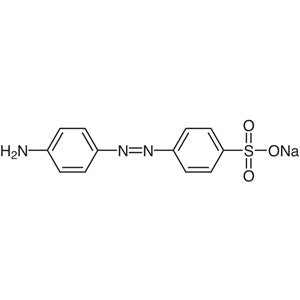
Sodium Anthraquinone-1-sulfonate is a chemical compound widely utilized in laboratory settings for its versatility and reactivity. It belongs to the anthraquinone family, known for its participation in various chemical reactions. This compound plays a crucial role in synthetic chemistry, particularly in organic and analytical applications. Its ability to undergo substitution and oxidation reactions makes it a valuable reagent in the development of new compounds. Due to its chemical stability and controlled reactivity, it is frequently used in research and industrial processes requiring precise chemical transformations.
The compound's chemical properties, including its solubility in organic solvents and its capacity to interact with various reagents, make it a preferred choice for complex chemical reactions. Its molecular structure allows it to participate in a range of chemical processes, from dye synthesis to pharmaceutical development. The compound’s stability under normal laboratory conditions further enhances its reliability in experimental settings. These characteristics make it a reliable and consistent material for both academic and industrial research.
In Indonesian laboratories, Sodium Anthraquinone-1-sulfonate is commonly used in chemical synthesis and analytical procedures. It is a key component in the development of dyes, pharmaceuticals, and other specialty chemicals. Its solubility and reactivity make it suitable for applications requiring controlled chemical transformations. Its widespread use in both academic and industrial research underscores its importance in the chemical sciences within Indonesia.
TCI brochures (PDF)
- Battery Research Reagents 2026-09-18 · p. 7
Related TCI products
- TCI A0308 853-68-9 Disodium Anthraquinone-2,6-disulfonate
- TCI A0506 853-35-0 Anthraquinone-1,5-disulfonic Acid Disodium Salt
- TCI A0505 14938-42-2 Dipotassium Anthraquinone-1,8-disulfonate
- TCI V0139 13388-33-5 2-Vinylanthraquinone
- TCI A0508 153277-35-1 Sodium Anthraquinone-2-sulfonate Monohydrate
- TCI A0279 6258-06-6 1-Amino-4-bromoanthraquinone-2-sulfonic Acid Sodium Salt
- Organic synthesis where controlled substitution reactions are required due to its reactivity and stability.
- Analytical chemistry for the development of reagents and indicators due to its chemical versatility.
- Dye and pigment production as a precursor in the synthesis of colored compounds.
- Pharmaceutical research for the development of compounds with specific chemical properties.
- Industrial chemical processes requiring reliable and consistent chemical intermediates.
| Brand | TCI |
|---|---|
| CAS number | 128-56-3 |
| Molecular formula | — |
| Purity | — |
| Category | Chemistry > Building Blocks > Non-Heterocyclic Building Blocks |
| Pack sizes | Available in various quantities as per standard laboratory supply |
| Physical form | Solid powder |
| Storage | Store in a cool, dry place away from direct sunlight |
Sodium Anthraquinone-1-sulfonate should be stored in a cool, dry environment to maintain its chemical integrity. It is recommended to keep it in airtight containers to prevent moisture absorption. The compound is generally stable under normal laboratory conditions but should be protected from prolonged exposure to light. Proper labeling of containers is essential for safe handling. Laboratory personnel should wear appropriate personal protective equipment when handling this compound to ensure safety. It is important to store the material away from incompatible substances to avoid any potential chemical interactions.
—
Product Categories
Produk Terkait
-
DisodiumAnthraquinone-2,6-disulfonate TCI A0308
Regular price From Rp 5.300.400,00Regular priceRp 3.722.250,00Sale price From Rp 5.300.400,00 -
Anthraquinone-1,5-disulfonicAcidDisodiumSalt TCI A0506
Regular price Rp 2.359.350,00Regular priceRp 1.665.300,00Sale price Rp 2.359.350,00 -
DipotassiumAnthraquinone-1,8-disulfonate TCI A0505
Regular price Rp 1.696.800,00Regular priceRp 1.202.250,00Sale price Rp 1.696.800,00 -
2-Vinylanthraquinone TCI V0139
Regular price From Rp 2.384.550,00Regular priceRp 1.683.150,00Sale price From Rp 2.384.550,00 -
SodiumAnthraquinone-2-sulfonateMonohydrate TCI A0508
Regular price From Rp 822.150,00Regular priceRp 590.100,00Sale price From Rp 822.150,00 -
1-Amino-4-bromoanthraquinone-2-sulfonicAcidSodiumSalt TCI A0279
Regular price From Rp 822.150,00Regular priceRp 590.100,00Sale price From Rp 822.150,00 -
Sodium4-Aminoazobenzene-4'-sulfonate TCI A0748
Regular price From Rp 1.087.800,00Regular priceRp 760.200,00Sale price From Rp 1.087.800,00 -
Sodium2-Nitroaniline-4-sulfonate TCI N0371
Regular price From Rp 1.273.650,00Regular priceRp 890.400,00Sale price From Rp 1.273.650,00