5,5'-Dibromo-4,4'-dinonyl-2,2'-bithiazole is a chemical compound widely used in scientific research, particularly in the development of semiconductor and polymer materials. This compound plays a crucial role in laboratories where material properties are modified through chemical reactions or used as a building block in the synthesis of complex compounds. Its unique molecular structure provides the foundation for creating materials with specific electronic properties, making it an essential component in advanced material science studies.
The compound's chemical properties, including its bromine groups and thiazole rings, contribute to its reactivity and ability to form stable chemical bonds with other substances. These characteristics make it a preferred choice for researchers seeking to develop materials with enhanced conductivity, stability, or functional performance. Its versatility allows it to be incorporated into various synthetic pathways, supporting the creation of new materials with tailored properties.
In Indonesian laboratories, 5,5'-Dibromo-4,4'-dinonyl-2,2'-bithiazole is commonly used in material science research, especially in semiconductor and polymer technologies. Researchers from academic institutions and research organizations rely on this compound to conduct experiments aimed at improving material properties or developing new materials with specific applications in electronics and advanced manufacturing.
- Semiconductor material development: This compound is ideal for creating semiconductor materials due to its ability to modify electronic properties through chemical reactions.
- Polymer synthesis: It serves as a key building block in the synthesis of complex polymers, enabling the creation of materials with tailored properties.
- Electronic device research: Its reactivity and molecular structure make it suitable for research into electronic devices requiring high-performance materials.
- Advanced material modification: It is used to alter the properties of existing materials, enhancing their functionality for specialized applications.
- Chemical reaction intermediates: Its unique chemical structure allows it to act as an intermediate in various synthetic processes, supporting the development of new compounds.
| Brand | TCI |
|---|---|
| CAS number | 172100-44-6 |
| Molecular formula | — |
| Purity | — |
| Category | Materials Science > Material Building Blocks > Polymer/Macromolecule Semiconductor Building Blocks |
| Pack sizes | — |
| Physical form | — |
| Storage | Store in a cool, dry place away from light and moisture |
This compound should be stored in a cool, dry environment, away from direct sunlight and moisture. It is recommended to use airtight containers to prevent exposure to air and humidity, which could affect its chemical stability. Proper labeling of storage containers is essential for safety and traceability. In laboratory settings, it should be handled with appropriate personal protective equipment, including gloves and safety goggles, to minimize direct contact. Due to its chemical nature, it should be kept away from incompatible substances such as strong oxidizers or acids. Regular monitoring of storage conditions ensures the compound remains in optimal condition for research applications.
—
Produk Terkait
-
2-[(tert-Butoxycarbonyl)amino]thiazole-4-carboxylicAcid TCI B6144
Regular price From Rp 1.458.450,00Regular price -
2-[2-[(tert-Butoxycarbonyl)amino]thiazol-4-yl]aceticAcid TCI B6173
Regular price From Rp 769.650,00Regular price -
5-(4-Bromophenyl)thiazol-2-amine TCI B6270
Regular price Rp 2.306.850,00Regular price -
5-(3-Bromophenyl)thiazol-2-amine TCI B6285
Regular price Rp 3.287.550,00Regular price -
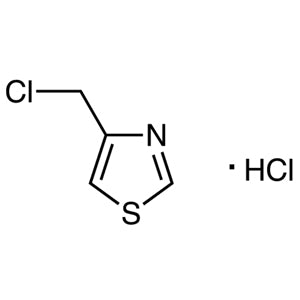
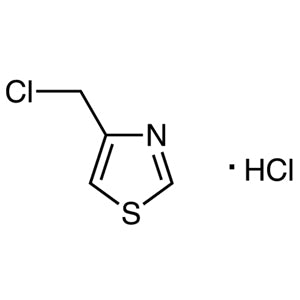
4-(Chloromethyl)thiazoleHydrochloride TCI C1623
Regular price From Rp 1.908.900,00Regular price -
2-Chlorothiazole TCI C2471
Regular price From Rp 1.565.550,00Regular price -
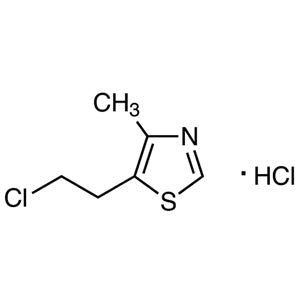
ChlormethiazoleHydrochloride TCI C3020
Regular price From Rp 2.677.500,00Regular price -
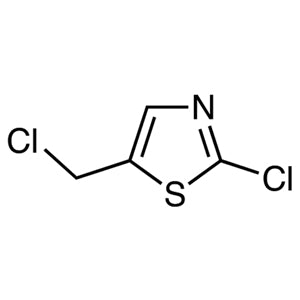
2-Chloro-5-(chloromethyl)thiazole TCI C3295
Regular price From Rp 477.750,00Regular price
![2-[(tert-Butoxycarbonyl)amino]thiazole-4-carboxylic Acid (CAS 83673-98-7) - TCI B6144 - AMI Scientific](http://amiscientific.com/cdn/shop/files/TCI2510B6144_30b774b8-53f0-43f4-a45f-a11d6bda12b0.jpg?v=1767864684&width=533)
![2-[2-[(tert-Butoxycarbonyl)amino]thiazol-4-yl]acetic Acid (CAS 89336-46-9) - TCI B6173 - AMI Scientific](http://amiscientific.com/cdn/shop/files/TCI2510B6173_3c32a927-9099-41fd-a930-c06aeda91824.jpg?v=1767864801&width=533)