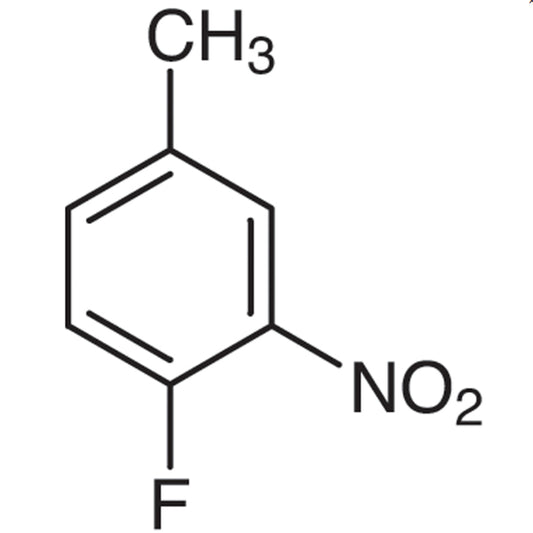
2,5-Difluoro-4-nitrotoluene is a chemical compound widely used in various chemical reactions, particularly in the synthesis of complex organic compounds. This material plays a crucial role in laboratory settings as a building block for constructing more intricate molecular structures. Its unique combination of fluorine and nitro groups makes it a valuable reagent in both academic and industrial research. Due to its reactivity and versatility, it is frequently employed in the development of new pharmaceuticals and specialty chemicals.
The compound is known for its chemical stability and ability to participate in a range of substitution and redox reactions. Its relatively high polarity allows it to dissolve well in organic solvents such as ethyl acetate and chloroform, making it suitable for reactions requiring high solubility and specific reactivity. These properties make it an essential component in many synthetic pathways, especially in the field of organic chemistry.
In Indonesian laboratories, 2,5-Difluoro-4-nitrotoluene is commonly used in scientific research, particularly in organic chemistry and pharmaceutical studies. It is relied upon by research institutions and universities to develop new compounds with potential applications in medicine and industry. Its consistent performance and reliability make it a preferred choice for researchers seeking to advance their work in chemical synthesis.
- Organic synthesis is a key application where this compound is used to build complex molecular structures due to its reactivity and functional group versatility.
- Pharmaceutical research benefits from its use in the development of new drug compounds, as it can be modified to create various derivatives with therapeutic potential.
- Industrial chemical synthesis relies on this compound for the production of specialty chemicals, thanks to its stability and solubility in organic solvents.
- Analytical chemistry applications often involve this compound as a standard or reagent in chromatographic and spectroscopic analyses.
- Environmental studies may use it as a model compound to study the behavior of fluorinated and nitro-containing substances in different matrices.
| Brand | TCI |
|---|---|
| CAS number | 141412-60-4 |
| Molecular formula | — |
| Purity | — |
| Category | Chemistry > Building Blocks > Fluorinated Building Blocks |
| Pack sizes | — |
| Physical form | — |
| Storage | Store in a cool, dry place away from direct sunlight and incompatible materials |
This compound should be stored in a cool, dry environment, away from direct sunlight and sources of heat. It is recommended to use airtight containers made of materials that are chemically inert, such as glass or high-density polyethylene, to prevent contamination and degradation. Due to its chemical nature, it should be kept separate from strong oxidizing agents and reactive metals. In laboratory settings, it is important to handle the compound with appropriate personal protective equipment, including gloves and safety goggles, to ensure safety. Always ensure proper ventilation when working with this material to minimize exposure risks.
—
Produk Terkait
-
2-Fluoro-3-nitrotoluene TCI F0661
Regular price From Rp 769.650,00Regular price -
3-Fluoro-4-nitrotoluene TCI F0567
Regular price From Rp 848.400,00Regular price -
4-Fluoro-3-nitrotoluene TCI F0562
Regular price From Rp 637.350,00Regular price -
5-Fluoro-2-nitrotoluene TCI F0301
Regular price From Rp 689.850,00Regular price -
2-Fluoro-4-nitrotoluene TCI F0292
Regular price From Rp 530.250,00Regular price -
2-Fluoro-5-nitrotoluene TCI F0276
Regular price From Rp 1.298.850,00Regular price -
4-Fluoro-2-nitrotoluene TCI F0218
Regular price From Rp 452.550,00Regular price -
4-Chloro-2-fluoro-5-nitrotoluene TCI C3334
Regular price Rp 1.696.800,00Regular price