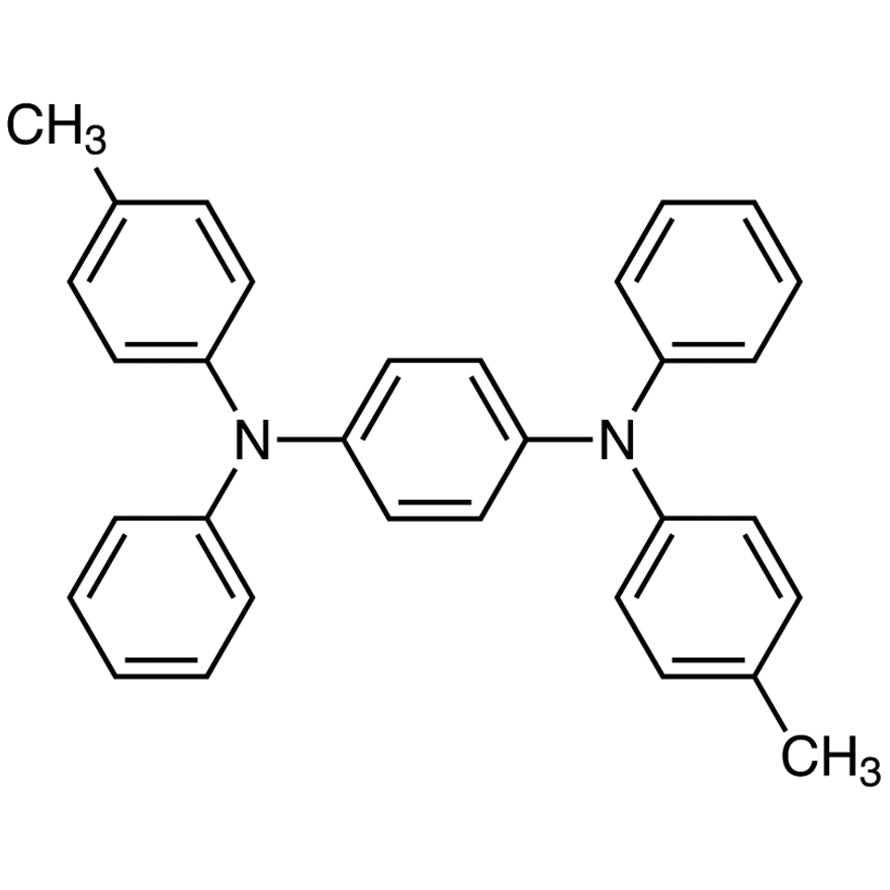
N,N’-Diphenyl-N,N’-bis(p-tolyl)-1,4-phenylenediamine (TPD) is an organic compound widely used in the development of optoelectronic devices, particularly in the field of Organic Light-Emitting Diodes (OLEDs). This material serves as a key component in the emissive layer of OLED structures, where it facilitates the emission of light when an electric current passes through the device. In laboratory settings, TPD is essential for researchers working on the fabrication and optimization of OLED materials. Its role extends beyond just light emission, as it contributes to the overall efficiency and stability of the device.
TPD is preferred due to its excellent electron conductivity and high chemical stability. These properties ensure consistent performance under various operating conditions, making it suitable for long-term use in demanding applications. The compound's molecular structure is also highly stable, which prevents degradation and maintains its functionality over time. This stability is crucial for maintaining the integrity of OLED devices, especially in environments where exposure to heat or moisture could otherwise compromise performance.
In Indonesian laboratories, TPD is extensively used in research and development projects focused on optoelectronic materials. It is commonly found in academic institutions and research centers that are working on advancing OLED technology. Its application supports the development of organic light-emitting devices that are both efficient and durable, aligning with the needs of the local industry and innovation efforts. The compound plays a vital role in driving technological progress in the field of optoelectronics.
- OLED Material Development: TPD is widely used in the fabrication of OLEDs due to its ability to emit light efficiently and maintain stability under operational conditions.
- Optoelectronic Research: Researchers utilize TPD to study the properties of organic materials and their performance in light-emitting devices.
- Thin Film Deposition Studies: TPD is applied in thin film deposition processes to investigate its behavior and effectiveness in different layers of OLED structures.
- Material Stability Testing: The compound's high chemical stability makes it ideal for testing the durability and performance of organic materials over time.
- Semiconductor Device Fabrication: TPD is incorporated into semiconductor devices to enhance their electrical and optical properties for improved performance.
| Brand | TCI |
|---|---|
| CAS number | 138171-14-9 |
| Molecular formula | — |
| Purity | — |
| Category | Materials Science > Electronic Materials > Organic Light-Emitting Diode (OLED) Materials |
| Pack sizes | Available in various quantities as per supplier specifications |
| Physical form | Solid, typically in powder or crystalline form |
| Storage | Store in a cool, dry place away from direct sunlight and moisture |
TPD should be stored in a cool, dry environment to maintain its chemical stability and prevent degradation. It is recommended to keep the material in airtight containers to minimize exposure to moisture and air, which can affect its performance. Laboratory personnel should handle TPD with care, using appropriate personal protective equipment such as gloves and safety goggles to ensure safety during handling. The compound should be stored away from incompatible substances to avoid any potential chemical reactions. Proper labeling of storage containers is essential to ensure safe handling and prevent accidental exposure. Regular inspection of storage conditions is advised to maintain optimal environmental parameters for the material's preservation.
—
Produk Terkait
-
N,N'-Bis[4-di(m-tolyl)aminophenyl]-N,N'-diphenylbenzidine TCI B5634
Regular price From Rp 2.677.500,00Regular price -
N,N-Bis(4'-diphenylamino-4-biphenylyl)amine TCI B5676
Regular price From Rp 1.590.750,00Regular price -
1,4-Bis[4-(N,N-diphenylamino)styryl]benzene TCI B5820
Regular price Rp 2.889.600,00Regular price -
(1R,2R)-1,2-Bis(2,4,6-trimethylphenyl)ethylenediamineDihydrochloride TCI B5914
Regular price Rp 2.199.750,00Regular price -
(1R,2R)-1,2-Bis(4-methylphenyl)ethylenediamineDihydrochloride TCI B6240
Regular price Rp 2.174.550,00Regular price -
(1S,2S)-N~1~,N~2~-Dibenzylcyclohexane-1,2-diamineDihydrochloride TCI B6390
Regular price From Rp 3.605.700,00Regular price -
(1R,2R)-N1,N2-Dibenzylcyclohexane-1,2-diamineDihydrochloride TCI B6393
Regular price From Rp 3.605.700,00Regular price -
1,4-BenzenediethanamineDihydroiodide TCI B6570
Regular price From Rp 2.068.500,00Regular price
![N,N'-Bis[4-di(m-tolyl)aminophenyl]-N,N'-diphenylbenzidine (CAS 199121-98-7) - TCI B5634 - AMI Scientific](http://amiscientific.com/cdn/shop/files/TCI2510B5634.jpg?v=1771058153&width=533)

![1,4-Bis[4-(N,N-diphenylamino)styryl]benzene (CAS 55035-42-2) - TCI B5820 - AMI Scientific](http://amiscientific.com/cdn/shop/files/TCI2510B5820.jpg?v=1771057994&width=533)