![2,4-Diphenyl-6-[3-(4,4,5,5-tetramethyl-1,3,2-dioxaborolan-2-yl)phenyl]-1,3,5-triazine (CAS 1269508-31-7) - TCI D5591 - AMI Scientific](http://amiscientific.com/cdn/shop/files/TCI2510D5591.jpg?v=1768205126&width=1946)
![2,4-Diphenyl-6-[3-(4,4,5,5-tetramethyl-1,3,2-dioxaborolan-2-yl)phenyl]-1,3,5-triazine (CAS 1269508-31-7) - TCI D5591 - AMI Scientific](http://amiscientific.com/cdn/shop/files/TCI2510D5591.jpg?v=1768205126&width=1445)
2,4-Diphenyl-6-[3-(4,4,5,5-tetramethyl-1,3,2-dioxaborolan-2-yl)phenyl]-1,3,5-triazine is a complex organic compound widely used in laboratory settings for its unique reactivity and structural versatility. This compound plays a crucial role in synthetic chemistry, particularly in reactions involving organoboron reagents. Its molecular structure allows for selective and specific interactions with various organic substrates, making it an essential tool in modern chemical research. As a member of the organoboron reagent family, it is highly valued for its ability to participate in a range of coupling reactions, such as Suzuki-Miyaura and Stille, which are fundamental in the synthesis of complex organic molecules.
The compound's reactivity is primarily attributed to the presence of a boron-containing group, which is known for its high reactivity and compatibility with a wide range of functional groups. This characteristic enables the compound to be used in the synthesis of heterocyclic compounds and complex structures that require precise chemical transformations. Its stability under controlled conditions further enhances its utility in laboratory environments, allowing chemists to perform multiple reaction steps with consistent results. The compound's ability to maintain reactivity while remaining stable under specific conditions makes it a preferred choice for advanced chemical synthesis.
In Indonesian laboratories, this compound is commonly used by researchers and scientists in the development of new compounds, drug synthesis, and material research. Its application in the synthesis of complex organic structures is particularly relevant in academic and industrial research settings. The compound's versatility and reactivity make it a valuable asset in the pursuit of innovative chemical solutions and scientific advancements.
TCI brochures (PDF)
- Suzuki-Miyaura Cross Coupling Reaction 2025-12-01 · p. 19
Related TCI products
- TCI D5271 1219956-23-6 2,4-Diphenyl-6-[4-(4,4,5,5-tetramethyl-1,3,2-dioxaborolan-2-yl)phenyl]-1,3,5-triazine
- TCI D5033 1259280-37-9 2-(9,9-Diphenyl-9H-fluoren-4-yl)-4,4,5,5-tetramethyl-1,3,2-dioxaborolane
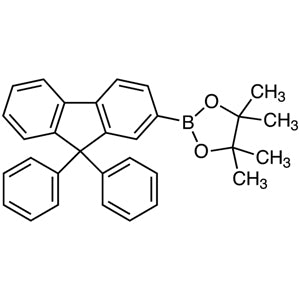
- TCI D5009 462128-39-8 2-(9,9-Diphenyl-9H-fluoren-2-yl)-4,4,5,5-tetramethyl-1,3,2-dioxaborolane
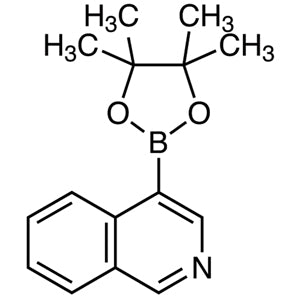
- TCI I0739 685103-98-4 4-(4,4,5,5-Tetramethyl-1,3,2-dioxaborolan-2-yl)isoquinoline
- TCI T4406 1219637-88-3 1-(4,4,5,5-Tetramethyl-1,3,2-dioxaborolan-2-yl)-9H-carbazole
- TCI T4400 942919-26-8 4-(4,4,5,5-Tetramethyl-1,3,2-dioxaborolan-2-yl)-1H-pyrrolo[2,3-b]pyridine
- Used in the synthesis of heterocyclic compounds due to its ability to participate in selective and efficient coupling reactions.
- Applied in drug development for the creation of complex molecular structures requiring precise chemical modifications.
- Employed in material science research for the synthesis of advanced polymers and functional materials.
- Utilized in organic chemistry experiments for the preparation of various boron-containing compounds.
- Integrated into academic research projects to explore new synthetic methodologies and reaction mechanisms.
| Brand | TCI |
|---|---|
| CAS number | 1269508-31-7 |
| Molecular formula | — |
| Purity | — |
| Category | Chemistry > Organometallic Reagents > Organoboron [Organometallic Reagents] |
| Pack sizes | Available in various quantities as per supplier specifications |
| Physical form | Solid (as per standard product description) |
| Storage | Store in a cool, dry place away from moisture and direct sunlight |
This compound should be stored in a cool, dry environment to maintain its chemical integrity and reactivity. It is recommended to use airtight containers to prevent exposure to moisture and air, which can affect its stability. Proper labeling of storage containers is essential for safety and identification purposes. In laboratory settings, it should be handled with appropriate personal protective equipment, such as gloves and safety goggles, to minimize direct contact. Due to its reactivity, it should be stored separately from incompatible substances to avoid any potential chemical interactions. Regular monitoring of storage conditions ensures the compound remains suitable for use in chemical reactions and research applications.
—
Produk Terkait
-
2,4-Diphenyl-6-[4-(4,4,5,5-tetramethyl-1,3,2-dioxaborolan-2-yl)phenyl]-1,3,5-triazine TCI D5271
Regular price From Rp 3.127.950,00Regular price -
2-(9,9-Diphenyl-9H-fluoren-4-yl)-4,4,5,5-tetramethyl-1,3,2-dioxaborolane TCI D5033
Regular price From Rp 1.749.300,00Regular price -
2-(9,9-Diphenyl-9H-fluoren-2-yl)-4,4,5,5-tetramethyl-1,3,2-dioxaborolane TCI D5009
Regular price From Rp 664.650,00Regular price -
4-(4,4,5,5-Tetramethyl-1,3,2-dioxaborolan-2-yl)isoquinoline TCI I0739
Regular price From Rp 2.386.650,00Regular price -
1-(4,4,5,5-Tetramethyl-1,3,2-dioxaborolan-2-yl)-9H-carbazole TCI T4406
Regular price Rp 3.021.900,00Regular price -
4-(4,4,5,5-Tetramethyl-1,3,2-dioxaborolan-2-yl)-1H-pyrrolo[2,3-b]pyridine TCI T4400
Regular price From Rp 3.630.900,00Regular price -
4-(4,4,5,5-Tetramethyl-1,3,2-dioxaborolan-2-yl)isoxazole TCI T4396
Regular price From Rp 2.174.550,00Regular price -
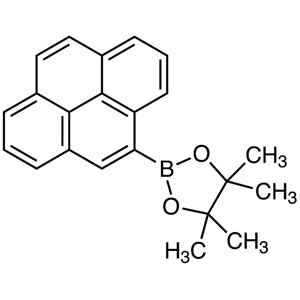
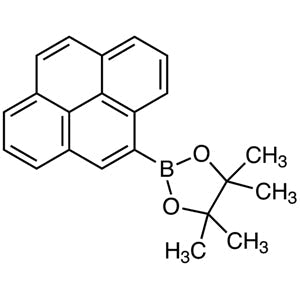
4-(4,4,5,5-Tetramethyl-1,3,2-dioxaborolan-2-yl)pyrene TCI T3857
Regular price Rp 4.399.500,00Regular price
![2,4-Diphenyl-6-[4-(4,4,5,5-tetramethyl-1,3,2-dioxaborolan-2-yl)phenyl]-1,3,5-triazine (CAS 1219956-23-6) - TCI D5271 - AMI Scientific](http://amiscientific.com/cdn/shop/files/TCI2510D5271.jpg?v=1769142099&width=533)


![942919-26-8 4-(4,4,5,5-Tetramethyl-1,3,2-dioxaborolan-2-yl)-1H-pyrrolo[2,3-b]pyridine - AMI Scientific](http://amiscientific.com/cdn/shop/files/TCI2510T4400.jpg?v=1767145178&width=533)