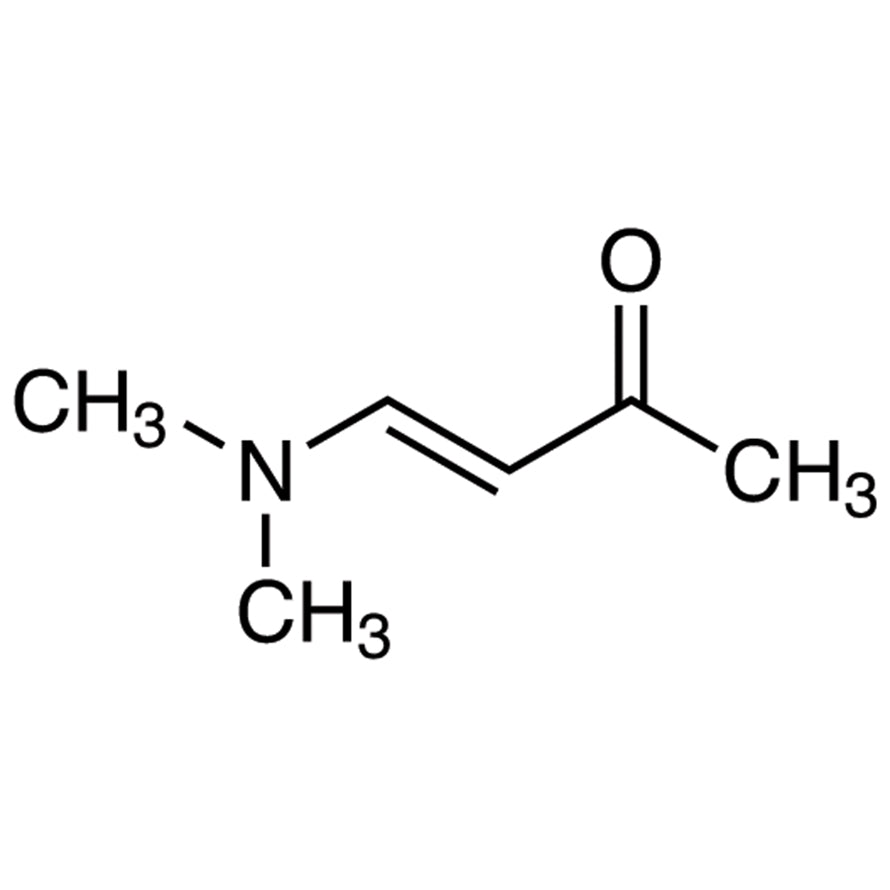
Trans-4-(Dimethylamino)-3-buten-2-one is a chemical compound widely used in laboratory settings for its reactivity and versatility in organic synthesis. This compound plays a crucial role in various chemical experiments and the development of complex molecular structures. Its ability to participate in both electrophilic and nucleophilic reactions makes it a valuable tool for researchers. In the laboratory, it serves as a key reagent in the synthesis of other compounds with applications in pharmaceuticals, materials science, and organic chemistry.
The compound's high reactivity is due to its molecular structure, which includes a dimethylamino group and an alkene group. These functional groups contribute to its unique reactivity and make it suitable for a wide range of chemical transformations. Its reactivity allows it to be used in specific and precise reactions, making it a preferred choice for researchers aiming to achieve controlled chemical outcomes. The compound’s chemical properties enable it to be a versatile building block in synthetic pathways.
In Indonesian laboratories, Trans-4-(Dimethylamino)-3-buten-2-one is commonly used in research and development projects, particularly in the fields of pharmacy and organic chemistry. It is also utilized in educational settings to teach students about chemical reactivity and reaction mechanisms. Its application is essential for both academic and industrial research, supporting the creation of new compounds and the advancement of scientific knowledge.
- In pharmaceutical research, this compound is used for the synthesis of bioactive molecules due to its reactivity and ability to form complex structures.
- For organic synthesis, it serves as a versatile intermediate in the creation of various chemical compounds with diverse applications.
- In material science, it contributes to the development of new polymers and functional materials through its chemical reactivity.
- In academic research, it is employed to study reaction mechanisms and chemical transformations in controlled environments.
- For educational purposes, it is used to demonstrate key concepts in organic chemistry and reaction pathways to students.
| Brand | TCI |
|---|---|
| CAS number | 2802-08-6 |
| Molecular formula | — |
| Purity | — |
| Category | TCI |
| Pack sizes | Available in various quantities as per supplier specifications |
| Physical form | Liquid |
| Storage | Store in a cool, dry place away from light and incompatible substances |
This compound should be stored in a cool, dry place, away from direct sunlight and sources of heat. It is recommended to keep it in a tightly sealed container to prevent exposure to air and moisture. Due to its reactivity, it should be stored separately from strong oxidizing or reducing agents to avoid potential chemical interactions. Proper labeling of containers is essential for safety and identification. Laboratory personnel should wear appropriate personal protective equipment, such as gloves and safety goggles, when handling this compound. Regular inspection of storage conditions ensures the compound remains stable and safe for use in experiments.
—
Produk Terkait
-
1-Cyclohexyl-2-buten-1-ol(cis-andtrans-mixture) TCI C1567
Regular price Rp 1.353.450,00Regular price -
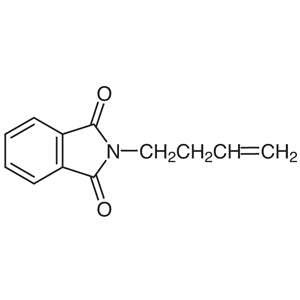
N-(3-Buten-1-yl)phthalimide TCI B1881
Regular price Rp 7.897.050,00Regular price -
2-Buten-1-ylsuccinicAnhydride TCI B1613
Regular price From Rp 2.439.150,00Regular price -
1-Buten-3-ol TCI B0695
Regular price From Rp 1.538.250,00Regular price -
3-Buten-1-ol TCI B0236
Regular price From Rp 1.431.150,00Regular price -
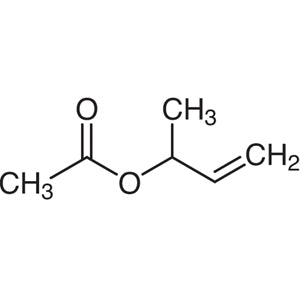
3-Buten-2-ylAcetate TCI B0128
Regular price From Rp 6.784.050,00Regular price -
1-Phenyl-3-buten-1-ol TCI P1329
Regular price Rp 2.995.650,00Regular price -
3-Methyl-3-buten-1-ol TCI M0726
Regular price From Rp 505.050,00Regular price