


TCI D5669, 3,4-Dihydro-5-hydroxy-1H-quinolin-2-one (CAS 30389-33-4), is a nitrogen-containing heterocyclic compound built on a dihydroquinolinone framework: a benzene ring fused to a six-membered lactam ring, carrying a hydroxyl group at the five position. The material is supplied as a heterocyclic building block, which means its role in the laboratory is to provide a pre-formed core scaffold so that chemists can immediately install new functional groups around it. In this way the most time-consuming synthetic steps, namely the construction of the lactam ring itself, can be skipped, and researchers are free to concentrate on exploring structural variation.
The property that makes this compound attractive is the presence of two reaction sites of different character within a single molecule. The phenolic hydroxyl group is ready for alkylation or acylation, while the lactam amide group can be alkylated at its nitrogen. This pairing allows selective, stepwise derivatisation from one starting material. The partially hydrogenated ring provides conformational flexibility together with better stability than a fully aromatic quinolinone. The dihydroquinolinone framework is itself a motif frequently encountered in bioactive compound research, which adds to the value of the compound as a starting point.
In Indonesian laboratories, a building block of this type is normally used in university research groups, government research institutes, and industrial R&D units working on organic synthesis and medicinal chemistry. It is typically handled at small scale on the bench, weighed out for multi-step synthetic routes, and used to prepare series of analogues for structure comparison. Because the core ring system arrives already assembled, working groups with limited synthetic capacity can still access derivative chemistry that would otherwise require lengthy preparation.
Related TCI products
- TCI D3599 22246-18-0 3,4-Dihydro-7-hydroxy-2(1H)-quinolinone
- TCI D3448 54197-66-9 3,4-Dihydro-6-hydroxy-2(1H)-quinolinone
- TCI B1512 7426-75-7 1,4-Bis(4,5-dihydro-2-oxazolyl)benzene
- TCI B1511 34052-90-9 1,3-Bis(4,5-dihydro-2-oxazolyl)benzene
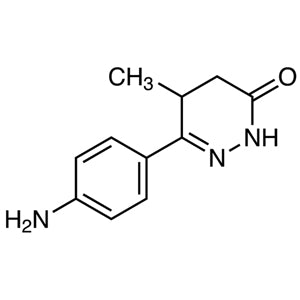
- TCI A2919 36725-28-7 6-(4-Aminophenyl)-4,5-dihydro-5-methyl-3(2H)-pyridazinone
- TCI A2618 137281-39-1 4-[2-(2-Amino-4,7-dihydro-4-oxo-3H-pyrrolo[2,3-d]pyrimidin-5-yl)ethyl]benzoic Acid
- Heterocyclic scaffold supply for multi-step organic synthesis, since the fused lactam core arrives pre-formed and removes the need to build the ring system from simpler precursors.
- Selective O-functionalisation chemistry, because the phenolic hydroxyl at the five position is readily alkylated or acylated to generate ethers and esters from a single common intermediate.
- Selective N-functionalisation chemistry, as the lactam amide nitrogen offers a second, chemically distinct handle that can be alkylated independently of the phenolic oxygen.
- Analogue library preparation in medicinal chemistry research, where the dihydroquinolinone motif is a recurring framework in bioactive compound studies and supports systematic structural variation.
- Structure-activity exploration work, since the partially hydrogenated ring provides conformational flexibility and improved stability compared with fully aromatic quinolinone counterparts during downstream derivatisation.
| Brand | TCI (Tokyo Chemical Industry) |
|---|---|
| CAS number | 30389-33-4 |
| Molecular formula | — |
| Purity | — |
| Category | Chemistry > Building Blocks > Heterocyclic Building Blocks |
| Pack sizes | available in standard TCI research-scale packaging; please confirm the pack size required when ordering |
| Physical form | — |
| Storage | store according to the manufacturer's instructions stated on the label and in the product safety data sheet |
- Chemical Name: 3,4-Dihydro-5-hydroxy-1H-quinolin-2-one
- Catalogue Code: D5669
Store the container tightly closed in a cool, dry, and well-ventilated area, away from direct sunlight, heat sources, and incompatible reagents. Keep the material in its original supplier container, or transfer it to a clean, chemically resistant, tightly sealed vessel that is clearly labelled with the compound name and CAS number. As a phenolic compound, it should be protected from prolonged exposure to air and moisture. Handle in a fume hood using standard laboratory personal protective equipment, including safety glasses, gloves, and a laboratory coat, and avoid generating dust during weighing. Always consult the manufacturer's safety data sheet before use, and dispose of residues and contaminated materials through an approved chemical waste route in line with institutional procedures.
—
Produk Terkait
-
3,4-Dihydro-7-hydroxy-2(1H)-quinolinone TCI D3599
Regular price From Rp 769.650,00Regular price -
3,4-Dihydro-6-hydroxy-2(1H)-quinolinone TCI D3448
Regular price From Rp 1.326.150,00Regular price -
1,4-Bis(4,5-dihydro-2-oxazolyl)benzene TCI B1512
Regular price Rp 2.518.950,00Regular price -
1,3-Bis(4,5-dihydro-2-oxazolyl)benzene TCI B1511
Regular price From Rp 903.000,00Regular price -
6-(4-Aminophenyl)-4,5-dihydro-5-methyl-3(2H)-pyridazinone TCI A2919
Regular price Rp 1.670.550,00Regular price -
4-[2-(2-Amino-4,7-dihydro-4-oxo-3H-pyrrolo[2,3-d]pyrimidin-5-yl)ethyl]benzoicAcid TCI A2618
Regular price From Rp 928.200,00Regular price -
5-Phenyl-2,4-dihydro-3H-1,2,4-triazole-3-thione TCI M3833
Regular price From Rp 1.167.600,00Regular price -
3-(3-Methyl-5-oxo-4,5-dihydro-1H-pyrazol-1-yl)benzenesulfonicAcid TCI M2710
Regular price From Rp 477.750,00Regular price


![137281-39-1 4-[2-(2-Amino-4,7-dihydro-4-oxo-3H-pyrrolo[2,3-d]pyrimidin-5-yl)ethyl]benzoic Acid - AMI Scientific](http://amiscientific.com/cdn/shop/files/TCI2510A2618.jpg?v=1767083121&width=533)

