TCI D3448 3,4-Dihydro-6-hydroxy-2(1H)-quinolinone (CAS 54197-66-9) is a heterocyclic building block that combines a dihydroquinolinone framework with a phenolic hydroxyl group at the 6-position. The structure consists of a lactam ring fused to a benzene ring, which places a cyclic amide, an aromatic ring, and a hydroxyl group within a single compact molecule. In organic and medicinal chemistry laboratories, compounds of this type are widely used as structural cores that can be elaborated into more complex molecules, particularly because the quinolinone framework is broadly recognised as a motif that appears frequently in bioactive compounds.
The property that makes this material a preferred choice is the presence of several functionalisation points whose reactivities differ and can therefore be distinguished from one another. The phenolic hydroxyl group is readily alkylated or acylated to install ether and ester side chains, the lactam nitrogen can be alkylated using a suitable base, while the aromatic ring remains open to directed electrophilic substitution. As a solid that is generally stable at room temperature, the material is convenient to weigh out and to purify by recrystallisation. The combination of hydrogen-bond donor and acceptor groups on one framework is a further reason it is selected.
In Indonesian laboratories, this building block fits naturally into synthetic organic chemistry and medicinal chemistry work at university research groups, government research institutes, and industrial R&D units. It is typically used at bench scale for stepwise synthesis, where the quinolinone core is carried through several transformations and the intermediates are isolated and characterised. Its solid form and room-temperature stability make it practical to handle under ordinary tropical laboratory conditions, where sample-handling convenience matters.
Related TCI products
- TCI D5773 4295-36-7 2,3-Dihydro-4(1H)-quinolinone
- TCI D3599 22246-18-0 3,4-Dihydro-7-hydroxy-2(1H)-quinolinone
- TCI D5669 30389-33-4 3,4-Dihydro-5-hydroxy-1H-quinolin-2-one
- TCI B3345 4876-10-2 4-(Bromomethyl)-2-quinolinone
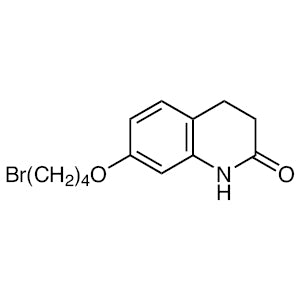
- TCI B3333 129722-34-5 7-(4-Bromobutoxy)-3,4-dihydro-2(1H)-quinolinone
- TCI B1512 7426-75-7 1,4-Bis(4,5-dihydro-2-oxazolyl)benzene
- Heterocyclic scaffold synthesis — the fused lactam–benzene framework serves as a ready-made core that can be carried through several synthetic steps without needing to be constructed from scratch.
- Medicinal chemistry analogue preparation — because the quinolinone motif appears frequently in bioactive compounds, this material supports the preparation of structural analogues around a recognised framework.
- Selective O-functionalisation studies — the phenolic hydroxyl group is readily alkylated or acylated, allowing ether and ester side chains to be installed while other sites are left untouched.
- Lactam N-alkylation chemistry — the lactam nitrogen can be alkylated with a suitable base, giving a second, distinguishable point of attachment for introducing new substituents onto the core.
- Directed aromatic substitution work — the benzene ring remains available for directed electrophilic substitution, so additional substituents can be introduced onto the aromatic portion of the scaffold.
| Brand | TCI |
|---|---|
| CAS number | 54197-66-9 |
| Molecular formula | — |
| Purity | — |
| Category | Chemistry > Building Blocks > Heterocyclic Building Blocks |
| Pack sizes | please refer to the current catalogue listing for available pack sizes |
| Physical form | solid, generally stable at room temperature |
| Storage | store in a closed original container in a cool, dry place away from light |
- Chemical name: 3,4-Dihydro-6-hydroxy-2(1H)-quinolinone
Store the material in its original tightly closed container in a cool, dry, well-ventilated place, protected from light and away from moisture, since the phenolic hydroxyl group makes the compound sensitive to prolonged air and light exposure. Amber glass or the manufacturer's supplied container is suitable; keep the closure secure between uses to limit moisture uptake. Handle the solid in a fume hood or well-ventilated area, wearing safety glasses, gloves, and a laboratory coat, and avoid generating dust during weighing and transfer. Use clean, dry spatulas to prevent cross-contamination, return the container promptly to storage after use, and consult the manufacturer's safety data sheet before first use and before disposal of residues.
—
Produk Terkait
-
2,3-Dihydro-4(1H)-quinolinone TCI D5773
Regular price From Rp 4.108.650,00Regular price -
3,4-Dihydro-7-hydroxy-2(1H)-quinolinone TCI D3599
Regular price From Rp 769.650,00Regular price -
3,4-Dihydro-5-hydroxy-1H-quinolin-2-one TCI D5669
Regular price From Rp 2.254.350,00Regular price -
4-(Bromomethyl)-2-quinolinone TCI B3345
Regular price From Rp 1.405.950,00Regular price -
7-(4-Bromobutoxy)-3,4-dihydro-2(1H)-quinolinone TCI B3333
Regular price From Rp 689.850,00Regular price -
1,4-Bis(4,5-dihydro-2-oxazolyl)benzene TCI B1512
Regular price Rp 2.518.950,00Regular price -
1,3-Bis(4,5-dihydro-2-oxazolyl)benzene TCI B1511
Regular price From Rp 903.000,00Regular price -
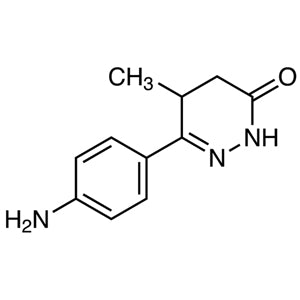
6-(4-Aminophenyl)-4,5-dihydro-5-methyl-3(2H)-pyridazinone TCI A2919
Regular price Rp 1.670.550,00Regular price