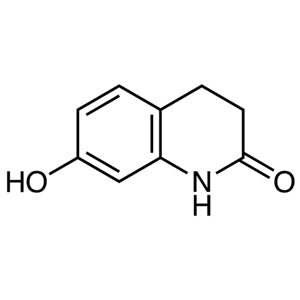
3,4-Dihydro-7-hydroxy-2(1H)-quinolinone is a heterocyclic building block that combines a dihydroquinolinone framework with a phenolic hydroxyl group at the seventh position. The structure consists of an aromatic ring fused to a six-membered lactam ring, so that a cyclic amide, a benzene ring, and a phenol are all present within a single molecule. In organic synthesis and medicinal chemistry laboratories, this compound serves as a ready-to-elaborate core, particularly because its hydroxyl group provides a clear anchoring point for constructing more complex target molecules.
This compound is widely chosen because its reactivity is highly directed. The phenol group can be selectively alkylated or acylated through Williamson ether synthesis or Mitsunobu condensation, while the lactam nitrogen remains relatively stable under those conditions and therefore does not require elaborate protection. The lactam ring imparts conformational rigidity and hydrogen-bonding capability, two properties that are valuable in receptor ligand design. The combination of hydrogen bond donor and acceptor groups within a small framework also makes this compound atom-efficient, allowing synthetic routes to be shortened.
In Indonesian laboratories, this building block is typically used in university research groups, pharmaceutical development units, and contract synthesis facilities working on heterocyclic scaffolds. It is generally handled at bench scale for exploratory route development, where a well-defined phenolic anchoring point allows chemists to prepare analogue series efficiently. Because the material is supplied as a defined single compound, it fits readily into workflows that require reproducible starting material quality across repeated synthetic campaigns.
Related TCI products
- TCI D5773 4295-36-7 2,3-Dihydro-4(1H)-quinolinone
- TCI D3448 54197-66-9 3,4-Dihydro-6-hydroxy-2(1H)-quinolinone
- TCI D5669 30389-33-4 3,4-Dihydro-5-hydroxy-1H-quinolin-2-one
- TCI B3345 4876-10-2 4-(Bromomethyl)-2-quinolinone
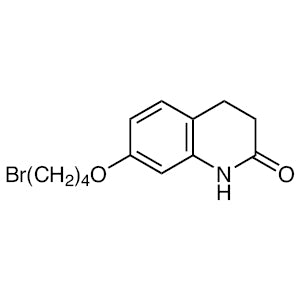
- TCI B3333 129722-34-5 7-(4-Bromobutoxy)-3,4-dihydro-2(1H)-quinolinone
- TCI B1512 7426-75-7 1,4-Bis(4,5-dihydro-2-oxazolyl)benzene
- Medicinal chemistry scaffold elaboration: the phenolic hydroxyl offers a defined attachment point for building more complex target molecules without extensive protecting group strategies.
- Williamson ether synthesis: the phenol group can be selectively alkylated under basic conditions while the lactam nitrogen remains relatively stable and does not compete significantly.
- Mitsunobu condensation: the acidic phenolic proton makes this compound a suitable nucleophile partner for introducing side chains with defined stereochemical outcomes.
- Receptor ligand design: the lactam ring contributes conformational rigidity and hydrogen bonding capability, both valuable when shaping molecules intended to fit binding pockets.
- Heterocyclic library preparation: the compact framework carrying both hydrogen bond donor and acceptor groups is atom-efficient, allowing shorter routes toward diverse analogue series.
| Brand | TCI |
|---|---|
| CAS number | 22246-18-0 |
| Molecular formula | — |
| Purity | — |
| Category | Chemistry > Building Blocks > Heterocyclic Building Blocks |
| Pack sizes | available in standard TCI catalogue pack sizes; please confirm the required quantity when ordering |
| Physical form | — |
| Storage | keep in a tightly closed original container in a cool, dry, well-ventilated area away from light |
- Chemical Name: 3,4-Dihydro-7-hydroxy-2(1H)-quinolinone
Store the material in its tightly closed original container in a cool, dry, and well-ventilated area, protected from direct sunlight and moisture. Glass containers with chemically resistant closures are suitable for repackaged portions, and every container should be clearly labelled with the compound name and CAS number. Because the compound contains a phenolic group, prolonged exposure to air and light should be minimised to preserve material quality. Handle in a fume hood using safety glasses, nitrile gloves, and a laboratory coat, avoiding dust formation and direct skin contact. Return the container to storage promptly after weighing, and always consult the manufacturer safety data sheet before use.
—
Produk Terkait
-
2,3-Dihydro-4(1H)-quinolinone TCI D5773
Regular price From Rp 4.108.650,00Regular price -
3,4-Dihydro-6-hydroxy-2(1H)-quinolinone TCI D3448
Regular price From Rp 1.326.150,00Regular price -
3,4-Dihydro-5-hydroxy-1H-quinolin-2-one TCI D5669
Regular price From Rp 2.254.350,00Regular price -
4-(Bromomethyl)-2-quinolinone TCI B3345
Regular price From Rp 1.405.950,00Regular price -
7-(4-Bromobutoxy)-3,4-dihydro-2(1H)-quinolinone TCI B3333
Regular price From Rp 689.850,00Regular price -
1,4-Bis(4,5-dihydro-2-oxazolyl)benzene TCI B1512
Regular price Rp 2.518.950,00Regular price -
1,3-Bis(4,5-dihydro-2-oxazolyl)benzene TCI B1511
Regular price From Rp 903.000,00Regular price -
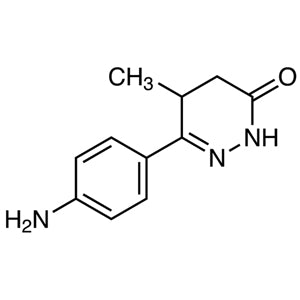
6-(4-Aminophenyl)-4,5-dihydro-5-methyl-3(2H)-pyridazinone TCI A2919
Regular price Rp 1.670.550,00Regular price