TCI D5818 1,3-Dihydroxyacetone is the simplest ketone of the sugar family — the only ketose with three carbon atoms, carrying two hydroxyl groups at positions 1 and 3 and a carbonyl group at the centre of the molecule. In the laboratory it is widely used as a non-heterocyclic building block for the synthesis of organic compounds bearing multiple functional groups, as a model substrate in studies of carbohydrate metabolism, and as an active reagent in cosmetic formulations based on the Maillard reaction with skin proteins. Its availability in pure form makes it straightforward for researchers to obtain repeatable results.
The characteristic that makes this compound so frequently chosen is the combination of dual reactivity within a single small molecule: the carbonyl group is ready to undergo nucleophilic addition, imine formation, reduction, or aldol condensation, while the two primary hydroxyl groups can be esterified, etherified, or selectively protected as cyclic acetals. Its strongly polar nature and ready solubility in water and protic solvents make handling practical on both micro and preparative scales. Its low molecular weight also means that adding carbon atoms to a target skeleton can be planned efficiently, with a minimum of extra mass carried through the sequence.
In Indonesian laboratories, this material is typically used in synthetic organic chemistry groups at universities and research institutes, in biochemistry work concerned with carbohydrate metabolism pathways, and in the formulation and quality-control laboratories of the personal-care industry. Because it is supplied in a defined pure grade under the TCI brand, it fits equally well into teaching and method-development work and into routine preparative use, where a consistent starting material is needed from one batch of experiments to the next.
- Non-heterocyclic building block synthesis: the central carbonyl and two flanking primary hydroxyls allow polyfunctional organic targets to be assembled from a single small, well-defined starting fragment.
- Carbohydrate metabolism studies: as the simplest three-carbon ketose, it serves as a clean model substrate for investigating ketose behaviour in metabolic pathways without interference from larger sugar frameworks.
- Cosmetic formulation research: it acts as an active reagent in preparations that rely on the Maillard reaction with skin proteins, making it suitable for formulation development and comparative testing.
- Selective protection and derivatisation chemistry: the pair of primary hydroxyl groups can be esterified, etherified, or converted to cyclic acetals, giving chemists controlled routes to protected intermediates.
- Aqueous and protic-solvent reaction work: its high polarity and ready solubility in water and protic solvents suit reactions, screening, and small-scale preparative runs carried out in those media.
| Brand | TCI (Tokyo Chemical Industry) |
|---|---|
| CAS number | 96-26-4 |
| Molecular formula | — |
| Purity | — |
| Category | Chemistry > Building Blocks > Non-Heterocyclic Building Blocks |
| Pack sizes | available in standard TCI catalogue pack sizes; please confirm the size required when ordering |
| Physical form | — |
| Storage | keep in a tightly closed original container, in a cool, dry place away from moisture |
- Product code: D5818
- Chemical name: 1,3-Dihydroxyacetone
Store the product in its original tightly closed container in a cool, dry, well-ventilated area, protected from moisture, direct sunlight, and sources of heat. Because the compound is highly polar and readily soluble in water, containers should be resealed promptly after each use to limit moisture pickup, and glass or compatible chemically resistant containers should be used for any transfer or sub-division. Handle in a fume hood or well-ventilated workspace, wearing a laboratory coat, safety glasses, and suitable gloves. Avoid generating dust, avoid contact with skin and eyes, and keep the material away from strong oxidising agents. Always consult the manufacturer's Safety Data Sheet before use, and follow institutional procedures for labelling and waste disposal.
—
Produk Terkait
-
Bis(2,2,6,6-tetramethyl-3,5-heptanedionato)copper(II) TCI B6318
Regular price From Rp 3.896.550,00Regular price -
Bis(2,2,6,6-tetramethyl-3,5-heptanedionato)lead(II) TCI B6371
Regular price From Rp 2.227.050,00Regular price -
1,1'-[Methylenebis(4,1-phenylene)]bis(2-hydroxy-2-methylpropan-1-one) TCI B6768
Regular price From Rp 1.458.450,00Regular price -
Tris(2,4-pentanedionato)chromium(III) TCI C0336
Regular price From Rp 795.900,00Regular price -
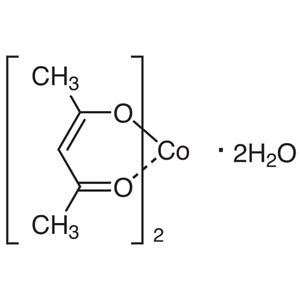
Bis(2,4-pentanedionato)cobalt(II)Dihydrate TCI C0373
Regular price From Rp 2.041.200,00Regular price -
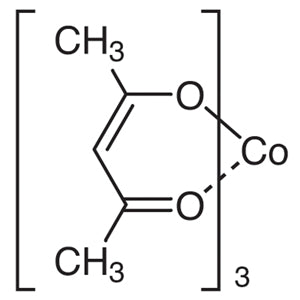
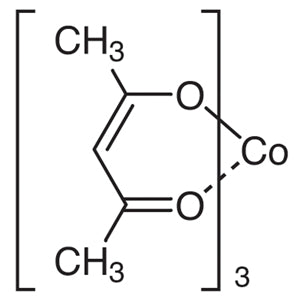
Tris(2,4-pentanedionato)cobalt(III) TCI C0374
Regular price From Rp 1.431.150,00Regular price -
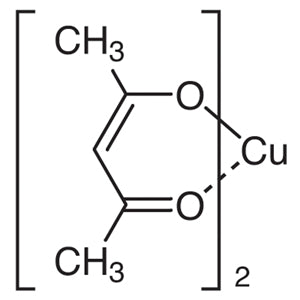
Bis(2,4-pentanedionato)copper(II) TCI C0384
Regular price From Rp 637.350,00Regular price -
Capsanthin(=PaprikaExtract)(Vegetableoilsolution) TCI C0781
Regular price Rp 1.167.600,00Regular price


![1,1'-[Methylenebis(4,1-phenylene)]bis(2-hydroxy-2-methylpropan-1-one) (CAS 474510-57-1) - TCI B6768 - AMI Scientific](http://amiscientific.com/cdn/shop/files/TCI2510B6768.jpg?v=1767094201&width=533)