


TCI D5975 3,3-Difluoroazetidine Hydrochloride is a fluorinated building block based on the azetidine ring, a saturated four-membered heterocycle containing a single nitrogen atom. In this compound, two fluorine atoms are bonded to the carbon at the three position, and the cyclic amine is supplied as its hydrochloride salt. In organic synthesis and medicinal chemistry laboratories, the material serves as a ready-to-use secondary amine unit that is attached to a target molecular framework through amidation, reductive alkylation, nucleophilic aromatic substitution, or transition-metal-catalysed coupling reactions to form carbon–nitrogen bonds.
Several properties make this material highly sought after. The azetidine ring provides a compact and rigid three-dimensional framework, raising the proportion of sp3 carbon in the final molecule without adding excessive molecular weight, which makes it an attractive alternative to the larger piperidine or pyrrolidine rings. The two fluorine atoms at the three position withdraw electron density strongly and markedly lower the basicity of the azetidine nitrogen, an adjustment frequently used to tune the physicochemical properties of a designed molecule. Fluorination at this position is a well-established strategy in modern building-block chemistry.
In Indonesian laboratories, this building block is typically used in university and institutional research groups working on organic synthesis, medicinal chemistry, and the preparation of compound libraries. It is handled at bench scale in fume hoods during multi-step synthetic routes, where the hydrochloride salt form makes it convenient to weigh out and store between reaction campaigns. Research teams commonly order it alongside coupling reagents and bases required to liberate the free amine in situ before the bond-forming step.
Related TCI products
- TCI F1186 617718-46-4 3-Fluoroazetidine Hydrochloride
- TCI B4288 254454-54-1 1-(tert-Butoxycarbonyl)-3-iodoazetidine
- TCI T3935 2472802-21-2 ShoyakuGreen (=TFMAQ-8Ph)
- TCI T3177 29540-81-6 1-(Trifluoromethanesulfonyl)imidazole
- TCI T3076 52222-73-8 4-(Trifluoromethyl)pyrazole
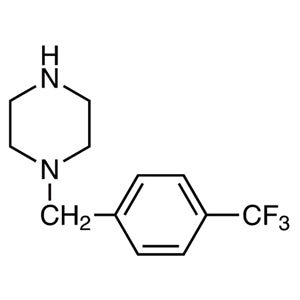
- TCI T3075 107890-32-4 1-(4-Trifluoromethylbenzyl)piperazine
- Amide bond formation: the secondary amine is coupled with carboxylic acids or acid chlorides to install a compact difluorinated azetidine cap on a target scaffold.
- Reductive alkylation: the free amine released from the hydrochloride salt condenses with aldehydes or ketones, giving N-alkylated azetidines that increase the sp3 character of the product.
- Nucleophilic aromatic substitution: the amine displaces suitable leaving groups on electron-poor aromatic and heteroaromatic rings, building carbon–nitrogen bonds without metal catalysis.
- Transition-metal-catalysed coupling: the azetidine nitrogen serves as the amine partner in catalysed carbon–nitrogen bond-forming couplings onto aryl and heteroaryl halides.
- Medicinal chemistry library synthesis: the ring lowers nitrogen basicity through the two fluorine atoms, letting chemists tune physicochemical properties across a series of analogues.
| Brand | TCI |
|---|---|
| CAS number | 288315-03-7 |
| Molecular formula | — |
| Purity | — |
| Category | Chemistry > Building Blocks > Fluorinated Building Blocks |
| Pack sizes | available in the catalogue pack sizes offered by TCI for this item |
| Physical form | — |
| Storage | store according to the conditions stated on the manufacturer label and safety data sheet |
- Chemical form: cyclic secondary amine supplied as the hydrochloride salt
Store the container tightly closed in a cool, dry, and well-ventilated place, away from moisture, heat sources, and incompatible materials, following the conditions specified on the manufacturer label and safety data sheet. Amine hydrochloride salts are generally hygroscopic, so keep the original container sealed and allow it to reach room temperature before opening to reduce condensation. Weigh and transfer the solid inside a fume hood using clean, dry spatulas and tightly closing glass or suitable plastic containers. Wear a laboratory coat, chemical-resistant gloves, and safety goggles during handling, avoid inhaling dust, and dispose of residues and contaminated materials through the institution's chemical waste procedures.
—
Produk Terkait
-
3-FluoroazetidineHydrochloride TCI F1186
Regular price From Rp 980.700,00Regular price -
1-(tert-Butoxycarbonyl)-3-iodoazetidine TCI B4288
Regular price From Rp 1.060.500,00Regular price -
ShoyakuGreen(=TFMAQ-8Ph) TCI T3935
Regular price Rp 4.347.000,00Regular price -
1-(Trifluoromethanesulfonyl)imidazole TCI T3177
Regular price From Rp 3.075.450,00Regular price -
4-(Trifluoromethyl)pyrazole TCI T3076
Regular price From Rp 1.961.400,00Regular price -
1-(4-Trifluoromethylbenzyl)piperazine TCI T3075
Regular price Rp 1.829.100,00Regular price -
3-(Trifluoromethyl)-5,6,7,8-tetrahydro-[1,2,4]triazolo[4,3-a]pyrazineHydrochloride TCI T2998
Regular price From Rp 903.000,00Regular price -
1-[2-(Trifluoromethyl)phenyl]imidazole TCI T2982
Regular price From Rp 1.087.800,00Regular price





![762240-92-6 3-(Trifluoromethyl)-5,6,7,8-tetrahydro-[1,2,4]triazolo[4,3-a]pyrazine Hydrochloride - AMI Scientific](http://amiscientific.com/cdn/shop/files/TCI2510T2998.jpg?v=1767143638&width=533)
![762240-92-6 3-(Trifluoromethyl)-5,6,7,8-tetrahydro-[1,2,4]triazolo[4,3-a]pyrazine Hydrochloride - AMI Scientific](http://amiscientific.com/cdn/shop/files/TCI2510T2998_91e2a02c-a005-468e-9a74-c025ab1e3892.jpg?v=1772425083&width=533)
![25371-96-4 1-[2-(Trifluoromethyl)phenyl]imidazole - AMI Scientific](http://amiscientific.com/cdn/shop/files/TCI2510T2982.jpg?v=1767143597&width=533)
![25371-96-4 1-[2-(Trifluoromethyl)phenyl]imidazole - AMI Scientific](http://amiscientific.com/cdn/shop/files/TCI2510T2982_5b32ad8f-93f1-4d42-9b45-f2193aa76553.jpg?v=1772425071&width=533)