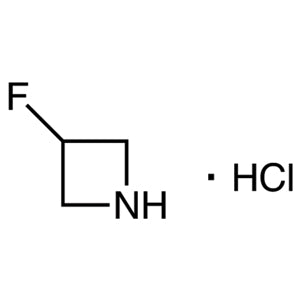
3-Fluoroazetidine Hydrochloride is a chemical compound widely used as a building block in the synthesis of complex molecules, particularly in the fields of organic chemistry and pharmacology. This compound features a fluorinated azetidine ring, making it a key component in the development of compounds with specific biological activities. Its structural uniqueness allows it to serve as a versatile intermediate in various synthetic pathways, supporting the creation of new compounds with therapeutic or industrial potential. In laboratory settings, it plays a crucial role in molecular synthesis and modification processes, contributing to the advancement of research in multiple scientific disciplines.
The compound is known for its high polarity due to the fluorine atom, which enhances its solubility in organic solvents such as ethyl acetate and acetone. This property makes it suitable for reactions requiring high reactivity and structural stability. Additionally, it exhibits chemical stability under certain conditions, although it remains reactive to various chemical environments. These characteristics make it a preferred choice for researchers aiming to achieve precise and efficient synthetic outcomes.
In Indonesian laboratories, 3-Fluoroazetidine Hydrochloride is commonly utilized in organic chemistry research, especially within academic institutions and research organizations. It is an essential part of the process for developing new compounds, supporting both educational and applied research initiatives. Its availability through suppliers like AMI Scientific ensures that it remains a valuable resource for scientific innovation in the region.
Related TCI products
- TCI D5975 288315-03-7 3,3-Difluoroazetidine Hydrochloride
- TCI B5335 1030825-20-7 2-(5-Bromo-2-methylbenzyl)-5-(4-fluorophenyl)thiophene
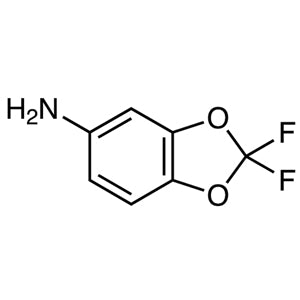
- TCI A3107 1544-85-0 5-Amino-2,2-difluoro-1,3-benzodioxole
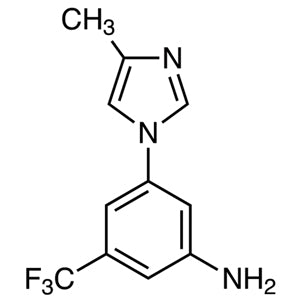
- TCI M2634 641571-11-1 3-(4-Methyl-1H-imidazol-1-yl)-5-(trifluoromethyl)aniline
- TCI F1057 394-67-2 4-Fluoroisoquinoline
- TCI F0944 84163-13-3 6-Fluoro-3-(4-piperidinyl)-1,2-benzisoxazole Hydrochloride
- Organic synthesis research utilizes 3-Fluoroazetidine Hydrochloride for constructing complex molecular frameworks due to its fluorinated azetidine ring.
- Pharmaceutical development benefits from this compound as it contributes to the creation of bioactive molecules with therapeutic potential.
- Academic laboratories employ it in teaching and research to demonstrate fluorinated building blocks in synthetic chemistry.
- Industrial chemical processes incorporate it for the production of specialty chemicals requiring precise molecular structures.
- Drug discovery initiatives use it as a starting material to explore new compounds with potential pharmaceutical applications.
| Brand | TCI |
|---|---|
| CAS number | 617718-46-4 |
| Molecular formula | — |
| Purity | — |
| Category | Chemistry > Building Blocks > Fluorinated Building Blocks |
| Pack sizes | Available in various quantities as per supplier specifications |
| Physical form | Solid powder |
| Storage | Store in a cool, dry place away from moisture and direct sunlight |
3-Fluoroazetidine Hydrochloride should be stored in a cool, dry environment to maintain its chemical stability. It is recommended to keep it in a sealed container to prevent exposure to moisture and air, which could affect its reactivity. Suitable storage conditions include a controlled temperature range between 15°C and 25°C. Laboratory personnel should handle the compound with care, using appropriate personal protective equipment such as gloves and safety goggles. Due to its reactivity, it should be stored separately from incompatible substances to avoid any chemical interactions. Proper labeling and storage practices ensure safe handling and long-term usability in research settings.
—
Product Categories
Produk Terkait
-
3,3-DifluoroazetidineHydrochloride TCI D5975
Regular price From Rp 1.326.150,00Regular price -
2-(5-Bromo-2-methylbenzyl)-5-(4-fluorophenyl)thiophene TCI B5335
Regular price From Rp 1.035.300,00Regular price -
5-Amino-2,2-difluoro-1,3-benzodioxole TCI A3107
Regular price From Rp 2.016.000,00Regular price -
3-(4-Methyl-1H-imidazol-1-yl)-5-(trifluoromethyl)aniline TCI M2634
Regular price From Rp 717.150,00Regular price -
4-Fluoroisoquinoline TCI F1057
Regular price Rp 3.021.900,00Regular price -
6-Fluoro-3-(4-piperidinyl)-1,2-benzisoxazoleHydrochloride TCI F0944
Regular price From Rp 477.750,00Regular price -
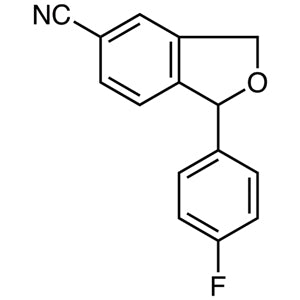
1-(4-Fluorophenyl)-1,3-dihydroisobenzofuran-5-carbonitrile TCI F0879
Regular price Rp 1.353.450,00Regular price -
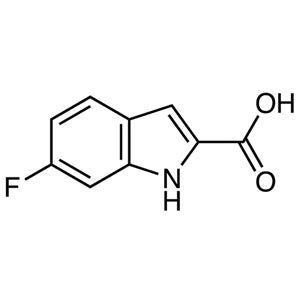
6-Fluoroindole-2-carboxylicAcid TCI F0835
Regular price From Rp 1.140.300,00Regular price