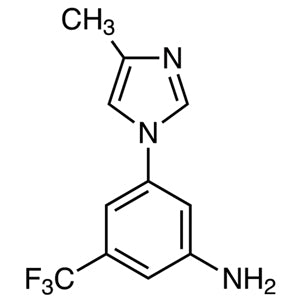
3-(4-Methyl-1H-imidazol-1-yl)-5-(trifluoromethyl)aniline is a complex organic compound widely used in laboratory settings for synthetic reactions. This compound belongs to the category of fluorinated building blocks and is a key component in the development of more complex chemical structures. Its unique molecular structure, featuring both a trifluoromethyl group and an imidazole ring, makes it a versatile reagent in organic chemistry. Due to its chemical stability and reactivity, it is frequently utilized in research environments to create novel compounds with potential applications in various scientific fields.
The compound’s reactivity is enhanced by its fluorinated and heterocyclic components, which contribute to its ability to participate in substitution and condensation reactions. These properties make it a preferred choice for researchers aiming to synthesize bioactive molecules. Its stability under controlled conditions further supports its use in a wide range of chemical processes, allowing for predictable outcomes in synthetic experiments. This combination of reactivity and stability ensures that it remains a valuable tool in modern chemical research.
In Indonesian laboratories, this compound is commonly used in organic and pharmaceutical research. It plays a crucial role in the development of new drug candidates and other bioactive compounds. Its availability in the local market supports academic and industrial research efforts, enabling scientists to conduct experiments that contribute to scientific advancements and innovation in the field of chemistry.
TCI brochures (PDF)
- Fluorination Reagents, Fluorinated Building Blocks 2026-03-18 · p. 42
Related TCI products
- TCI I0794 163444-17-5 2-Iodo-4-(trifluoromethyl)aniline
- TCI B1324 328-74-5 3,5-Bis(trifluoromethyl)aniline
- TCI M2774 22864-65-9 N-Methyl-4-(trifluoromethyl)aniline
- TCI M2301 25449-96-1 2-Methyl-5-(trifluoromethyl)aniline
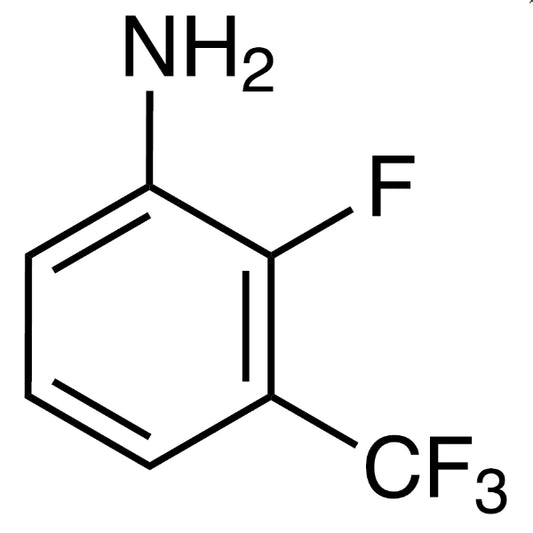
- TCI F1294 123973-25-1 2-Fluoro-3-(trifluoromethyl)aniline
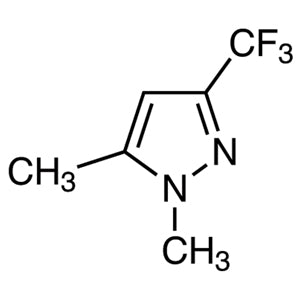
- TCI D5071 79080-31-2 1,5-Dimethyl-3-(trifluoromethyl)pyrazole
- Organic synthesis applications benefit from its fluorinated structure and reactivity, enabling the creation of complex molecules with tailored properties.
- Pharmaceutical research utilizes this compound to develop new drug candidates with enhanced biological activity and therapeutic potential.
- Fluorinated building blocks are essential in the design of compounds for medicinal chemistry, offering improved stability and reactivity in synthetic pathways.
- Academic institutions use it for teaching and research purposes, supporting the training of future chemists and researchers.
- Industrial laboratories employ it in the development of specialty chemicals and materials, contributing to advancements in various technological fields.
| Brand | TCI |
|---|---|
| CAS number | 641571-11-1 |
| Molecular formula | — |
| Purity | — |
| Category | Chemistry > Building Blocks > Fluorinated Building Blocks |
| Pack sizes | Available in various sizes as per standard laboratory requirements |
| Physical form | Solid |
| Storage | Store in a cool, dry place away from moisture and direct sunlight |
This compound should be stored in a cool, dry environment to maintain its chemical stability. It is recommended to keep it in a sealed container to prevent exposure to moisture and air, which could affect its reactivity. Suitable storage conditions include a controlled temperature range between 15°C and 25°C. Laboratory personnel should handle the compound with care, using appropriate personal protective equipment such as gloves and safety goggles. Due to its chemical nature, it should be stored away from incompatible substances like strong oxidizers or acids. Regular inspection of storage conditions ensures the compound remains in optimal condition for use in research applications.
—
Product Categories
- Building BlocksFluorinated Building BlocksHeterocyclic Fluorinated Building Blocks
- Building BlocksFluorinated Building BlocksNon-Heterocyclic Fluorinated Building Blocks
- Pharmaceutical Development and Drug Discovery Research ReagentsBuilding Blocks for Pharmaceutical Ingredients (for Research and Experimental Use)
Produk Terkait
-
2-Iodo-4-(trifluoromethyl)aniline TCI I0794
Regular price From Rp 1.485.750,00Regular price -
3,5-Bis(trifluoromethyl)aniline TCI B1324
Regular price From Rp 743.400,00Regular price -
N-Methyl-4-(trifluoromethyl)aniline TCI M2774
Regular price From Rp 1.618.050,00Regular price -
2-Methyl-5-(trifluoromethyl)aniline TCI M2301
Regular price From Rp 1.115.100,00Regular price -
2-Fluoro-3-(trifluoromethyl)aniline TCI F1294
Regular price From Rp 689.850,00Regular price -
1,5-Dimethyl-3-(trifluoromethyl)pyrazole TCI D5071
Regular price From Rp 795.900,00Regular price -
4-(Trifluoromethoxy)aniline TCI T1345
Regular price From Rp 664.650,00Regular price -
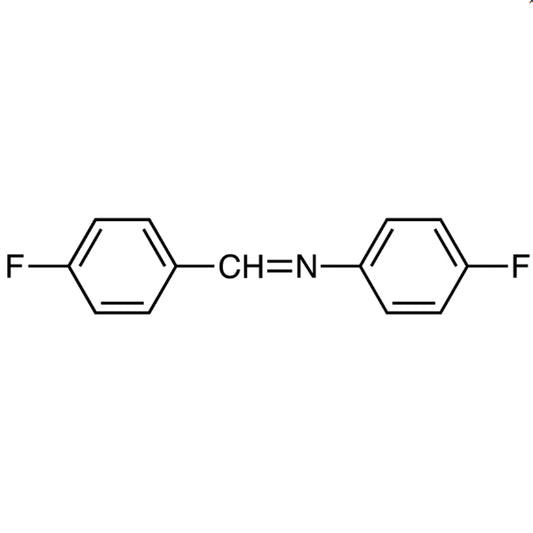
4-Fluoro-N-(4-fluorobenzylidene)aniline TCI F0892
Regular price From Rp 980.700,00Regular price