3,5-Bis(trifluoromethyl)aniline is a chemical compound widely used as a building block in the synthesis of complex molecules. It plays a crucial role in organic chemistry laboratories, particularly in reactions that require fluorine substitution on aromatic structures. This compound is part of the fluorinated building blocks category, which is essential for developing compounds with specific chemical properties, such as controlled reactivity and enhanced stability. Its unique structure makes it a valuable tool for researchers aiming to explore fluorinated compounds in various scientific fields.
The compound's key feature is the presence of trifluoromethyl groups at the 3 and 5 positions of the aniline ring. These groups impart distinctive electronic properties, allowing the molecule to exhibit strong electron-withdrawing capabilities. This characteristic significantly influences the reactivity and stability of the compound, making it a preferred choice in synthetic chemistry. Its ability to participate in a wide range of chemical transformations further enhances its utility in laboratory settings.
In Indonesian laboratories, 3,5-Bis(trifluoromethyl)aniline is commonly used in organic chemistry research, especially in pharmaceutical and materials science applications. Many research institutions and universities utilize this compound to expand their understanding of fluorinated compounds and their potential applications in industry. Its role in the development of new drugs and advanced materials underscores its importance in modern scientific research.
Related TCI products
- TCI I0794 163444-17-5 2-Iodo-4-(trifluoromethyl)aniline
- TCI M2774 22864-65-9 N-Methyl-4-(trifluoromethyl)aniline
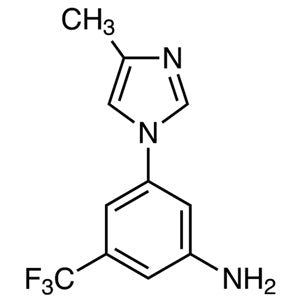
- TCI M2634 641571-11-1 3-(4-Methyl-1H-imidazol-1-yl)-5-(trifluoromethyl)aniline
- TCI M2301 25449-96-1 2-Methyl-5-(trifluoromethyl)aniline
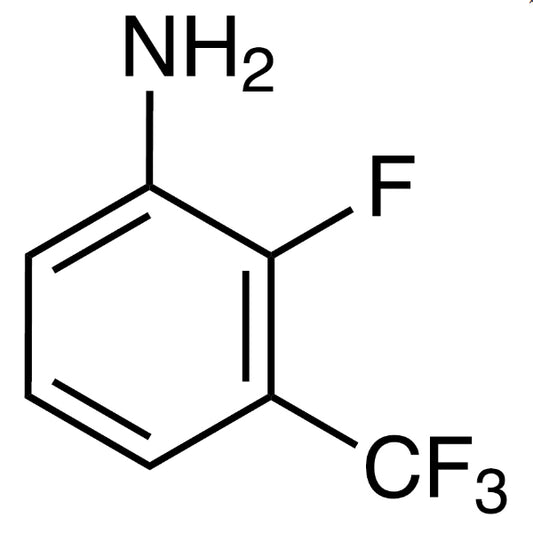
- TCI F1294 123973-25-1 2-Fluoro-3-(trifluoromethyl)aniline
- TCI T1345 461-82-5 4-(Trifluoromethoxy)aniline
- Fluorinated Compound Synthesis: This compound is ideal for creating fluorinated derivatives due to its electron-withdrawing trifluoromethyl groups, enabling controlled reactivity in synthetic pathways.
- Pharmaceutical Research: It is used in drug development to design molecules with enhanced stability and bioavailability, leveraging its unique electronic properties.
- Organic Chemistry Reactions: Its ability to participate in substitution and coupling reactions makes it a versatile reagent in various synthetic strategies.
- Materials Science Innovation: It contributes to the development of advanced materials with specific chemical and physical properties, such as high thermal stability.
- Academic Research: Widely used in Indonesian universities for teaching and research, supporting studies on fluorinated compounds and their applications.
| Brand | TCI |
|---|---|
| CAS number | 328-74-5 |
| Molecular formula | — |
| Purity | — |
| Category | Chemistry > Building Blocks > Fluorinated Building Blocks |
| Pack sizes | Available in various quantities as per supplier specifications |
| Physical form | Liquid or solid, depending on supplier packaging |
| Storage | Store in a cool, dry place away from light and incompatible substances |
This compound should be stored in a cool, dry environment, away from direct sunlight and sources of heat. It is recommended to use airtight containers made of materials that are chemically inert, such as glass or high-density polyethylene, to prevent contamination and degradation. Due to its fluorinated nature, it may react with strong oxidizing agents or strong bases, so it should be handled with care. Always ensure proper ventilation in the laboratory when working with this compound. Personal protective equipment, including gloves, goggles, and a lab coat, should be worn at all times to minimize exposure. Avoid inhalation of vapors and skin contact to ensure safe handling in laboratory settings.
—
Produk Terkait
-
2-Iodo-4-(trifluoromethyl)aniline TCI I0794
Regular price From Rp 1.485.750,00Regular priceRp 1.038.450,00Sale price From Rp 1.485.750,00 -
N-Methyl-4-(trifluoromethyl)aniline TCI M2774
Regular price From Rp 1.618.050,00Regular priceRp 1.130.850,00Sale price From Rp 1.618.050,00 -
3-(4-Methyl-1H-imidazol-1-yl)-5-(trifluoromethyl)aniline TCI M2634
Regular price From Rp 769.650,00Regular priceRp 553.350,00Sale price From Rp 769.650,00 -
2-Methyl-5-(trifluoromethyl)aniline TCI M2301
Regular price From Rp 1.115.100,00Regular priceRp 779.100,00Sale price From Rp 1.115.100,00 -
2-Fluoro-3-(trifluoromethyl)aniline TCI F1294
Regular price From Rp 689.850,00Regular priceRp 481.950,00Sale price From Rp 689.850,00 -
4-(Trifluoromethoxy)aniline TCI T1345
Regular price From Rp 664.650,00Regular priceRp 464.100,00Sale price From Rp 664.650,00 -
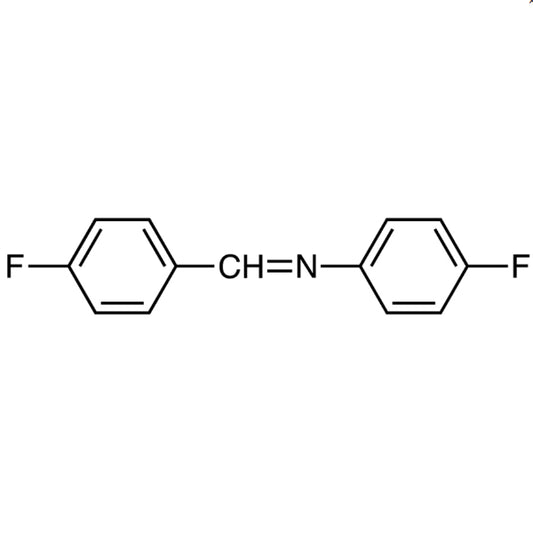
4-Fluoro-N-(4-fluorobenzylidene)aniline TCI F0892
Regular price From Rp 1.033.200,00Regular priceRp 738.150,00Sale price From Rp 1.033.200,00 -
N-(4-Fluorobenzylidene)aniline TCI F0891
Regular price From Rp 1.008.000,00Regular priceRp 720.300,00Sale price From Rp 1.008.000,00