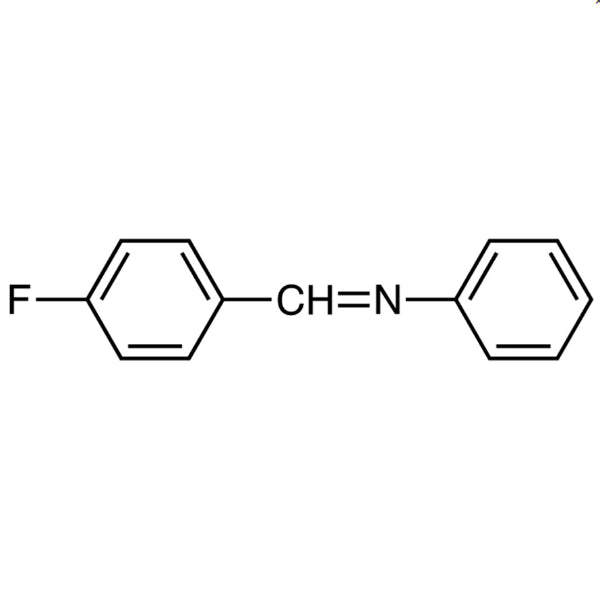
N-(4-Fluorobenzylidene)aniline is a chemical compound widely used as a building block in the synthesis of complex molecules. It plays a crucial role in organic chemistry by enabling the construction of larger molecular structures through various chemical reactions. This compound is particularly valuable in research and development settings where the introduction of fluorine atoms into aromatic structures is required. Its versatility makes it an essential component in the toolkit of chemists working on innovative projects.
The compound's molecular structure is stable, and its reactivity allows it to participate in a range of chemical reactions, including condensation, substitution, and aromatic reactions. The presence of fluorine in its molecular framework imparts unique properties that influence its reactivity and physical characteristics. These features make it a preferred choice for chemists seeking to manipulate molecular structures with precision.
In Indonesian laboratories, N-(4-Fluorobenzylidene)aniline is commonly used by researchers and scientists for fundamental and applied research. It is particularly relevant in the development of new compounds with applications in pharmaceuticals, materials science, and industrial chemistry. Its role in advancing chemical innovation is significant, especially in the context of local scientific research efforts.
TCI brochures (PDF)
- Fluorination Reagents, Fluorinated Building Blocks 2026-03-18 · p. 15
Related TCI products
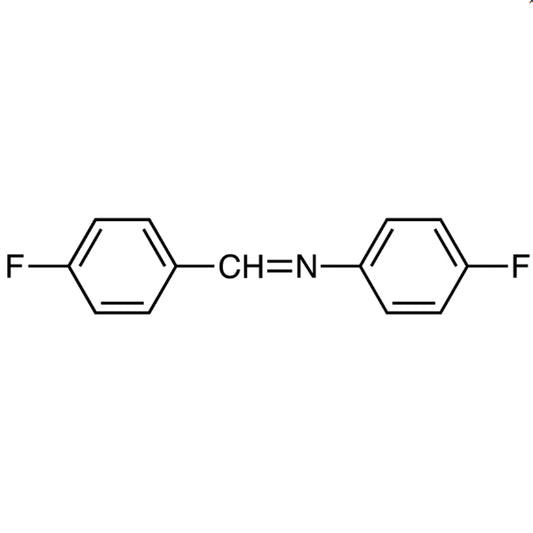
- TCI F0892 39769-09-0 4-Fluoro-N-(4-fluorobenzylidene)aniline
- TCI B2282 62085-74-9 2,6-Bis(4-fluorobenzylidene)cyclohexanone
- TCI T1884 4084-38-2 2,3,5,6-Tetrafluorobenzyl Alcohol
- TCI T1883 53072-18-7 2,3,4,5-Tetrafluorobenzyl Alcohol
- TCI B5143 261723-32-4 3-Bromo-2-fluorobenzyl Alcohol
- TCI B5090 162744-59-4 4-Bromo-2,6-difluorobenzyl Alcohol
- Organic synthesis applications benefit from this compound’s ability to introduce fluorine into aromatic structures, enhancing the reactivity and functionality of target molecules.
- Pharmaceutical research utilizes this building block to develop new drug compounds with improved pharmacological properties and bioavailability.
- Materials science applications leverage its unique chemical properties to create advanced polymers and functional materials with tailored characteristics.
- Industrial chemistry projects use this compound to synthesize intermediates for a wide range of chemical products, including dyes, pesticides, and specialty chemicals.
- Academic research in Indonesian universities incorporates this compound to explore new synthetic methodologies and chemical transformations in organic chemistry.
| Brand | TCI |
|---|---|
| CAS number | 5676-81-3 |
| Molecular formula | — |
| Purity | — |
| Category | Chemistry > Building Blocks > Fluorinated Building Blocks |
| Pack sizes | Available in various sizes as per standard supplier offerings |
| Physical form | Solid, typically in crystalline or powder form |
| Storage | Store in a cool, dry place away from light and moisture |
This compound should be stored in a cool, dry environment, away from direct light and moisture to maintain its stability and prevent degradation. It is recommended to use airtight containers to minimize exposure to air and humidity. Proper labeling of storage containers is essential for safety and traceability. In laboratory settings, it is important to handle the compound with appropriate personal protective equipment, such as gloves and safety goggles, to ensure safe handling. While it is generally stable under normal storage conditions, it should be kept away from incompatible substances to avoid any potential chemical reactions. Regular monitoring of storage conditions ensures the compound remains suitable for use in research applications.
—
Produk Terkait
-
4-Fluoro-N-(4-fluorobenzylidene)aniline TCI F0892
Regular price From Rp 980.700,00Regular price -
2,6-Bis(4-fluorobenzylidene)cyclohexanone TCI B2282
Regular price From Rp 1.193.850,00Regular price -
2,3,5,6-TetrafluorobenzylAlcohol TCI T1884
Regular price From Rp 610.050,00Regular price -
2,3,4,5-TetrafluorobenzylAlcohol TCI T1883
Regular price Rp 903.000,00Regular price -
3-Bromo-2-fluorobenzylAlcohol TCI B5143
Regular price From Rp 875.700,00Regular price -
4-Bromo-2,6-difluorobenzylAlcohol TCI B5090
Regular price From Rp 1.035.300,00Regular price -
4-Bromo-3-fluorobenzylAlcohol TCI B4956
Regular price Rp 1.298.850,00Regular price -
3-Bromo-4-fluorobenzylAlcohol TCI B4656
Regular price From Rp 1.590.750,00Regular price