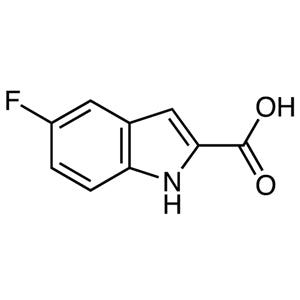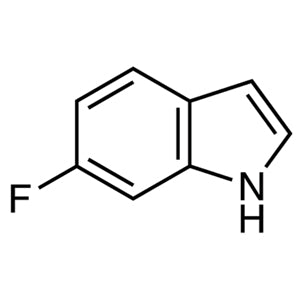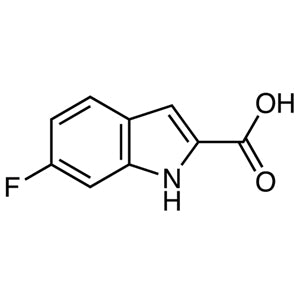
6-Fluoroindole-2-carboxylic Acid is a chemical compound widely used in organic synthesis reactions. This compound is derived from the indole structure with a fluorine atom substituted at the sixth position, giving it unique chemical properties that enhance its reactivity and specificity in various chemical processes. In the laboratory, it serves as a crucial building block for the synthesis of complex molecules, including pharmaceuticals, industrial chemicals, and other organic compounds. Its versatility makes it a valuable tool for researchers and chemists working on advanced synthetic pathways.
The presence of fluorine in its structure significantly influences its chemical behavior, making it more polar and enhancing its ability to interact with a wide range of reagents. This increased polarity and reactivity make it a preferred choice for applications requiring high reactivity and specificity. The compound exhibits stability under certain conditions but remains highly reactive in substitution, condensation, and replacement reactions, which are common in organic chemistry. These properties make it an essential component in the development of new compounds and materials.
In Indonesian laboratories, 6-Fluoroindole-2-carboxylic Acid is commonly used in organic chemistry research, drug development, and the synthesis of complex heterocyclic compounds. Its role in creating structurally diverse molecules makes it a key reagent in both academic and industrial research settings. Researchers in Indonesia rely on this compound to advance their work in chemical innovation and pharmaceutical applications.
- Organic synthesis research where high reactivity and specificity are required for complex molecule creation.
- Drug development projects aiming to synthesize novel pharmaceutical compounds with unique structural features.
- Heterocyclic compound synthesis, as the fluorine substitution enhances reactivity and structural diversity.
- Industrial chemical production involving fluorinated building blocks for specialized applications.
- Advanced chemical research focused on exploring new synthetic pathways and reaction mechanisms.
| Brand | TCI |
|---|---|
| CAS number | 3093-97-8 |
| Molecular formula | — |
| Purity | — |
| Category | Chemistry > Building Blocks > Fluorinated Building Blocks |
| Pack sizes | Available in standard laboratory quantities as per supplier specifications |
| Physical form | Solid powder (as per typical chemical compound presentation) |
| Storage | Store in a cool, dry place away from moisture and direct sunlight |
This compound should be stored in a cool, dry environment to maintain its chemical stability. It is recommended to use airtight containers to prevent exposure to moisture and air, which may affect its reactivity. Due to its chemical nature, it should be handled in a well-ventilated area, and appropriate personal protective equipment should be worn when working with it. Avoid direct contact with skin and eyes, and ensure proper disposal procedures are followed to comply with laboratory safety standards. Regular monitoring of storage conditions is essential to ensure the compound remains in optimal condition for use in research applications.
—
Product Categories
Produk Terkait
-
5-Fluoroindole-2-carboxylicAcid TCI F0716
Regular price From Rp 1.140.300,00Regular price -
4-Fluoroindole TCI F0556
Regular price Rp 1.670.550,00Regular price -
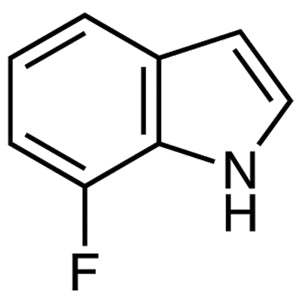
7-Fluoroindole TCI F0555
Regular price Rp 2.677.500,00Regular price -
5-Fluoroindole TCI F0369
Regular price From Rp 848.400,00Regular price -
6-Fluoroindole TCI F0352
Regular price From Rp 769.650,00Regular price -
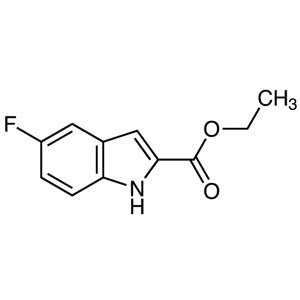
Ethyl5-Fluoroindole-2-carboxylate TCI E1035
Regular price From Rp 2.121.000,00Regular price -
3-(Difluoromethyl)-1-methyl-1H-pyrazole-4-carboxylicAcid TCI D4949
Regular price From Rp 743.400,00Regular price -
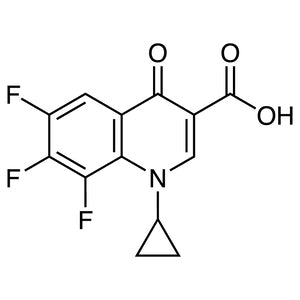
1-Cyclopropyl-6,7,8-trifluoro-4-oxo-1,4-dihydroquinoline-3-carboxylicAcid TCI C4052
Regular price From Rp 1.458.450,00Regular price