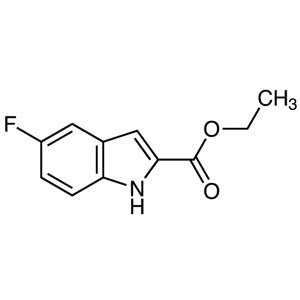
5-Fluoroindole-2-carboxylic Acid is a chemical compound widely used as a building block in the synthesis of complex molecules, particularly in organic chemistry and pharmacology. Its structure is based on an indole ring with a fluorine atom at the fifth position and a carboxylic acid group at the second position. This unique arrangement contributes to its reactivity and versatility in chemical reactions. In the laboratory, it serves as a key component for the development of bioactive compounds, including pharmaceuticals and pharmacological agents.
The compound's molecular structure, featuring fluorine and a carboxylic acid group, gives it high polarity and reactivity. Fluorine, being highly electronegative, significantly influences the compound’s chemical behavior, making it suitable for substitution reactions, coupling reactions, and structural modifications. Its reactivity and stability make it a preferred choice for researchers aiming to design new molecules with specific biological activities.
In Indonesian laboratories, 5-Fluoroindole-2-carboxylic Acid is commonly used in scientific research across various fields, including organic chemistry, pharmacology, and the synthesis of novel compounds. It is a valuable resource for academic institutions and research centers working on drug discovery and chemical innovation. Its availability and chemical properties make it an essential tool for advanced chemical investigations.
TCI brochures (PDF)
- Fluorination Reagents, Fluorinated Building Blocks 2026-03-18 · p. 50
- Organic synthesis projects benefit from this compound due to its reactivity and ability to participate in various chemical transformations.
- Pharmacological research utilizes it for the development of new bioactive compounds and drug candidates.
- Structural modification studies leverage its fluorinated group for designing molecules with enhanced biological activity.
- Chemical innovation in drug discovery often incorporates this compound as a key building block for novel pharmaceuticals.
- Research in synthetic chemistry relies on its versatility for creating complex molecular structures through functional group manipulations.
| Brand | TCI |
|---|---|
| CAS number | 399-76-8 |
| Molecular formula | — |
| Purity | — |
| Category | Chemistry > Building Blocks > Fluorinated Building Blocks |
| Pack sizes | Available in standard laboratory quantities as per supplier specifications |
| Physical form | Solid, typically in crystalline or powder form |
| Storage | Store in a cool, dry place away from moisture and direct sunlight |
This compound should be stored in a cool, dry environment to maintain its chemical integrity. It is recommended to use airtight containers to prevent exposure to moisture and air, which could affect its stability. Due to its reactivity, it should be handled in a well-ventilated laboratory setting, preferably with appropriate personal protective equipment. Avoid contact with incompatible substances, such as strong oxidizing agents. Proper labeling and storage conditions ensure the compound remains effective for research applications. Regular monitoring of storage conditions is advised to maintain its quality and usability in laboratory settings.
—
Produk Terkait
-
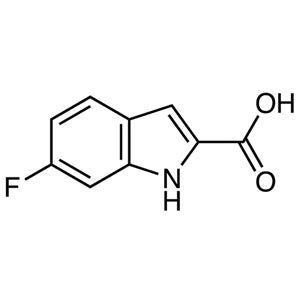
6-Fluoroindole-2-carboxylicAcid TCI F0835
Regular price From Rp 1.140.300,00Regular price -
4-Fluoroindole TCI F0556
Regular price Rp 1.670.550,00Regular price -
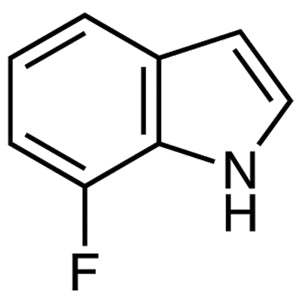
7-Fluoroindole TCI F0555
Regular price Rp 2.677.500,00Regular price -
5-Fluoroindole TCI F0369
Regular price From Rp 848.400,00Regular price -
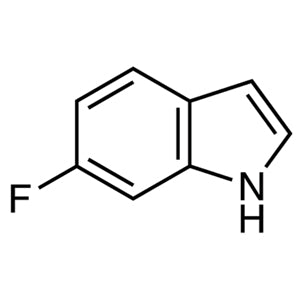
6-Fluoroindole TCI F0352
Regular price From Rp 769.650,00Regular price -
Ethyl5-Fluoroindole-2-carboxylate TCI E1035
Regular price From Rp 2.121.000,00Regular price -
9,10-Difluoro-2,3-dihydro-3-methyl-7-oxo-7H-pyrido[1,2,3-de]-1,4-benzoxazine-6-carboxylicAcid TCI O0404
Regular price From Rp 2.545.200,00Regular price -
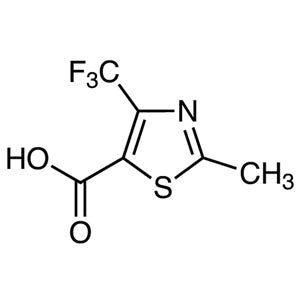
2-Methyl-4-(trifluoromethyl)thiazole-5-carboxylicAcid TCI M3078
Regular price From Rp 477.750,00Regular price




![82419-35-0 9,10-Difluoro-2,3-dihydro-3-methyl-7-oxo-7H-pyrido[1,2,3-de]-1,4-benzoxazine-6-carboxylic Acid - AMI Scientific](http://amiscientific.com/cdn/shop/files/TCI2510O0404.jpg?v=1767131869&width=533)