6-Fluoroindole is a chemical compound that belongs to the fluorinated building blocks category, widely used as a foundational material in the synthesis of complex compounds. It is a derivative of indole with a fluorine atom attached at the sixth position, which imparts unique chemical properties. This structural modification allows for enhanced reactivity and specificity in chemical reactions, making it a valuable tool in modern laboratory settings. Its presence in scientific research is notable, particularly in the fields of pharmacology and organic chemistry, where it serves as a key intermediate in the development of bioactive molecules.
The compound’s fluorinated structure provides stability and controlled reactivity, making it a preferred choice for synthetic chemists. The fluorine atom at position six contributes to the molecule’s chemical stability, enabling efficient and selective reactions. Additionally, its polar nature facilitates solubility and reactivity in various solvents, which is crucial for laboratory processes that require precision. These properties make 6-Fluoroindole a versatile and reliable material for a wide range of chemical applications.
In Indonesian laboratories, 6-Fluoroindole is commonly used in scientific research related to pharmacology and organic chemistry. Its role in the synthesis of bioactive compounds makes it an essential component in drug development and chemical innovation. Researchers rely on its predictable behavior and chemical versatility to achieve accurate and reproducible results. Its use is particularly prevalent in academic and industrial settings where high-quality chemical building blocks are required for advanced experimentation.
TCI brochures (PDF)
- Fluorination Reagents, Fluorinated Building Blocks 2026-03-18 · p. 49
- Pharmacological research utilizes 6-Fluoroindole for the synthesis of bioactive compounds due to its controlled reactivity and structural versatility.
- Organic chemistry experiments benefit from its fluorinated structure, allowing for selective chemical transformations and enhanced molecular stability.
- Drug development projects incorporate this compound to create novel pharmaceuticals with improved therapeutic properties and reduced side effects.
- Analytical chemistry applications leverage its polar nature for efficient solubility and reactivity in various solvent systems.
- Synthetic chemistry studies rely on its unique chemical properties to design and produce complex molecular structures with high precision.
| Brand | TCI |
|---|---|
| CAS number | 399-51-9 |
| Molecular formula | — |
| Purity | — |
| Category | Chemistry > Building Blocks > Fluorinated Building Blocks |
| Pack sizes | Available in various quantities as per standard laboratory supply |
| Physical form | Solid crystalline powder |
| Storage | Store in a cool, dry place away from light and moisture |
6-Fluoroindole should be stored in a cool, dry environment, away from direct light and moisture to maintain its chemical integrity. It is recommended to keep it in a sealed container to prevent exposure to air and humidity. Due to its polar nature, it is advisable to use glass or plastic containers that are chemically inert to avoid any unwanted reactions. In laboratory settings, it should be handled with appropriate personal protective equipment, such as gloves and safety goggles, to ensure safe handling. Proper ventilation should be maintained when working with this compound to minimize any potential exposure. Its stability under controlled conditions makes it suitable for long-term storage without significant degradation.
—
Produk Terkait
-
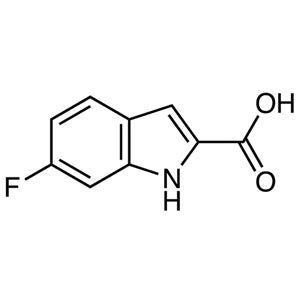
6-Fluoroindole-2-carboxylicAcid TCI F0835
Regular price From Rp 1.140.300,00Regular price -
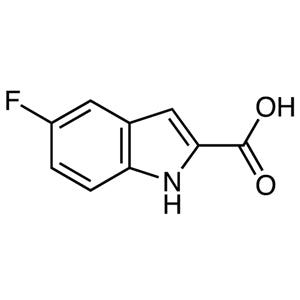
5-Fluoroindole-2-carboxylicAcid TCI F0716
Regular price From Rp 1.140.300,00Regular price -
4-Fluoroindole TCI F0556
Regular price Rp 1.670.550,00Regular price -
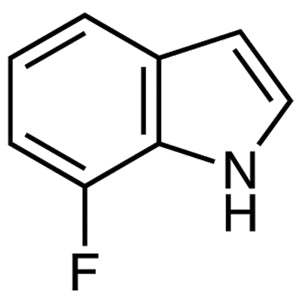
7-Fluoroindole TCI F0555
Regular price Rp 2.677.500,00Regular price -
5-Fluoroindole TCI F0369
Regular price From Rp 848.400,00Regular price -
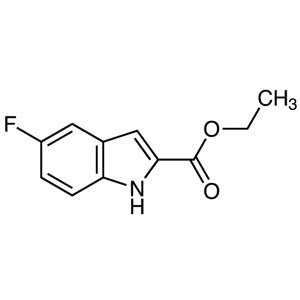
Ethyl5-Fluoroindole-2-carboxylate TCI E1035
Regular price From Rp 2.121.000,00Regular price -
4-Fluoroindazole TCI F1037
Regular price Rp 1.908.900,00Regular price -
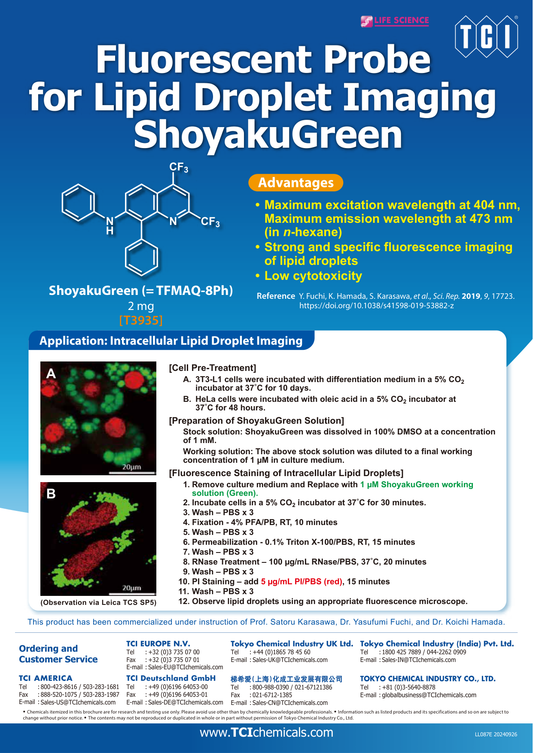
ShoyakuGreen(=TFMAQ-8Ph) TCI T3935
Regular price Rp 4.347.000,00Regular price