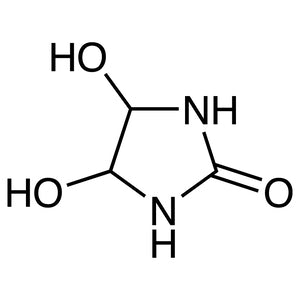
4,5-Dihydroxyimidazolidin-2-one is a chemical compound widely used in laboratory settings for the synthesis of heterocyclic compounds. This compound serves as a fundamental building block in organic chemistry, enabling the creation of complex molecular structures through various chemical reactions. Its unique structure, featuring hydroxyl groups at positions 4 and 5 of the imidazolidin ring, makes it a versatile reagent in synthetic pathways. It is particularly valuable in the development of pharmaceuticals and specialty chemicals due to its reactivity and structural adaptability.
The compound's stability and controlled reactivity make it a preferred choice for researchers working on complex synthesis projects. Its ability to undergo substitution reactions or ring-opening reactions allows for the modification of its structure, making it adaptable to a wide range of synthetic strategies. This flexibility is crucial in the design of new compounds with specific functional groups or biological activities. Additionally, its participation in diverse reaction mechanisms enhances its utility in both academic and industrial research environments.
In Indonesian laboratories, 4,5-Dihydroxyimidazolidin-2-one is commonly used in research and development of bioactive compounds and industrial chemicals. It is a key component in the synthesis of pharmaceutical intermediates and specialty chemicals, supporting innovation in both academic and applied research. Its availability and chemical properties make it an essential tool for chemists and researchers in Indonesia.
Related TCI products
- Used in the synthesis of heterocyclic compounds due to its structural versatility and reactivity.
- Applied in pharmaceutical research for the development of bioactive molecules and drug intermediates.
- Utilized in organic chemistry experiments for ring-opening and substitution reactions.
- Employed in the creation of complex chemical structures for industrial applications.
- Integrated into research projects requiring stable and controllable reagents for synthetic pathways.
| Brand | TCI |
|---|---|
| CAS number | 3720-97-6 |
| Molecular formula | — |
| Purity | — |
| Category | Chemistry > Building Blocks > Heterocyclic Building Blocks |
| Pack sizes | Available in various sizes as per supplier specifications |
| Physical form | Solid or liquid, depending on the specific product variant |
| Storage | Store in a cool, dry place away from moisture and direct sunlight |
This compound should be stored in a cool, dry environment, away from moisture and direct sunlight to maintain its chemical integrity. It is recommended to use airtight containers to prevent exposure to air and humidity, which could affect its stability. Proper labeling of containers is essential to ensure safe handling and prevent accidental use. In laboratory settings, it is important to follow standard safety protocols, including the use of personal protective equipment when handling. The compound should be kept in a well-ventilated area to minimize any potential risks associated with its chemical properties. Regular monitoring of storage conditions ensures the compound remains suitable for use in research applications.
—
Produk Terkait
-
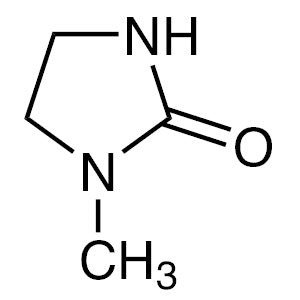
1-Methylimidazolidin-2-one TCI M3422
Regular price From Rp 1.644.300,00Regular price -
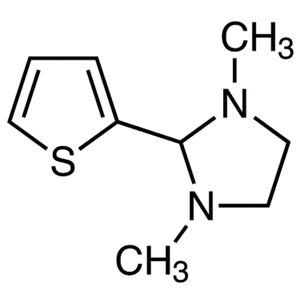
1,3-Dimethyl-2-(2-thienyl)imidazolidine TCI D2289
Regular price Rp 2.359.350,00Regular price -
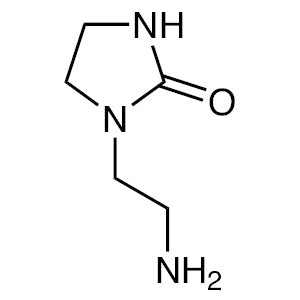
1-(2-Aminoethyl)imidazolidin-2-one TCI A3472
Regular price From Rp 1.565.550,00Regular price -
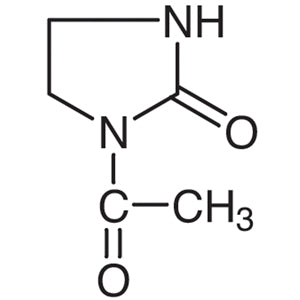
1-Acetyl-2-imidazolidinone TCI A1945
Regular price From Rp 1.326.150,00Regular price -
1-Methanesulfonyl-2-imidazolidinone TCI M2553
Regular price Rp 1.565.550,00Regular price -
2-Imidazolidinone TCI I0005
Regular price From Rp 530.250,00Regular price -
1,3-Dimethyl-2-imidazolidinone TCI D1477
Regular price From Rp 477.750,00Regular price -
4',6,7-Trihydroxyisoflavone TCI T3473
Regular price From Rp 3.075.450,00Regular price